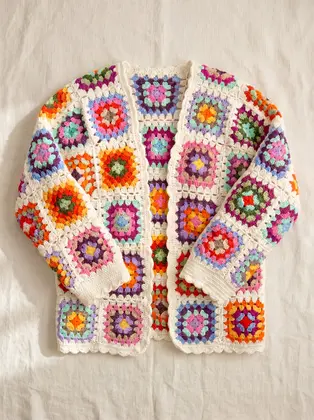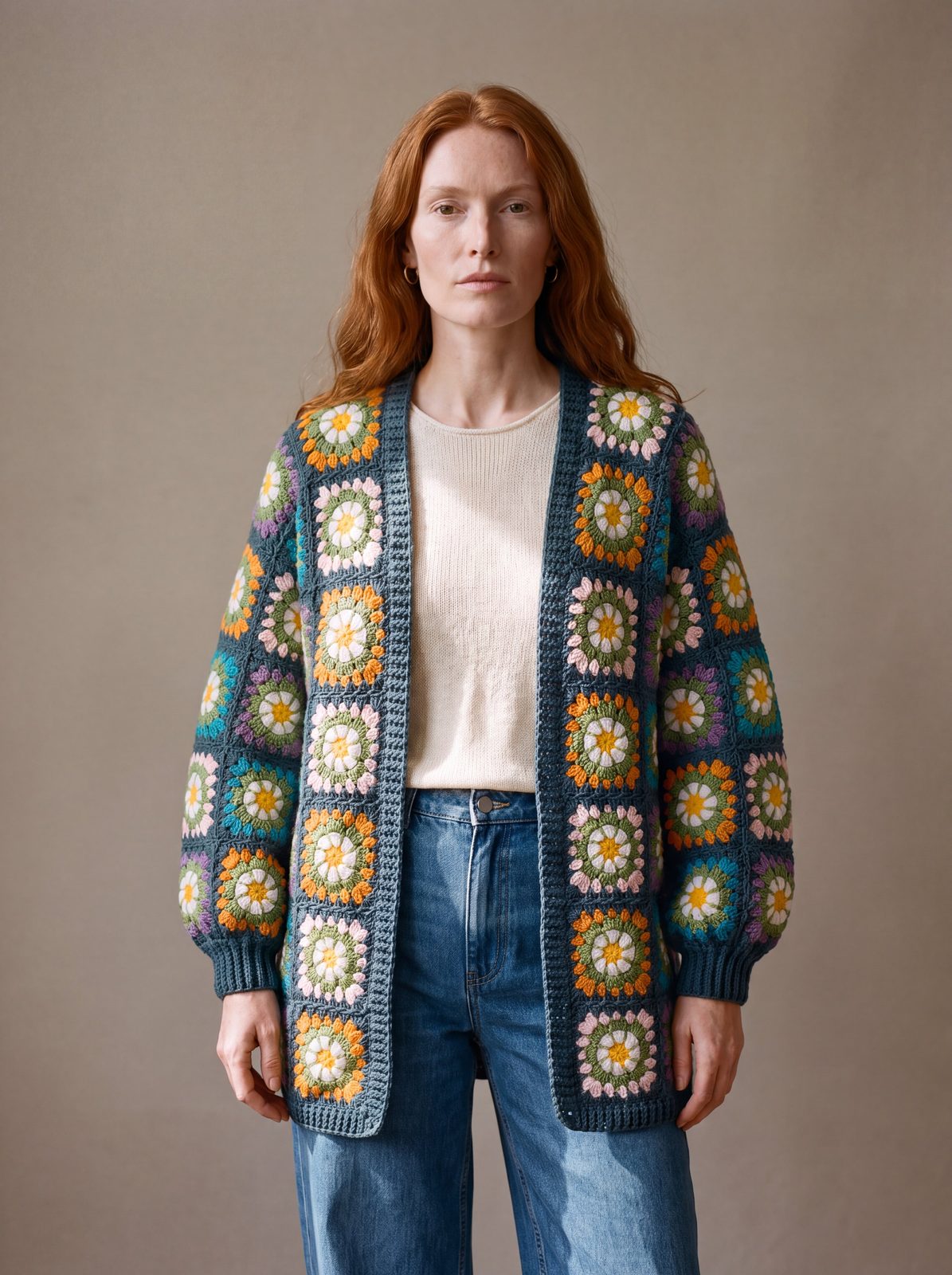
A long cardigan earns its place when its length, weight, and shape work with the clothes you already wear. Before choosing a color or falling for a striking stitch, decide where you want the hem to land, what you plan to layer underneath, and whether you need a soft indoor layer or something with more presence for a cool walk. Those practical choices make the difference between a beautiful piece you reach for and one that stays on a hanger.
Start with the length that suits your proportions
“Long” can mean just below the hip, around mid-thigh, or closer to the knee. A hem that ends near the widest part of your thigh draws attention there; a little shorter or longer can create a more continuous line. Neither is a rule about what you can wear. It is a useful mirror check: try the cardigan with your usual pants and shoes, and notice where the hem falls when you stand and sit.
For everyday denim, a cardigan ending below the seat often feels easy without overwhelming the outfit. A longer line can work especially well over a simple column—straight-leg pants and a close-fitting tee, for example—because the uninterrupted layers keep the look composed. With a skirt or dress, compare the hems. A cardigan that ends at a very different point from the skirt may feel intentional, but if the proportions seem accidental, try a different length or leave the front open.
Consider your routine, too. A hem that brushes the top of your thigh may be convenient for commuting or sitting at a desk; extra length adds coverage and movement but can catch on a chair or feel cumbersome under a coat. Product photos can help you understand the silhouette, but check garment measurements and model information when available rather than assuming the pictured length will fall the same way on you.
Choose a shape for real layers
A long cardigan is at its best when it glides over what you wear beneath it. Try to picture it over a T-shirt, a blouse with sleeves, or the light sweater you actually reach for. If the shoulder seam pulls, the front edges gape, or the sleeves bunch under the arms, the fit is too restrictive for your intended layers. If it swallows your frame and the shoulders drop far beyond where you like them, a more defined or shorter silhouette may be easier to style.
Look at the details that affect movement. An open front creates a relaxed vertical line and avoids the bulk of buttons, while a front band can add visual structure. Ribbed cuffs help define a sleeve and can be pushed up if they are comfortable; a fuller sleeve looks expressive but needs room beneath a coat. Pockets are useful only if their placement and weight feel comfortable. On a textured or crochet design, the surface itself adds visual volume, so a clean layer underneath is often the simplest balance.
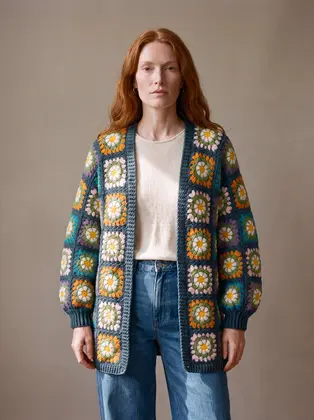
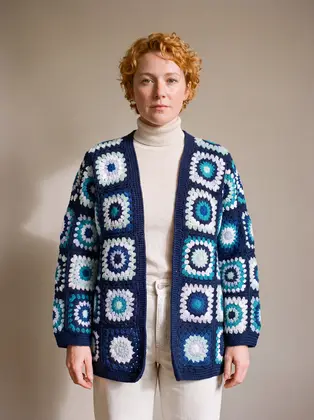
For an open, easy shape with sleeves that gather at the wrist, see the Daisy Balloon Sleeve Long Cardigan in Teal. If you prefer a long open silhouette with a cooler palette, the Long Cardigan in Navy and Turquoise offers a different way to bring color into a simple outfit. Use each product page to review the actual fit information before deciding on a size.
Let texture and color set the outfit's direction
A smooth, fine knit tends to layer quietly beneath a jacket; a chunky stitch or bold motif becomes the focal point. Think about the pieces you own, not an imaginary wardrobe. If your coats, denim, and shoes are mostly neutral, a patterned cardigan can supply enough interest that the rest of the outfit needs little more than a plain top. If you already wear prints often, a solid or tonal option may earn more repeat use.
Color choice is practical as well as personal. A dark ground can anchor bright motifs and pair readily with familiar basics. A lighter or multicolored design may feel fresh over denim, cream, or black, but check which colors actually appear in your closet. Pick one shade in the cardigan and repeat it in a small accessory or shoe if you want the look to feel connected; there is no need to match every color.
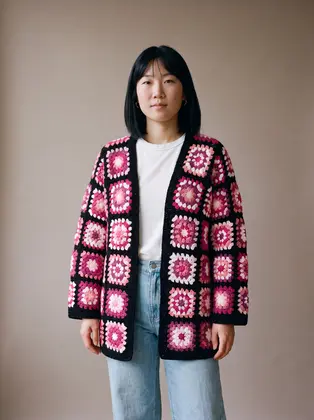
For example, the Long Cardigan in Black and Pink puts contrast at the center of the outfit, while the Mosaic Cardigan in Burgundy and Mustard leans into a warmer combination. For a brighter blue base, consider the Mosaic Cardigan in Cobalt and Aqua. These are distinct styling choices, not interchangeable basics: decide whether you want your layer to blend in, coordinate with a recurring wardrobe color, or lead the whole look.
Think about weight, climate, and how you will wear it
Length alone does not tell you how warm a cardigan will feel. Stitch density, fiber content, lining, and the air between the fabric and your body all matter. A more open construction can feel breezy and add texture without acting like a windproof coat. A denser knit may feel more substantial, but it still may not replace outerwear in cold or wet weather. Think of a cardigan as a flexible layer, then use a coat suited to the conditions when you go outside.
Ask when you expect to wear it: chilly air conditioning, cool mornings, or as a mid-layer during a seasonal transition? If you need it to fit beneath a coat, bring that coat into the decision. Sleeves and shoulder width are the usual pinch points, and a thick cardigan can make a coat feel tight even when each garment fits on its own. For indoor use over a tee, you may welcome a softer drape and more room. For frequent travel, a lighter layer that folds comfortably may be more useful than the most dramatic option.
Browse the cardigan collection with that use case in mind, and explore tops for simple layers to wear beneath a statement knit. A cardigan should make dressing easier: if an outfit requires a special bra, a narrow coat, or constant adjustment, account for that before choosing it.
Check fit information and care before buying
Use the size chart and garment measurements where provided, especially for a long layer with a generous or relaxed silhouette. Compare the measurements with a cardigan you already like, laid flat and measured in the same way. Pay attention to body length, chest width, sleeve length, and any size notes. A label such as small or medium is not a universal promise of fit. If measurements or fiber details are unclear, confirm them with the team before ordering rather than guessing.
Also read the product's actual composition and care instructions. Similar-looking knits can need different handling, and a description of a cotton blend does not specify its full fiber content or establish a safe washing method. Follow the garment label and the confirmed product guidance; do not assume that machine washing, soaking, tumble drying, or hanging is appropriate. If you are unsure, ask before cleaning. Store a substantial knit folded if its weight might stretch it on a hanger, and keep it away from sharp jewelry or rough surfaces that could snag an open stitch.
The size and care guide is a useful starting point, but the individual garment label and product-specific information should take precedence. If you need help interpreting measurements or confirming a detail, use the contact page to ask before purchase.
Make the final choice by outfit, not by trend
Before deciding, name three outfits you would genuinely wear with the cardigan: perhaps jeans and a tee, a simple dress, and a workday trouser. If the color, length, and sleeve shape cooperate with at least two of them, you have a strong candidate. If you can imagine only one very specific combination, consider whether that is enough for your wardrobe and budget.
Then picture the practical moments: carrying a bag, reaching for a shelf, sitting down, and putting on a coat. A good long cardigan should move with you without requiring constant fuss. Choose the hem that works with your proportions, enough room for your usual layers, and a texture that fits your existing clothes. When those fundamentals are right, the distinctive details—color, stitch, and silhouette—become a pleasure to wear rather than a styling problem.