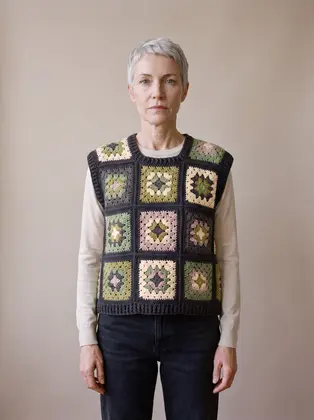
When the forecast shifts between cool shade and warm sun, the choice between a jumper and an open cardigan is less about which one is “better” and more about how you want to manage your layers. A jumper gives you one finished layer to pull on and wear; an open cardigan lets you adjust, show what is underneath, and change the outline of an outfit without starting over. The right choice depends on temperature, the clothes beneath it, and whether you want your knit to blend in or take the lead.
Start with how you want to regulate warmth
A jumper is the straightforward option when you expect to keep it on for most of the day. Since it covers the front continuously, it feels composed without requiring a second layer underneath beyond a camisole, tee, or shirt. That makes it useful in a cool office, on a breezy commute, or whenever taking a layer off and carrying it would be inconvenient. A pullover can also be the more comfortable choice when you dislike fabric shifting around your shoulders or sleeves.
An open cardigan offers more control. Leave it open in a warm room, draw it closer around you when the air cools, then slip it off quickly when the temperature changes again. It is particularly useful when moving between indoor and outdoor settings. The open front does mean it is not as enclosing as a closed pullover, so think of it as a flexible layer rather than a substitute for a coat in cold or windy conditions.
Consider the knit itself, too. An airy stitch or lightweight fabric may be comfortable over a tee in mild weather but offer little protection against a sharp chill. A denser, heavier knit brings more substance but can feel too warm once you are indoors. Product descriptions can suggest the look and intended feel, but fiber content and care requirements should be checked against the garment’s actual label and confirmed product information.
Think about the shape you want over your outfit
A jumper creates a clear uninterrupted line from neckline to hem. It can make an outfit feel simpler, especially when the rest of the look already has pattern or detail. For a neat proportion, compare the hem with the rise of your trousers or skirt: a shorter pullover can sit naturally with a higher waist, while a longer one may work better with slimmer bottoms or a gentle front tuck if the fabric permits. Do not force a tuck if it distorts the knit or makes it uncomfortable.
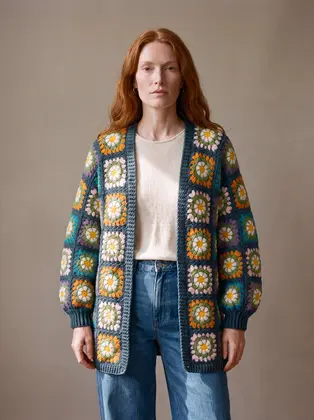
A cardigan frames whatever sits beneath it. The vertical edges can give a sense of length, while the visible base layer adds another color or texture. A shorter cardigan often works easily with dresses, skirts, and high-rise pants; a longer style creates a more relaxed, coat-like silhouette and may benefit from simpler pieces underneath. Sleeve volume matters as well. If the cardigan has generous sleeves, a close-fitting tee or fine top underneath usually avoids bunching.
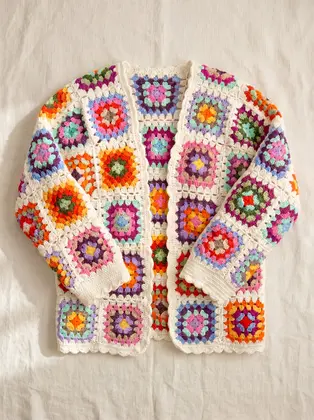
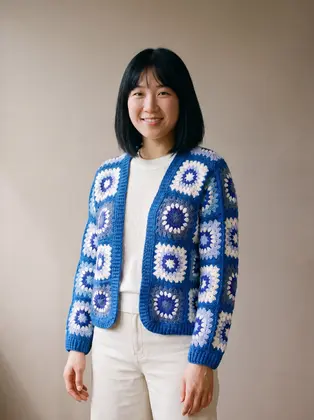
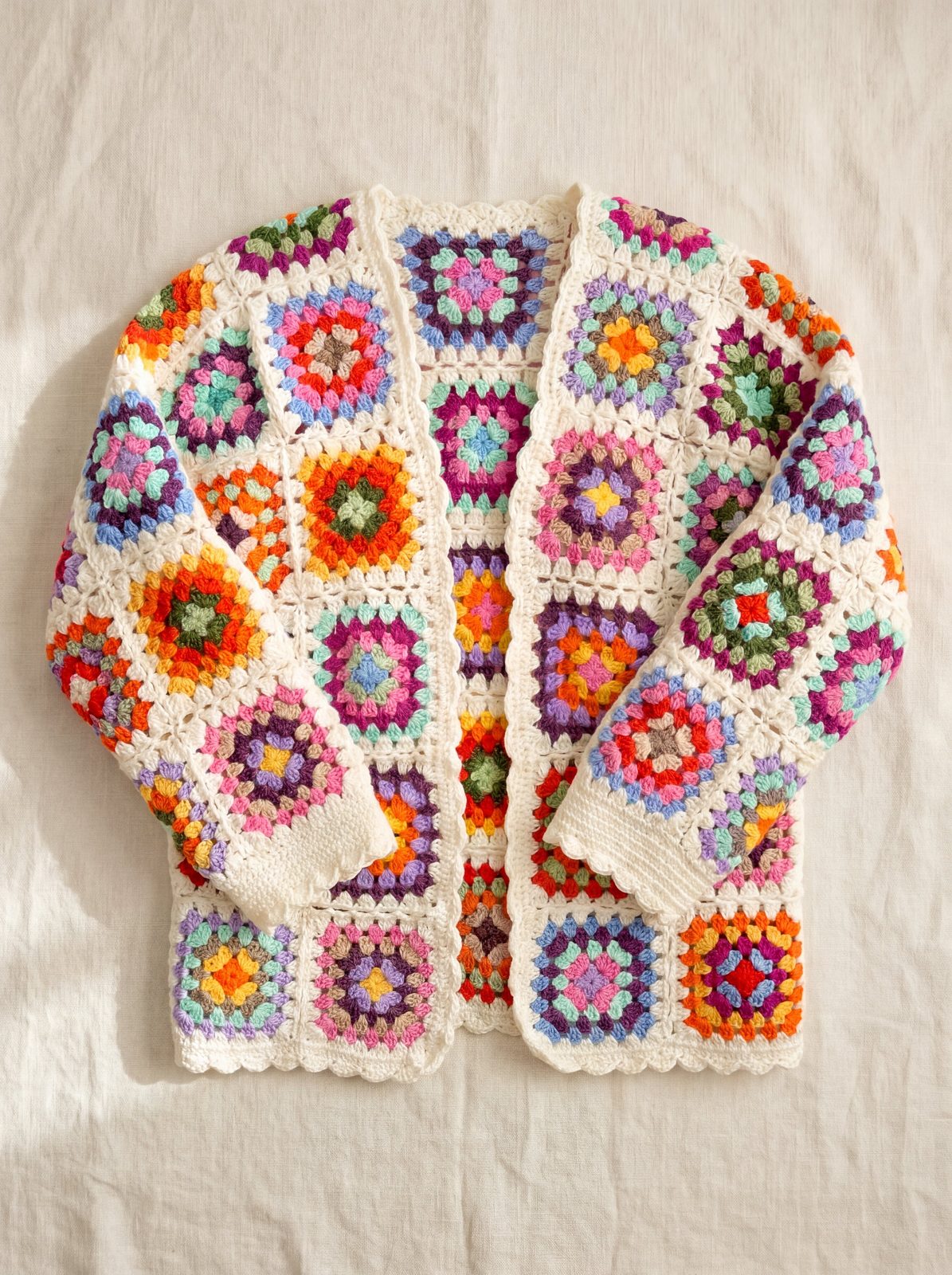
For a vivid, graphic layer, the Jubilee Cardigan brings bright squares together with a cream ground and a scalloped edge. It can be the focal point over a plain tee and uncomplicated bottoms. If you want a quieter color story, the blue-and-white pattern of the Blues Cardigan has a similarly distinctive surface but a more limited palette. These are styling distinctions, not rules: choose the outline and color contrast that feel natural with the pieces you actually wear.
Choose the layer that suits the base underneath
A cardigan is especially practical when you want the base layer to remain visible. A crisp shirt collar, a striped tee, or a simple tank can all contribute to the outfit rather than disappearing beneath a pullover. The open front also makes it easy to take a cardigan off without disturbing a carefully arranged shirt or hairstyle. If the front edges fall awkwardly over a bulky collar or gathered neckline, try a smoother base layer or a different cardigan length.
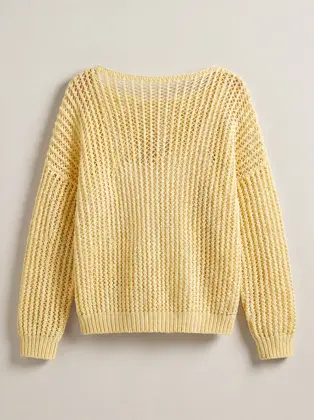
A jumper is often the easier partner for a minimal base. It hides the visual transition between layers and gives an outfit a single focal knit. If you want pattern without adding extra pieces, a colorful pullover can do that work on its own. The Lemonade Jumper, for example, is described as a pale yellow, loose, airy style; balance that lightness with a simple base and understated bottoms so the color stays intentional. Check the listing and garment details for the exact fit and composition rather than assuming all jumpers behave alike.
For more options, browse the cardigan collection alongside the broader tops collection. Comparing lengths, sleeve shapes, and color placement across categories can clarify whether you need a top layer or a standalone knit. If the aim is an outfit for a particular occasion, start with the shoes and bottom you plan to wear, then choose the knit that completes their proportions.
Use the occasion as a practical filter
For a long day with uncertain indoor temperatures, an open cardigan usually wins on convenience. You can keep it over a sleeveless dress or tee and remove it as needed. For a casual lunch, travel day, or time spent moving between errands, the ability to adjust is useful. A mid-length cardigan can also lend a simple outfit enough color and texture to feel considered without adding accessories.
For a meeting, dinner, or an outfit that needs to look finished from the moment you leave home, a jumper can be the simpler decision. There is no front to arrange, and the silhouette stays consistent as you move. A clean neckline and a well-chosen hem can look polished with tailored pants or a skirt, even when the jumper itself is relaxed. If you want a cardigan for a more structured setting, select one with a tidy fit and keep the base layer crisp; open-front does not have to mean informal.
Check fit, layering room, and care before deciding
Fit should be judged with the layer you intend to wear beneath. Try a cardigan over that tee or shirt and make sure the shoulder seam, sleeve, and front edges sit comfortably without pulling. A jumper should allow you to move your arms and sit without the hem riding uncomfortably or the neckline feeling restrictive. If sizing information is unclear, ask the team to confirm the garment measurements and intended fit before ordering; do not infer fit from a product photograph alone.
Pay attention to how the fabric meets other clothes. A loose sleeve can catch on a coat, and a textured knit may feel bulky beneath a fitted jacket. A smooth jumper can layer more easily under outerwear, while a roomy cardigan may be most comfortable as the final indoor layer. Think about where you will store it when it is off: a substantial knit is better carried folded than left hanging from a narrow strap that could pull at its shape.
Care is part of the decision, not an afterthought. Different fibers and constructions need different handling, and crochet or open stitches may require particular care. Read the care label on the actual garment and follow confirmed product guidance; when uncertain, contact the team rather than relying on a generic wash method. The size and care guide is a useful starting point, but the garment label takes priority for that specific piece.
A quick decision you can use tomorrow
Choose a jumper when you want one warm, settled layer, a clean uninterrupted shape, and minimal outfit adjustment. Choose an open cardigan when you need flexibility, want the layer beneath to show, or would like a knit to add color and texture to basics you already own. Then refine the choice by checking the day’s temperature, the bulk of your base layer, and the actual garment measurements and care information.
If both options appeal, decide which one solves the more frequent problem in your week. The best knit is not the one with the broadest theoretical use; it is the one that fits comfortably, works with your existing clothes, and makes getting dressed easier. A jumper and an open cardigan can both earn a place, but they do different jobs. Start with the job you need done, and the choice becomes much clearer.