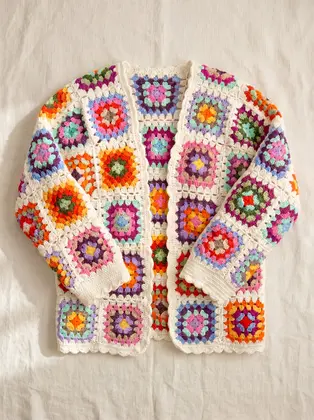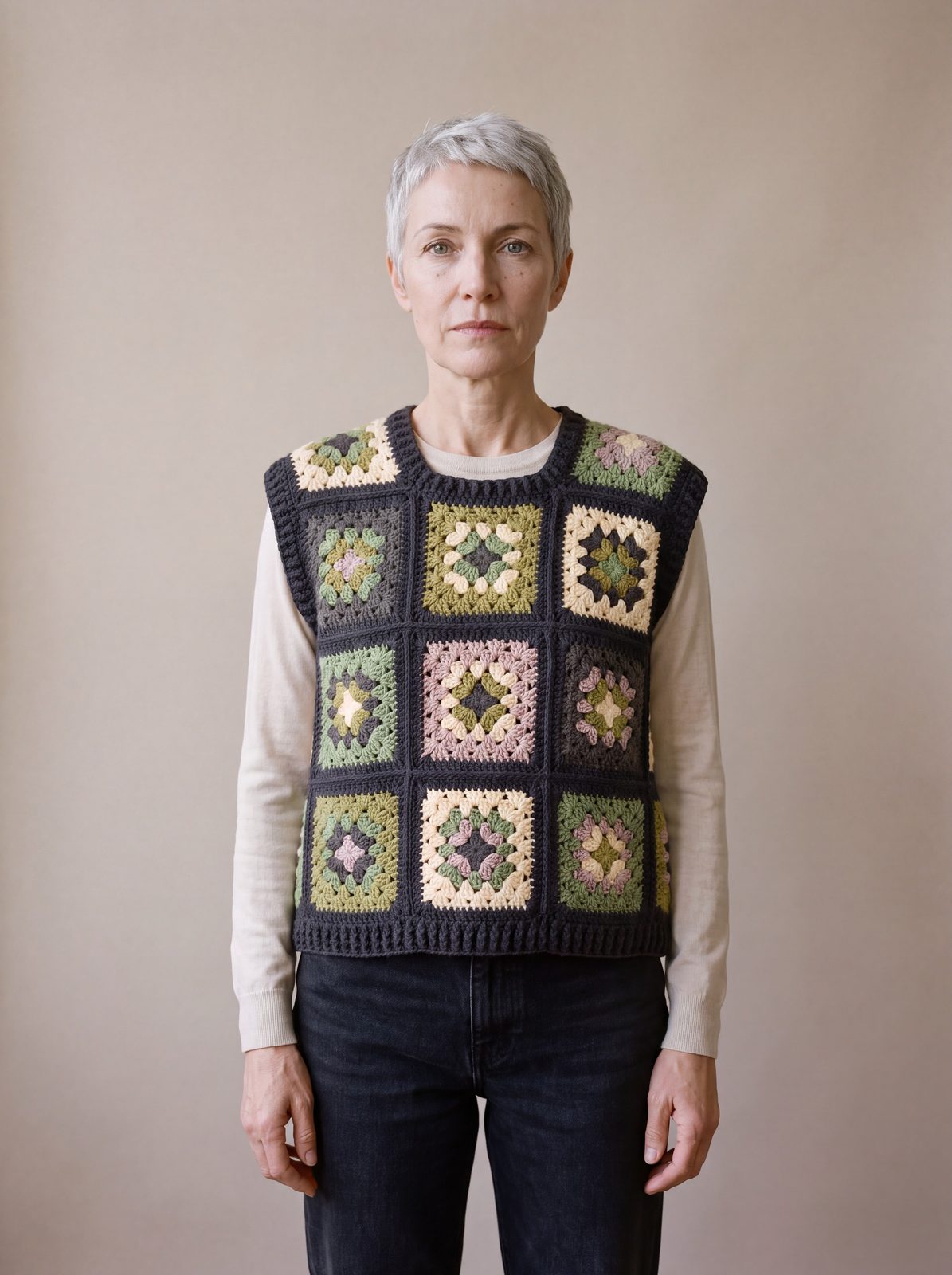
A crochet vest earns its place when it adds warmth and texture without making the rest of an outfit feel crowded. The right one slips over pieces you already wear—a crisp shirt, a fine long-sleeve tee, or a simple dress—and gives them a clear point of view. Choosing well is less about finding a perfect trend and more about balancing proportion, color, texture, and the layers you actually reach for.
Start with the layers you own
Before choosing a vest, think about what will sit underneath it most often. A fitted tee or lightweight shirt is a forgiving base for a textured crochet piece because it leaves room for the stitches to show. If your usual shirts have generous sleeves, check that the armholes allow them to fall naturally rather than bunching at the shoulder. Crochet has an open structure, but the garment itself can still have substantial weight; a bulky sweatshirt underneath may feel cumbersome even when the stitches look airy.
For a first vest, choose a base layer in a color already present in your closet. White, cream, denim blue, black, and soft gray make practical partners for a patterned vest. A simple foundation lets the crochet pattern do its work without requiring a fully coordinated outfit. For a more deliberate mix, pick up one color from the vest in a shirt, shoe, or accessory, then leave the other pieces quiet.
Consider the neckline, too. A V-neck gives a collared shirt room to show and creates a longer line down the front. A round neckline can look especially neat over a crewneck tee or a dress with a simple collar. Neither is universally more flattering; the useful question is whether the neckline of the underlayer sits cleanly against the vest instead of competing with it.
Choose a shape that sits easily
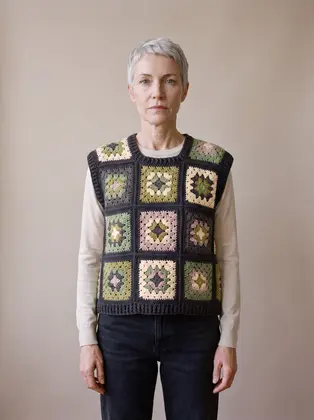
Length changes how a vest works with your proportions. A cropped or high-hip style can meet the waistband of high-rise jeans or a skirt, making the outfit feel intentional rather than accidentally layered. The Patchwork Slipover – Green Vest has a cropped slipover shape and an olive, moss, cream, and blush palette that pairs naturally with denim or a plain shirt. Because its pattern is busy, keep the bottom half relatively straightforward if you want the vest to remain the focal point.
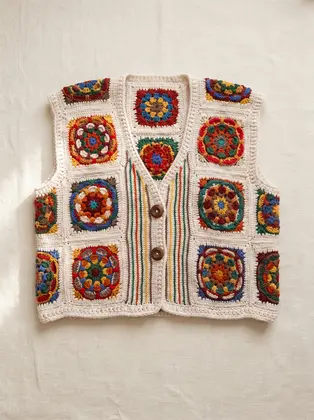
A closer-fitting button-front shape offers a different kind of versatility. The Rustica Vest is described as fitted and cropped, with a V-shaped opening, striped placket, and wooden buttons. Worn buttoned over a fine long-sleeve top, it reads as a finished layer; left open over a tee, it feels less formal. When trying this kind of shape, check that buttons lie flat and that the armholes do not pull when you reach forward. A vest should sit comfortably, not depend on constant adjustment.
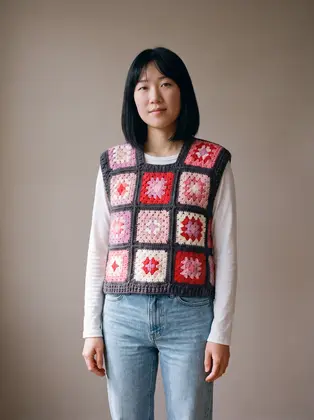
Relaxed, boxier designs leave more room for movement and can balance a narrow skirt or straight-leg trousers. The Patchwork Slipover – Rose Vest brings a floral square pattern and a dark grid into a relaxed, boxy silhouette. Try it with a smooth, close-fitting base if you want definition beneath the volume, or wear it with a fuller shirt and let the outfit feel deliberately easy. The deciding factor is not a rule about body type; it is whether the hem and shoulder line work with the clothes you prefer.
Let texture and pattern have room
Crochet introduces raised stitches, open spaces, and sometimes a multicolor motif. Those details are appealing, but they add visual activity. Pairing a patterned vest with another large-scale print can be successful when the colors relate and the proportions are controlled, yet it is not the simplest route to an outfit you can assemble quickly. For everyday layering, put texture against smoother fabrics: poplin, jersey, denim, or a plain knit.
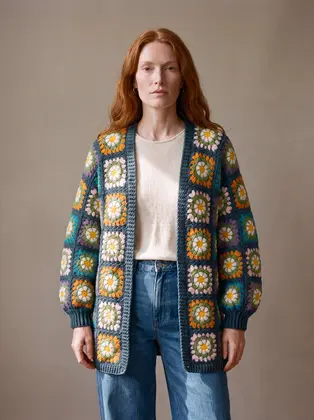
Look at the vest from a few feet away as well as close up. A patchwork design may read as one broad color field at a distance, while its individual squares become more expressive nearby. If the colors are varied, choose one neutral anchor and one supporting color rather than trying to repeat every shade. The warmer terracotta palette of the Patchwork Slipover – Terracotta Vest can sit comfortably with cream, dark denim, or muted brown; a simple base helps its warm squares stay legible.
Open crochet can reveal the layer beneath, so think of the shirt as part of the outfit rather than an invisible undergarment. A tonal top creates a quieter effect; a contrasting color makes the stitch openings more noticeable. If coverage matters, select an underlayer that feels comfortable on its own and check the appearance in natural light. Texture should add interest, not leave you second-guessing the outfit throughout the day.
Make proportion practical
When you try on a vest, move as well as stand still. Sit, reach, and put on the jacket or coat you expect to wear over it. The armhole should allow normal movement, and the hem should not catch awkwardly on a belt, waistband, or bag strap. A cropped vest often works cleanly with high-rise bottoms; with a longer top underneath, a small visible hem can look layered on purpose if the lengths are distinct. When two hems end almost together, the outfit can appear less considered.
For a long shirt, decide whether you want it tucked, partially tucked, or left out before judging the vest. Each choice changes where the eye lands. A tucked shirt emphasizes the vest and waistband; an untucked shirt creates a longer vertical line. With skirts, compare the vest hem to the skirt’s waist and volume. A neat, close-fitting vest can bring definition to a flowing skirt, while a roomier vest often feels best with a cleaner, straighter bottom.
Outerwear deserves a real test. Crochet may catch on rough or closely woven linings, and a thick vest beneath a narrow coat can restrict the shoulders. Smooth the vest, put the coat on slowly, and check whether the sleeves and armholes remain comfortable. If the outfit only works without the coat you need, it may be better suited to mild weather or indoor layering.
Build a small set of reliable outfits
A vest becomes easy to wear when you can name two or three combinations without inventing a new wardrobe around it. Start with a white or cream shirt and straight jeans for a familiar formula. Then try a plain long-sleeve tee with a skirt, or a simple dress under the vest for a softer contrast. Change shoes and the same combination can move from casual daytime dressing to a more finished dinner look without adding another patterned layer.
Use the rest of the outfit to set the mood. Denim and a basic tee make a colorful patchwork vest feel relaxed. Tailored trousers and a crisp shirt give the same texture a sharper frame. A flowing skirt echoes a romantic floral motif, while a simple column skirt keeps the overall line restrained. Accessories can either repeat a quiet color from the vest or stay minimal; there is no need to match every motif with a themed piece.
If you are deciding between several styles, begin with the one that works with your most-used base layer and outerwear. Browse the vest collection alongside tops to compare shapes and possible underlayers. The broader collection can help you think across the wardrobe, but use the actual garment details and fit information rather than assuming all crochet pieces behave alike.
Check details before choosing
Read the individual product page for listed measurements, fit notes, fiber content, and care guidance. A description of a cotton blend or an organic cotton blend is not a substitute for the full composition or a care label, and construction and sizing can vary from one garment to another. If a measurement or care point is unclear, ask the team through the contact page before deciding. For specific washing and drying instructions, follow the garment’s actual label and confirmed guidance; do not rely on a general rule for all crochet.
Finally, choose the vest you will wear, not only the one that looks striking on its own. A practical color, a neckline that works with your shirts, armholes that feel comfortable, and a length that meets your favorite bottoms are small details with outsized impact. When those elements align, crochet brings character to ordinary layers while leaving the rest of your closet in play.