A knitwear description is most useful when you read it as a set of practical clues, not a promise that a sweater will feel or fit exactly like the picture. Start with what the garment is, then check its shape, construction, measurements, fiber information, and care details. Those specifics help you decide whether it belongs in your wardrobe and what you still need to confirm before ordering.
Start with the garment type and silhouette
First identify the basic form: pullover, cardigan, vest, or accessory. Then look for the words that explain how it sits on the body. “Open front” means there is no closure holding the fronts together; it will layer differently from a buttoned cardigan. “Longline” or “falls past the hips” suggests more coverage, while a cropped shape ends higher and can change the proportions of a high-waisted skirt or trouser. These descriptions are useful, but they are not substitutes for garment measurements.
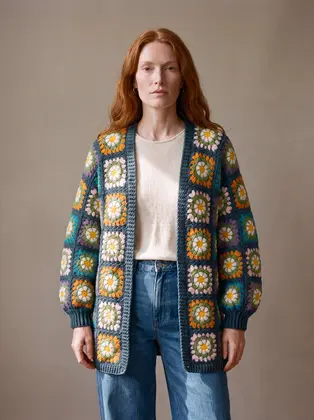
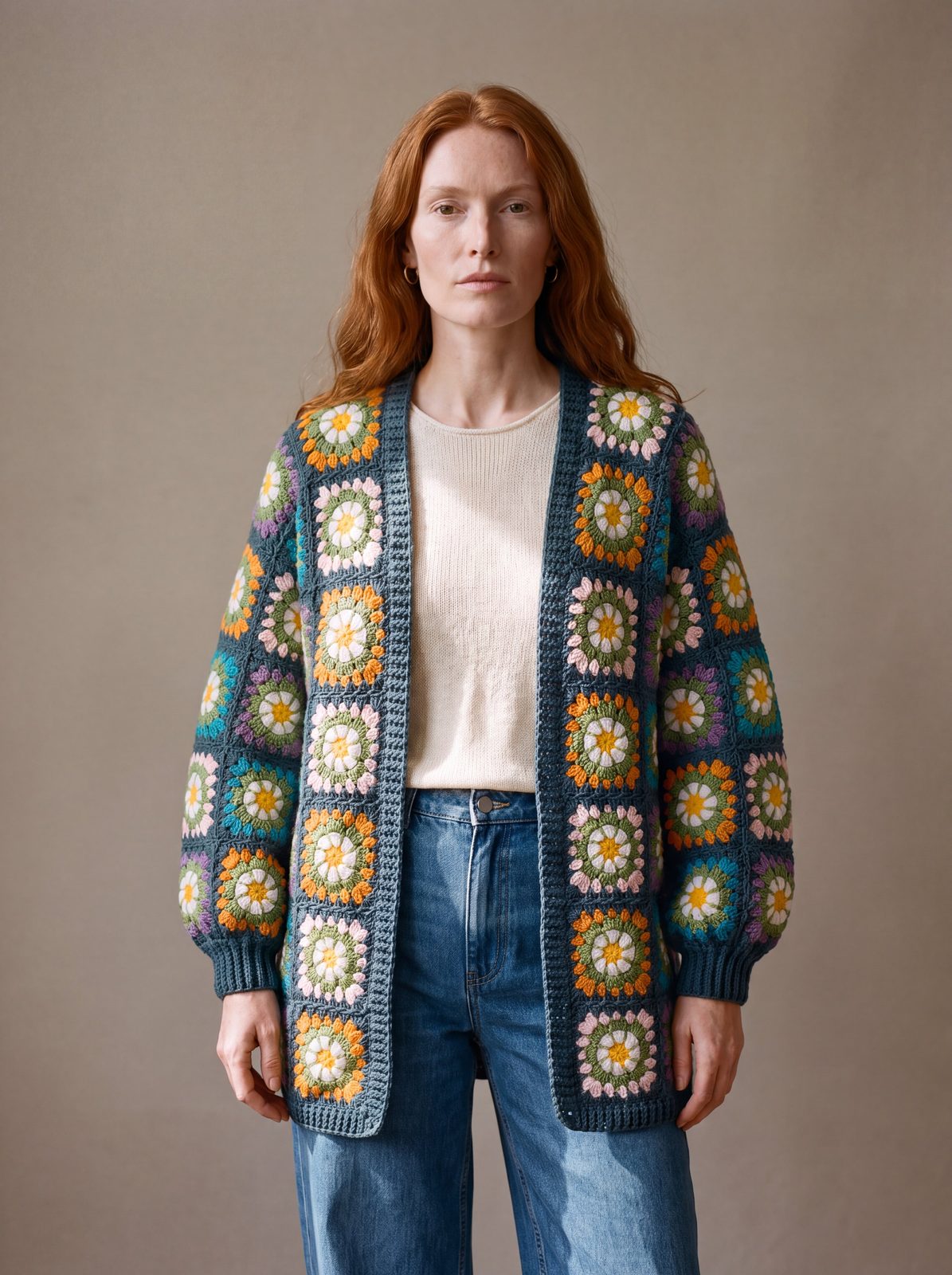
Consider the Daisy Balloon Sleeve Long Cardigan – Teal. Its description identifies a longer body and softly full sleeves gathered at ribbed cuffs. That tells you more than the color name: the body may cover the hip, while the sleeve adds volume. If you prefer a cleaner line, think about what you usually wear underneath and whether a roomy sleeve will sit comfortably beneath your coat. For other layering options, browse the cardigan collection.
Words such as “relaxed,” “fitted,” and “oversized” are relative. One shop’s relaxed fit may be another shopper’s standard fit. Treat them as a first impression, then compare the listed garment dimensions with a sweater you already own. Lay that reference garment flat, measure it in the same places, and compare like with like. Do not assume a size label means identical ease across different shapes or styles.
Translate construction details into how it wears
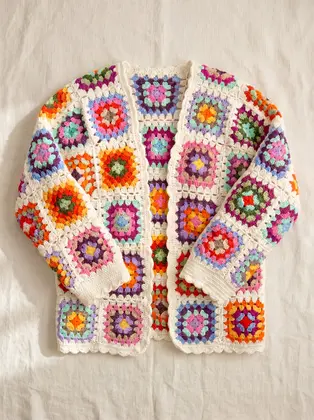
Construction tells you where a piece gets its texture and visual character. Knit, crochet, ribbing, and stitched panels are not interchangeable terms. A ribbed cuff is likely to look and behave differently from a straight sleeve edge; an open crochet pattern may show more of the layer underneath than a dense knit. A description that mentions squares, motifs, or color rings is explaining a surface pattern, not necessarily the garment’s weight or warmth.
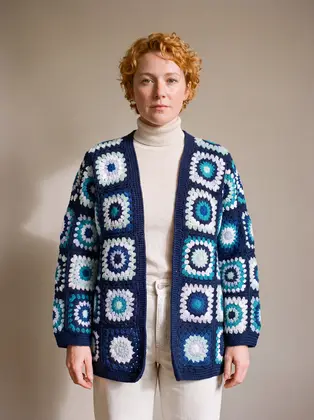
The Long Cardigan – Navy & Turquoise is described as an open, long cardigan with colored squares. Read those details as clues to styling: the open front makes it an easy layer, the length creates a vertical line, and the contrasting motifs make it a visible part of an outfit. They do not establish a precise thickness, stretch, or temperature range. If the product page does not state a construction detail you care about, ask before relying on an assumption.
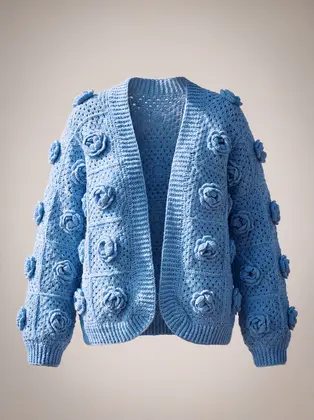
Also notice the finishing language. Ribbed edges, bands, and cuffs can define the outline; a straight edge may hang with a different visual effect. For example, the Rose Cardigan – Cornflower Blue is described with a wide ribbed band and tonal raised roses. That combination gives a shopper concrete visual information without needing to infer that the knit is heavy, fitted, or suitable for a particular climate. Separate what the description actually says from what the styling photograph suggests.
Read fiber claims precisely
Fiber content is one of the most useful facts in a product description, but only when it is specific. “Cotton blend” tells you cotton is combined with another fiber; unless the full composition and percentages are listed, it does not tell you what that other fiber is or how much of each is present. “Soft,” “breathable,” or “substantial” are descriptive impressions, not standardized performance guarantees. A blend’s hand and drape can vary with yarn, stitch structure, and finishing.
Look for a fiber breakdown on the product page or sewn-in label if you have a material preference, sensitivity, or care concern. Do not infer that a piece is all cotton, wool-free, hypoallergenic, or machine washable from a broad phrase. If exact composition is missing, contact the shop for confirmation. The tops collection can help you compare other layering shapes, but each item’s own fiber information should guide your decision.
Weight and warmth deserve the same caution. A dense-looking surface in a photograph may be lighter than expected, and an open stitch can still have a substantial feel. Description language can suggest intended use, yet it cannot guarantee warmth in a particular setting. Choose based on the details given and your own layering habits, rather than turning an adjective into a technical specification.
Use measurements to make a size decision
Check whether the page lists body measurements, garment measurements, or both. They answer different questions: body measurements describe the wearer, while garment measurements describe the finished piece. A cardigan’s chest width, body length, and sleeve length can be especially helpful because its fit depends on how much ease you want and what you plan to wear beneath it.
Compare measurements with a garment you like, laid flat and measured consistently. For a flat chest measurement, note whether the number is a half-width or a full circumference; product pages do not always use the same convention. Check shoulder placement and sleeve length if those affect comfort. If a size chart lists only a range of body measurements, use it as guidance rather than as a promise of identical fit across every design.
When details are absent or ambiguous, ask the RETROLIFE BOUTIQUE team to clarify the actual measurements and how they were taken. State the style and size you are considering, and mention what you want to layer underneath. That is more productive than asking whether an item “runs true to size,” since your preferred ease and proportions may differ from someone else’s.
Check care instructions before you commit
Care is not a safe place to guess. Fiber content, stitch structure, color combinations, and finishing can all affect how a knit garment should be handled. Do not assume that a cotton blend can be washed or dried in a particular way, and do not treat general advice for another sweater as instructions for this one. Follow the garment’s actual care label and the product-specific information supplied by the shop.
If the listing does not state a care method, ask for guidance before washing. Avoid applying heat, agitation, soaking, or a cleaning product based only on an assumption about the fiber. When washing is confirmed as appropriate, follow the stated instructions and handle the garment gently; if instructions are unclear or conflict, pause and seek clarification. The size and care page is a useful place to check general guidance, but the item label and confirmed product-specific directions take priority.
Storage matters, too. A knit can lose its shape if it is hung for a long period, especially if it is heavy or loosely constructed. Until you know the garment’s specific needs, folded storage is a sensible default, with the piece clean and fully dry. Keep sharp accessories and rough surfaces from catching open stitches, and address a loose thread carefully rather than pulling it.
Separate useful facts from styling language
Product copy often combines measurable details with mood-setting language. Color names, descriptions of a pattern, and styling suggestions can help you picture an outfit; they are not promises about exact color on every screen or a guarantee that the item will pair with a particular piece. Look for concrete nouns and dimensions first, then enjoy the editorial phrasing as context.
A quick decision check can keep the page readable:
- Shape: Is the length, sleeve, and front opening right for how you layer?
- Material: Is the fiber composition specific enough for your needs, or do you need confirmation?
- Fit: Can you compare actual measurements with a garment you already wear?
- Care: Are the item’s instructions clear, or should you ask before cleaning?
If those answers line up, the description has done its job: it has helped you make a considered choice without asking you to guess. When an important detail is missing, a short question to the shop is better than treating an appealing photograph or a broad adjective as evidence.