“One size” is a label, not a measurement. Before ordering, find out what the garment is designed to fit, how it is meant to sit on your body, and whether its shape accommodates the way you plan to wear it. A flexible accessory and a close-fitting top ask very different questions of a single-size description. A few careful checks now can save the disappointment of receiving something technically wearable but not comfortable or useful to you.
Find the measurements, not just the label
Look for finished-garment measurements first. Depending on the piece, the useful numbers may include chest or body width, length, shoulder span, sleeve length, opening circumference, or strap drop. A listing that says only “one size” leaves essential fit questions unanswered; do not translate that phrase into a promise that the item suits every body. If measurements are missing, ask the shop for the dimensions of the actual style before placing an order.
Compare garment measurements with a similar item you already own and like. Lay that item flat, smooth it without stretching, and measure the relevant areas in the same way the seller describes. For circumference, check whether the listed number is a flat width or a full-around measurement; doubling a flat measurement is only meaningful when the garment is laid in the stated position and has a simple shape. Ask for clarification rather than guessing. A few inches can change whether a top skims, clings, or pulls across the body.
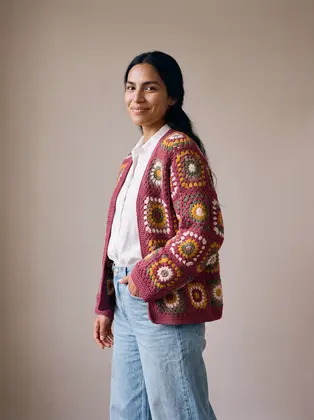
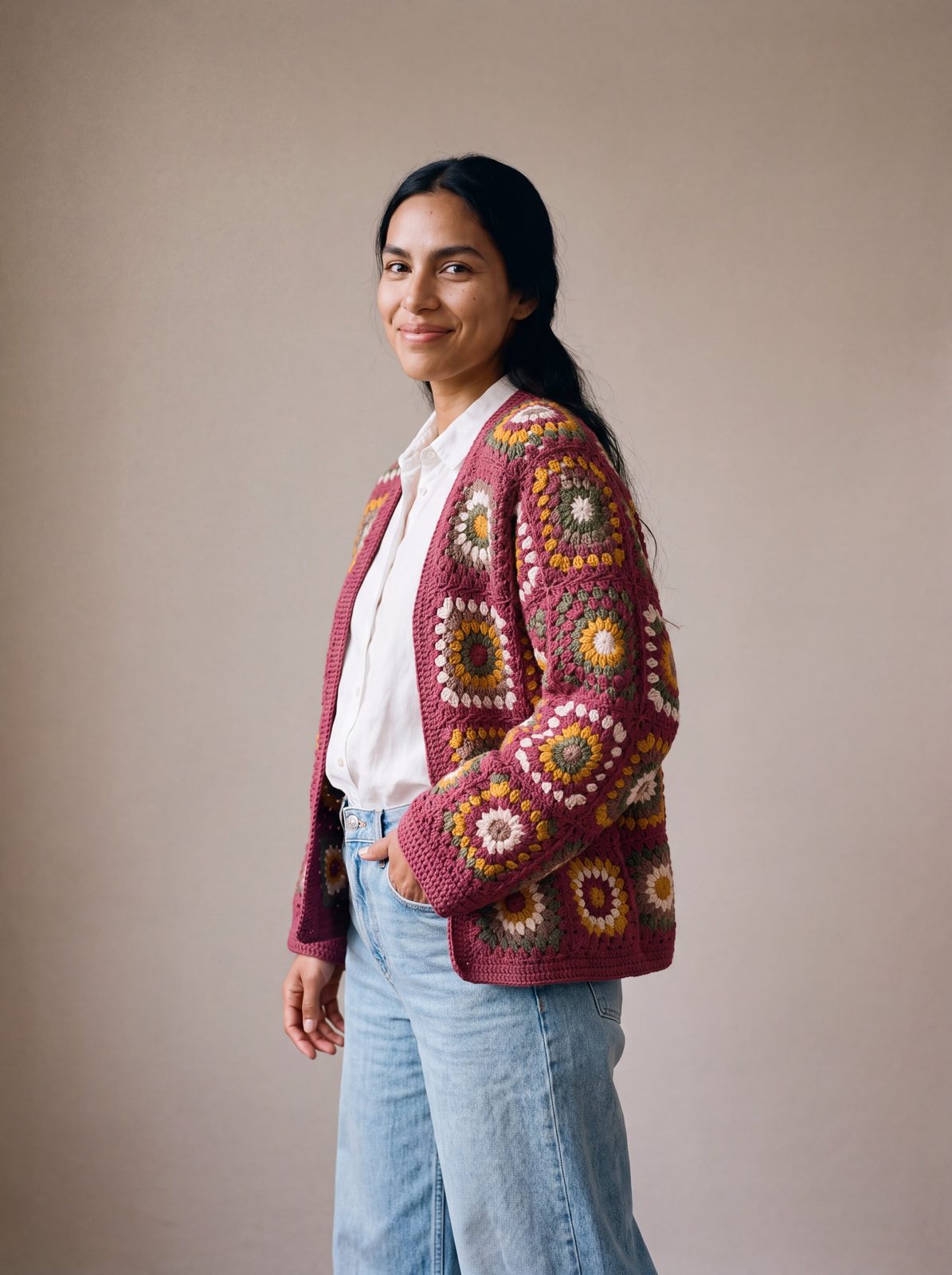
For an open cardigan, width does not tell the whole story because it is not designed to close across the front. Shoulder placement, sleeve room, and overall length may matter more. Compare the stated silhouette with the photographs and read the wording closely: “relaxed” and “oversized” describe style, but they do not replace dimensions. For an example of an open, hip-length layer, consider the Mosaic Cardigan in Burgundy & Mustard; use its own listing details rather than assuming every cardigan shares its proportions.
Read the shape and construction as fit information
Consider where a garment has room and where it does not. A straight body with an open front can be forgiving across the waist, while a narrow shoulder, fixed sleeve opening, or fitted neckline can set a more definite limit. A stretchy rib may adapt differently from a firm woven panel, but stretch is not infinite and should not be treated as a substitute for fit information. Textured or layered construction can also affect how much a piece drapes and how it feels over another layer.
Think about how you will wear it. If you want a one-size cardigan over a thin tee, your reference garment should be a similar layering piece. If you expect to wear it over a sweatshirt, measure over that outfit or allow for the extra ease in your comparison. Sleeve length can feel different when arms are bent; a body length that looks generous in a product photo may land differently on a shorter or taller frame. Where available, use model height and garment measurements as context, not as a guarantee that the same fit will result for you.
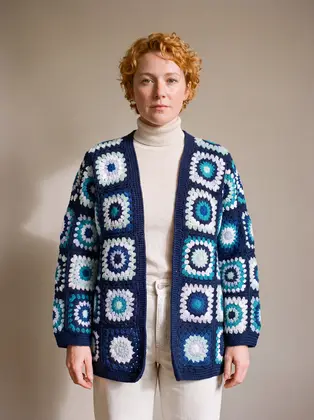
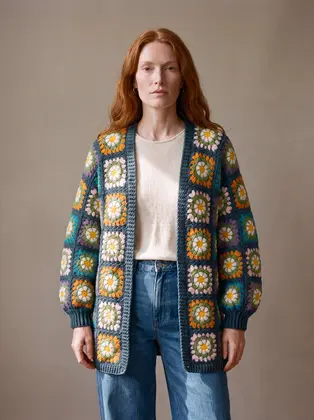
For a longer open layer, the Long Cardigan in Navy & Turquoise shows why length and layering intention deserve their own check. If you are comparing multiple options, browse the cardigan collection and assess each product page individually. A shared category does not mean a shared cut.
Check what “one size” means for this particular item
One-size accessories and clothing do not fit by the same logic. A hat, scarf, bag, and top each interact with the body differently. For a headwear piece, check the opening or circumference if provided, how it is intended to sit, and whether the product description indicates a close or relaxed shape. For a bag, check dimensions and strap drop against what you plan to carry and where you want it to rest. Do not use another category’s fit experience as a shortcut.
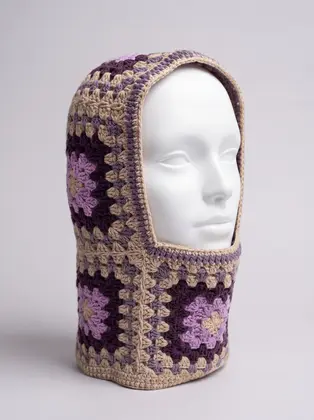
A balaclava is a useful example: the opening around the face and the depth over the neck are more relevant than a conventional bust measurement. The Sand & Plum Balaclava is listed as one size, but that label alone cannot tell you how it will feel around your face or how much coverage you prefer. Review the product description and images for its shape, and ask for exact dimensions if comfort depends on a particular opening or coverage length.
Likewise, an adjustable detail is only helpful if you know its range and placement. Ties, elastic, cuffs, and open fronts may offer flexibility, but none guarantees a universal fit. If there is no adjustment, treat that as a fixed measurement to verify. Shop the top collection for styles with different silhouettes, then compare the individual listing’s fit notes rather than relying on the collection label.
Use photos carefully and ask focused questions
Photos help you understand proportion, drape, and styling, but perspective can distort scale. A close crop may hide the hem; a loose pose may make a shoulder look roomier; an item photographed on one person will not show every fit outcome. Look across front, side, and back views when available. Notice where the hem falls relative to the model’s waist or hip, whether sleeves appear gathered or straight, and whether the item is worn open or fastened. These are useful clues, not measurements.
If a detail remains unclear, send a concise question before ordering. Include the product name and ask for the specific information you need: finished chest width, shoulder-to-hem length, sleeve opening, or the circumference of a head opening. Ask how a measurement was taken if the number could mean flat width or full circumference. A precise question is more likely to produce an answer you can use than “Will this fit me?” because fit depends on your proportions, preferred ease, and intended layers.
Check the shop’s current shipping, return, and exchange information before checkout, especially if a fixed-size garment is a close call. Policies can vary by product and order, so read the applicable terms rather than assuming an item can be returned. If you need further clarification, use the contact page before purchasing. The size and care information may also help you understand available guidance, but product-specific measurements and care directions take priority.
Make a practical yes-or-no decision
Before adding a one-size item to your cart, make sure you can answer three questions: What are the key finished measurements? Which parts of the design have flexibility, and which are fixed? Does the garment’s intended ease match how you want to wear it? If you cannot answer one, pause and ask rather than filling the gap with optimism.
A helpful comparison is more concrete than a size label. If a favorite cardigan has a shoulder width and sleeve length that work for you, keep those measurements in a note and compare them with future listings. For a top, check the area where you prefer ease and the length you like. For a small accessory, note the actual point of contact or carrying position. This simple reference makes shopping more consistent without pretending that bodies or garments are interchangeable.
Finally, treat materials and care claims with the same care as fit claims. A product description may give a general fabric indication, but do not infer exact fiber content, stretch recovery, shrinkage, or washing method unless the item’s own information confirms it. When material composition or care instructions are unclear, rely on the garment’s actual label and ask the shop team to confirm before cleaning. The best one-size purchase is not the one you hope will work; it is the one whose measurements, construction, and intended use make sense for you.