Crochet layers look their best when they keep their shape, and a little space in the closet makes that easier. The open stitches, dimensional motifs, and relaxed silhouettes that give a cardigan its character can also catch on neighboring hardware or slump under a heavy stack. Rather than treating every piece like an ordinary sweatshirt, give crochet a predictable place, a gentle fold, and enough room to be found without rummaging.
Give crochet its own breathing room
Start by choosing a section of the closet where the garment will not be pressed between stiff jackets or crowded against bags with buckles. Crochet does not need a precious display case, but it does benefit from less friction. A small stretch of hanging rail or a dedicated shelf is often more useful than scattering pieces among unrelated knits. Keep the space dry, clean, and away from direct sun where practical; persistent dampness and strong light are unhelpful for clothing generally.
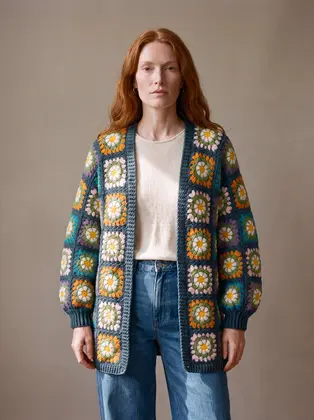
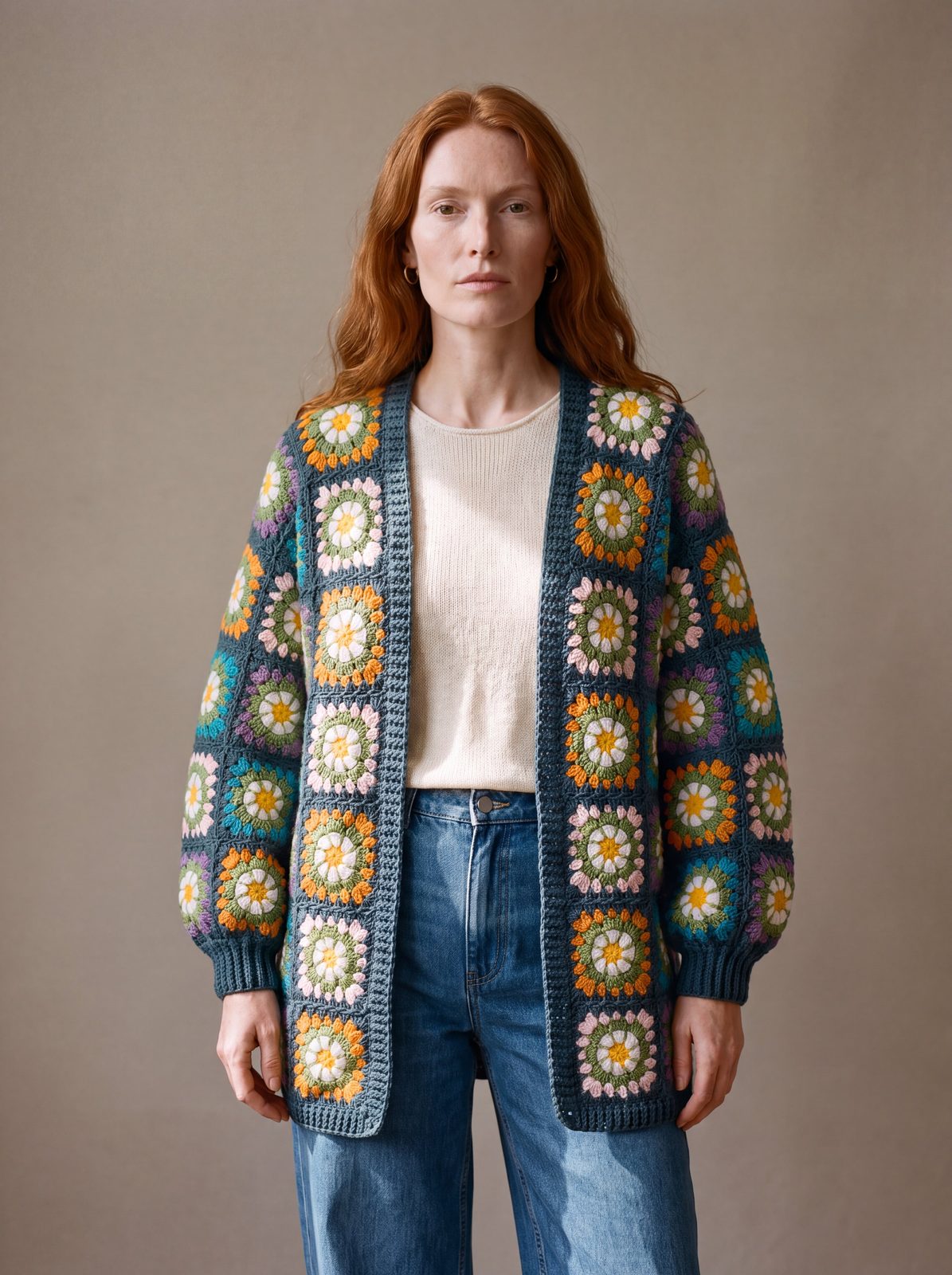
Group pieces by how you wear them, not just by color. Put the cardigan you reach for over everyday tees at the front, and reserve a shelf or divider for more delicate openwork and special-occasion layers. If you have several colorful squares, grouping them together makes outfit planning easier while preventing the search through a tightly packed row. A bold piece such as the Daisy Balloon Sleeve Long Cardigan – Teal can sit alongside other statement layers, with enough clearance for its fuller sleeves.
Choose a hanger or a fold based on the shape
There is no single storage method for every crochet garment. A light, compact cardigan may hang comfortably on a broad, smooth hanger if the shoulders remain supported and the body is not being pulled downward. Avoid thin wire hangers: they concentrate weight at narrow points and can distort shoulder lines. If a garment is long, heavy, loose, or already stretching under its own weight, folding it is generally the more considerate choice.
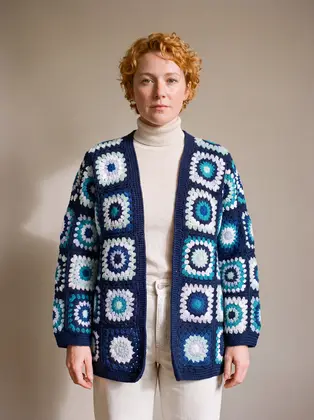
For a fold, lay the piece flat on a clean surface, straighten the sleeves without tugging, and fold them inward along the natural line of the body. Fold the garment into a broad rectangle rather than making a tight, hard crease. Store it flat on a shelf, ideally without a heavy pile above it. A cardigan like the Long Cardigan – Navy & Turquoise has length that can be awkward on a crowded rail; a broad fold prevents the hem from dragging and keeps it easy to retrieve.
Try the chosen method for a few days and look at the shoulders, cuffs, and hem. If you notice a hanger mark, a stretched point, or a sleeve pulled out of line, change the setup. The aim is not to force a particular storage rule, but to let the garment rest without tension.
Make shelves easy to navigate
Open shelves can turn into a stack of forgotten layers unless each pile stays modest. Keep only a few garments in a stack, with the pieces you wear most often near the top. A shelf divider or a shallow basket can keep folded cardigans from sliding into one another, but choose a smooth, roomy container rather than compressing crochet into a small bin. Leave enough space to lift one layer out without dragging the rest along.
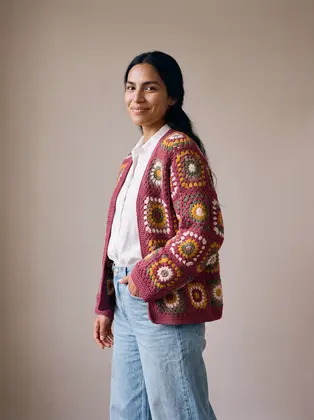
Use simple visual cues for seasonal rotation. You might place warm-toned pieces together, keep lighter colors in a separate stack, or designate one shelf for everyday layers and another for occasional ones. The point is to find a garment in seconds, not to create a rigid color system. The Mosaic Cardigan – Burgundy & Mustard, for example, may be easiest to locate in a small group of richly colored pieces rather than hidden among plain basics.
Keep accessories with outfits only when they cannot snag the yarn. Belts, brooches, and jewelry belong in their own tray or drawer, not pinned to an open-knit garment in storage. Likewise, do not hang bags on crochet shoulders or drape other clothes over sleeves. These small habits prevent tension and reduce the chance that a hook or clasp catches a loop.
Protect open stitches from snags
Before putting a layer away, check that closures on nearby garments are fastened and that rough edges are not facing it. Zippers, hooks, sequins, and exposed jewelry findings can catch open stitches. If your closet is especially crowded, place crochet in a breathable garment cover or keep it on a separate shelf. Avoid sealing a garment away while it is damp or in a way that traps moisture.
When removing a folded piece, lift it with both hands instead of pulling one sleeve or the neckline. If a loop catches, pause and ease the surrounding fabric back; do not yank the strand or cut it. A loose end or pulled stitch may need careful attention, and persistent damage is a reason to seek an experienced repair person rather than improvising with scissors.
Give the closet a quick reset when you change outfits: return the garment to its assigned hanger or fold, and make sure neighboring pieces are not resting on top of it. This brief reset prevents the familiar pile that gradually squashes a carefully stored layer. Browse the broader cardigan collection for silhouettes that work as layering pieces, or explore all collections to organize your wardrobe around the clothes you actually wear.
Refresh carefully before storing for a season
Before putting a crochet piece away for a longer break, check the actual product care label and any guidance supplied for that garment. Fiber content and construction can vary, so do not assume that one washing method suits every open-knit layer. If instructions are unclear, ask the RETROLIFE BOUTIQUE team through contact before cleaning. Avoid vigorous brushing, twisting, or a heat treatment unless the garment's care directions specifically support it.
Make sure a recently worn piece is fully dry and aired before it returns to a shelf. Treat a visible mark according to the label rather than applying an untested solvent or aggressive spot treatment. For detailed garment-specific guidance, consult size and care information. When in doubt, pausing to confirm is preferable to risking a snag, color change, or altered shape.
For seasonal storage, fold the clean garment loosely and place it in a clean, dry, breathable space. Keep it away from shoes, cosmetics, and anything likely to leak or transfer color. Do not add scented products directly against the yarn. Check stored pieces occasionally, especially if the closet is prone to dampness, and return them to their regular shelf when the season changes.
Build a routine that lasts
A well-organized closet does not require a complicated system. Choose a protected spot, fold heavier or longer layers, use broad smooth hangers only when the garment sits securely, and keep stacks low enough to lift from easily. Leave accessories and snag-prone items elsewhere, and follow the care information for each specific piece.
Most importantly, let your storage reflect the way you dress. Put favorite layers within reach, leave room around their sleeves and hems, and return them to the same place after wear. With those simple habits, crochet remains visible, comfortable to style, and less likely to be stretched or caught in the daily rush.