A cardigan’s shoulders stretch when its weight hangs from a narrow point for hours. The fix is not a special hanger; it is choosing storage that supports the garment across its body. Fold most knits, give heavier or longer styles a broad resting place, and keep them dry and uncompressed. A little care at the moment you put a cardigan away can prevent those familiar hanger bumps and help the shape look intentional when you reach for it again.
Why shoulders take the strain
Knitted fabric is made of interconnected loops, so it can yield under a steady pull. On a hanger, the body’s weight travels downward from the shoulder seams or the narrow ends of the hanger. Over time, that load can leave pointed ridges, lengthen the shoulder line, or make the front hang unevenly. Open, textured constructions and substantial long cardigans can be especially awkward on a conventional hanger: the garment may be both weighty and easy to snag.
That does not mean every cardigan must be treated like a fragile heirloom. It means matching the storage method to its length, weight, and construction. A light, close-fitting layer worn often may tolerate a short time on a well-shaped hanger, while a dense or long piece is better stored folded. If a cardigan has a distinctive sleeve or shoulder shape, preserve that shape by supporting it evenly rather than forcing it onto a thin wire hanger.
Fold it so the shoulders rest naturally
Start with a clean, dry surface. Fasten a button or two if that helps the front stay aligned, then lay the cardigan face down and smooth it gently without pulling at the cuffs or hem. Fold each sleeve inward across the back, following its natural line. Bring one side of the body toward the center, then the other, keeping the shoulder area broad and flat. Fold the lower portion upward once or twice, depending on the depth of the shelf. The aim is a relaxed rectangle, not a tightly compressed bundle.
For a long cardigan, fold the bottom up in manageable sections rather than making a tiny, dense packet. Avoid sharp creases directly across raised details, thick seams, or decorative surface work; shifting the fold slightly can reduce pressure on those areas. Do not tug the shoulders into perfect symmetry. If the knit settles a little differently on each side, let it. The garment should rest rather than be stretched into a shape.
Place folded cardigans in a stable stack with heavier pieces below lighter ones. Keep the stack low enough that you can remove one without dragging the others forward. Pulling a cardigan from the bottom of a tall pile stretches sleeves and shoulder panels even when the clothes are folded. If the shelf is crowded, store fewer pieces there or use separate cubbies, so each item can be lifted out by supporting its body.
Choose a shelf or drawer that fits the knit
A shelf gives a cardigan room to lie flat and makes it easy to see what you own. Leave a little space around the stack so the fabric is not squeezed against a wall or wedged beneath another pile. A drawer works well for lighter cardigans when it is not overfilled; lay each piece flat and lift it out rather than hooking a finger into a sleeve and pulling. For textured designs, a clean shelf liner or smooth drawer interior can help prevent snagging.
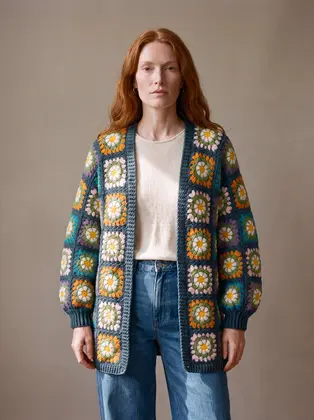
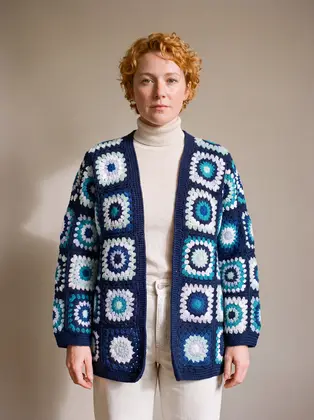
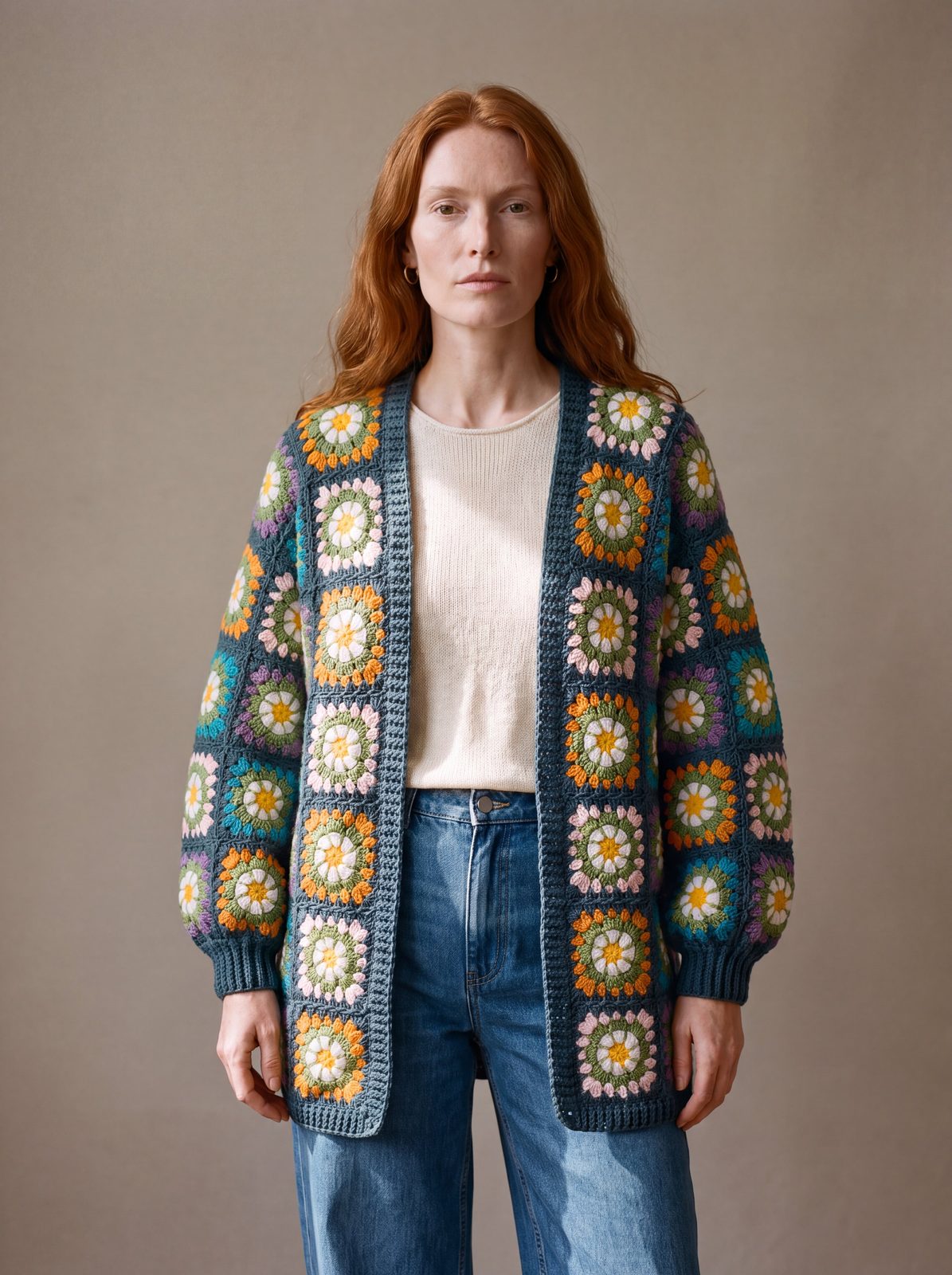
Think about the garment’s proportions as well as the storage furniture. A long open style, such as the Long Cardigan – Navy & Turquoise, needs a broad fold so its length does not become a compact, heavy lump. A shorter cardigan can be folded into a smaller rectangle, but do not let a bulky stack press down on the shoulders. The Daisy Balloon Sleeve Long Cardigan – Teal has visibly full sleeves; fold them inward without crushing their volume under a pile of dense clothes.
When closet space is limited, consider rotating the cardigans you wear most rather than hanging every knit for convenience. Store less-used items folded in a breathable fabric storage bag on a shelf. Avoid sealing away a garment before it is fully dry, and do not pack it so tightly that air cannot circulate. Check the item periodically, particularly if it is stored for a long stretch or in a closet that tends to feel damp.
When hanging is reasonable—and how to do it
Hanging is most useful for a cardigan that is light, frequently worn, and shaped in a way that sits comfortably on a hanger. If you choose that option, use a wide, smooth hanger with rounded shoulders that roughly follow the garment’s shoulder line. A narrow hanger concentrates weight at two points. Never use a wire hanger for a knit you want to keep in shape, and avoid hangers with rough edges that can catch loops.
One alternative is to fold the cardigan in half lengthwise, then place the folded midpoint over the hanger’s bar so the body and sleeves drape on both sides. This supports the garment at a broad fold instead of suspending it from its shoulder seams. Keep it from rubbing against a crowded row of clothing, and do not leave it hanging for months simply because it is out of sight. If it begins to look elongated or the shoulders show pressure marks, move it to a shelf.
A hanger is not a cure for a crowded closet. If the cardigan is squeezed between coats, its sleeves can be pushed into awkward angles and the shoulder area can remain under pressure. Give hanging knits enough room to fall freely. For a highly textured, handworked, or unusually heavy piece, folding is generally the simpler choice unless the product’s own care information advises otherwise.
Prepare cardigans before seasonal storage
Before putting a cardigan away for a season, check the care information attached to that specific product. Fiber blends and construction differ, so do not assume that a familiar-looking knit can be washed, soaked, steamed, or dried in a particular way. Follow the actual label; if it is missing or unclear, ask the RETROLIFE BOUTIQUE team for guidance rather than guessing. For broader garment-care questions, see Size & Care.
Store only garments that are clean and completely dry. Freshen or clean them according to their instructions, then allow adequate drying time before folding. Do not put a damp cardigan into a closed bag or drawer. If you notice a snag, loose thread, or small repair need, address it carefully before storage; pulling at a loop can make the problem larger. Avoid hanging a wet or heavy damp knit, since added water weight can increase strain.
Choose a cool, dry, reasonably ventilated closet or drawer away from direct sunlight and sources of moisture. A breathable cotton storage bag can shield a folded item from dust while avoiding the sealed, compressed feeling of a plastic bag. Keep the storage area clean and check it from time to time. These are practical precautions, not a substitute for product-specific care instructions.
Restore the shape without pulling
When you take a cardigan out, let it rest flat for a little while. Smooth the shoulders and sleeves with your hands, guiding the fabric into place without tugging the ends. If a fold line remains, consult the care label before using any heat, steam, or moisture; different fibers respond differently. Never stretch the shoulders to make them match a hanger’s outline. Gentle handling and time are safer than trying to force the knit back into shape.
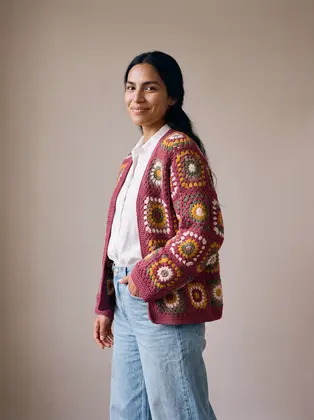
If a cardigan has spent a short time on a hanger and developed small bumps, remove it and lay it flat before deciding what to do next. Do not pull loops or press a hot iron directly onto textured stitches. Follow the label or ask the team if the best approach is uncertain. For shoppers comparing styles and shapes, browse the cardigan collection or explore all collections. The Mosaic Cardigan – Burgundy & Mustard is one example of a hip-length, open style that can be folded flat between wears.
Fold cardigans loosely, give them room, and reserve brief hanging for pieces that suit it. Support the body rather than making the shoulders carry the garment’s weight. That simple routine helps a favorite knit keep its relaxed line.