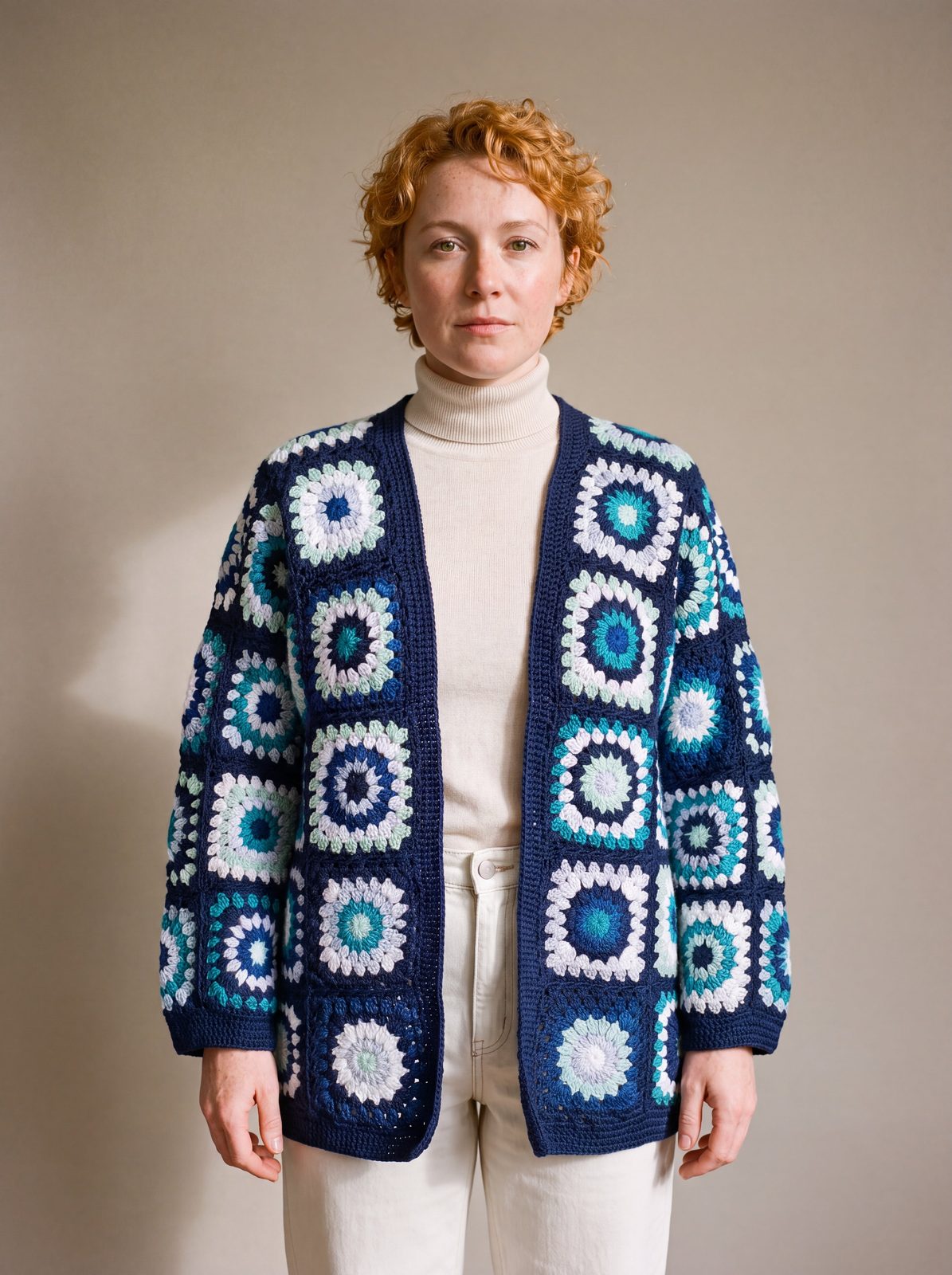
A snag is not always a sign that a garment is coming apart. It may be one small loop caught on a bag clasp, a rough edge on a desk, or a neighboring piece of jewelry. The useful response is patient and specific: stop the friction, look at the structure, and avoid pulling the thread to see what happens. A little restraint can keep a minor surface loop from becoming a larger repair.
Pause before you touch the thread
When you notice a loose loop, take the garment off if practical and set it on a clean, flat surface. Continuing to wear it while the thread catches repeatedly can lengthen the loop or tug neighboring stitches. Resist the instinct to yank, cut, or knot it. Pulling a loop tight can distort the fabric around it; cutting may leave an end that unravels, particularly in a knitted or crocheted structure. First identify what you are seeing: a single raised loop, a short loose end, or a run of stitches that has begun to open.
Use good light and check the reverse side as well as the face. If the thread is intact and simply drawn outward, the garment may be recoverable with gentle repositioning. If you see a broken strand, widening gap, or several loose stitches, stop handling that area and consider a repair professional. The right response depends on the fabric and construction, not just how small the snag looks from the front.
Know the difference between a snag and a loose end
A snag is usually a loop pulled out of its normal place while the yarn or thread remains continuous. It can look dramatic because it sits above the surface, but the surrounding fabric may still be sound. A loose end, by contrast, is a short tail that was already free or has worked out from a seam or finishing point. A run is more concerning: in a knit, one broken yarn can release a column of stitches, and in crochet an open join can affect the neighboring motif.
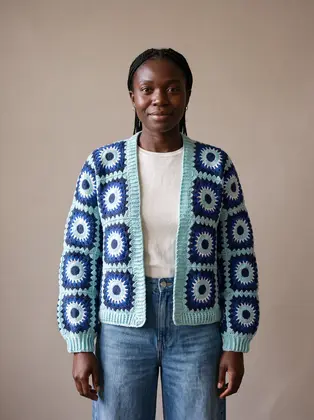
Texture matters. A smooth woven shirt may show a single pulled thread running across the cloth. A textured knit such as the Ribbed Cuff Cardigan in Navy & Aqua has dimensional stitches that can make a harmless loop harder to spot at first glance. Open crochet, raised motifs, and loosely structured pieces need especially light handling: an exposed strand can be part of the construction rather than an accidental loose thread. Do not assume that every irregularity should be pulled back into place.
Try a gentle repair only when the yarn is intact
For a single intact snag, lay the fabric flat without stretching it. With clean hands, use a blunt-ended tool designed for snag repair, or a smooth, blunt needle, to guide the loop toward the wrong side through the nearest opening. Work slowly and avoid piercing the yarn. The aim is not to tighten the fabric; it is to distribute the extra slack into the surrounding stitches so the face lies more evenly. A small crochet hook can help with some knits, but it should not be forced through dense or delicate fabric.
Once the loop is on the reverse, leave it loose rather than tying a knot. A knot can create a hard bump, pull the fabric, or snag against another layer. If the remaining loop is long, secure it only with a repair method suitable for that specific construction, ideally after advice from a tailor or knitwear repair specialist. Do not trim a strand just because it looks untidy. Cutting a continuous yarn can turn a cosmetic snag into an actual hole or run.
For a short end at a seam or edge, do not pull it to test its hold. If the seam is open, stitches are missing, or the end appears to anchor a crocheted motif, professional repair is safer than improvising with glue or a household knot. Adhesives can stiffen fibers and may not be removable without damage. A gentle approach sometimes means stopping rather than attempting a fix.
Give handmade and textured pieces extra room
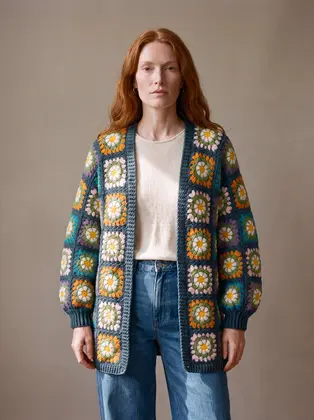
Surface texture is part of the look of many statement layers, and those details deserve a little space. A crocheted or patchwork cardigan may have openwork, joins, and raised stitches that can catch on zippers, hook-and-loop fasteners, rough upholstery, or jewelry. When layering, check that the closure of a bag is not rubbing against the same spot during every step. Put on rings and bracelets after dressing, and remove them before taking off a delicate knit.
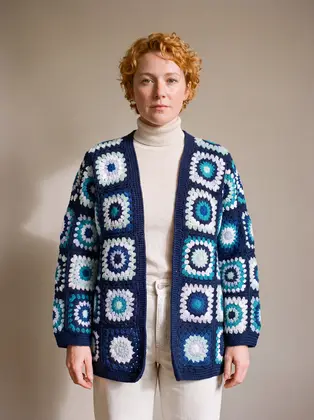
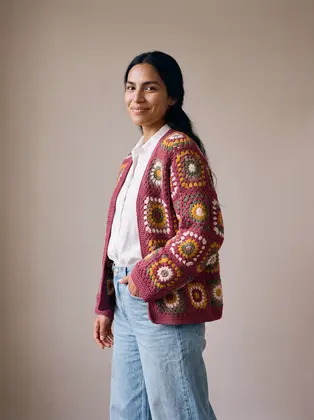
That does not mean textured clothing must be kept away from everyday life. It means paying attention to the likely points of friction: under the arm, at a cuff, along the front edge, and where a crossbody strap rests. The long open front of the Long Cardigan in Navy & Turquoise can be styled over a simple smooth layer, while keeping bag hardware from dragging across the fabric. For a shorter, colorful layer such as the Mosaic Cardigan in Burgundy & Mustard, a smooth cotton tee beneath it can reduce friction at the sleeves without hiding the texture.
When putting a piece away, close zippers and fasteners on neighboring garments and avoid crushing textured items under sharp accessories. Fold rather than hang if the garment's weight or construction makes hanging seem likely to stretch it; when in doubt, follow the item's care information. The cardigan collection includes varied constructions, so one storage approach should not be treated as universal. Check the garment itself before choosing a method.
Prevent repeat snags without overthinking your outfit
Prevention is mostly about noticing contact points, not wrapping a garment in special handling. Before leaving home, glance over the inside of a bag and the edges of any fasteners that sit against your clothes. Smooth a rough nail edge, tuck away a dangling bracelet clasp, and take care when passing close to rough wood or brick. If a piece has already snagged in one location, change how you carry the bag or layer the garment rather than repeatedly repairing the same spot.
Laundry also creates avoidable friction. Turn garments inside out when appropriate, separate pieces with hooks or zippers, and use a wash method only if the care label permits it. Do not infer a safe cycle, water temperature, or drying method from appearance alone: fiber content and construction vary. The product's actual label and confirmed care information should guide the decision. Our size and care page is a useful place to check general guidance, but it does not replace the instructions attached to a specific garment.
For delicate knits, avoid tossing them loosely into a load with abrasive items. A laundry bag may reduce contact, but it is not a substitute for checking the label or selecting a suitable wash approach. Never use heat or aggressive agitation as a way to make a snag disappear. Drying and pressing choices can affect shape and texture, so follow the garment-specific directions instead of relying on a one-size-fits-all trick.
When to ask for a repair
Seek help when the yarn is broken, a seam is separating, a run is growing, the snag sits in a prominent or load-bearing area, or the garment has a construction you do not recognize. A repair professional can assess whether the loop can be redistributed, the yarn should be secured from the reverse, or a stitch needs rebuilding. Bring the garment as it is; avoid trimming or tugging the area before an assessment. If you are unsure whether the issue is a normal feature or damage, clear photographs and a brief description can help the team understand what you are seeing. You can use the contact page to ask for guidance.
Care is not measured by never encountering a loose thread. It is the habit of responding calmly, using the least force necessary, and knowing when a repair is beyond a quick home adjustment. Put the garment down, inspect both sides, and protect the surrounding stitches. That simple sequence gives you a better chance of preserving the fabric—and keeps one small snag from becoming the center of your day.