A boutique knitwear assortment earns its space when customers can see how each piece fits into a real wardrobe. For retail buyers, that means balancing an immediate point of view with the familiar shapes and colors people reach for repeatedly. Rather than buying several versions of the same eye-catching cardigan, build a small, legible mix: one or two focal pieces, versatile layers, and enough variation in length, color, and texture to serve different outfits.
The goal is not to predict every customer’s taste. It is to make the choices on the rack feel intentional, easy to compare, and useful beyond a single styling moment. Start with the role each piece should play, then let color, silhouette, and merchandising support that role.
Plan the assortment around outfit roles
Before selecting colors, list the jobs knitwear needs to do in your store. A customer might want a light open layer to wear indoors, a substantial cardigan that stands in for a casual jacket, or a distinctive piece that gives a simple outfit personality. These are different needs, even when all products share a cardigan label.
Think in outfit combinations rather than isolated items. A hip-length cardigan can sit naturally over a tee and jeans; a longer open-front style can layer over a dress or create a vertical line with trousers. Texture also changes the role: a quiet knit can finish a printed outfit without competing, while a square-patterned piece can become the visual center of a plain base layer. If two candidates serve the same customer, outfit, and season equally well, ask whether both are necessary.
Use the cardigan collection as a practical reference point for comparing lengths, grounds, and pattern scale. A range of silhouettes creates more meaningful choice than a row of near-identical colors. Buyers can also browse the broader collections to consider how knitwear connects with the rest of the shop’s wardrobe offer.
Balance statement pieces with easier entry points
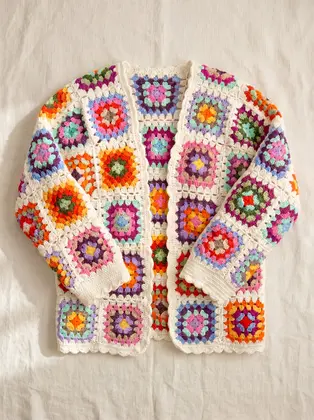
Colorful crochet, bold motifs, and high-contrast squares are compelling on a rack, but they ask the shopper to make a styling decision. Pair that visual energy with pieces that feel straightforward to wear. A customer who hesitates at a bright all-over pattern may respond to a darker ground with a few lively accents, or a tonal motif that reveals its detail at closer range.
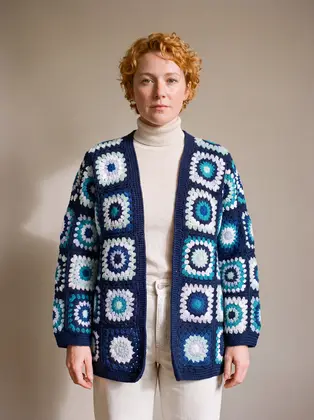
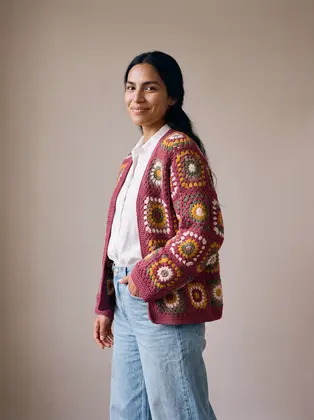
For example, the Mosaic Cardigan – Burgundy & Mustard combines mustard, sage, taupe, and cream within a burgundy frame. The darker edge gives the palette cohesion, making it easier to imagine with neutral separates. The Long Cardigan – Navy & Turquoise offers a different proposition: a long open shape and blue-toned squares that can work with denim or a simple dress. Neither needs to be treated as a universal basic; their value lies in giving customers distinct but understandable choices.
A useful buy has contrast without confusion. If every item is a showpiece, shoppers may struggle to find a starting point. If every item is restrained, the selection can lose its identity. Consider the visual weight of a piece from across the room, then its detail up close. That two-distance test helps prevent a collection from becoming either noisy or forgettable.
Use color with a clear point of view
Choose a limited color story that repeats in deliberate ways. A shared dark ground, a recurring cream detail, or related shades of blue can create continuity even when motifs differ. Repetition gives the rack rhythm; controlled variation keeps it from looking like a uniform. Consider the colors your customers already wear and the separates in your store that can anchor brighter knits.
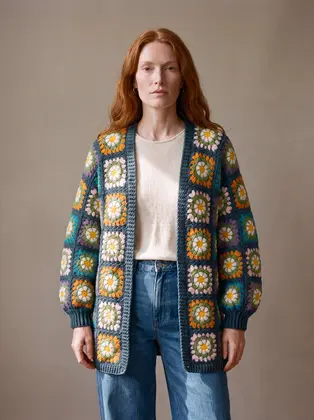
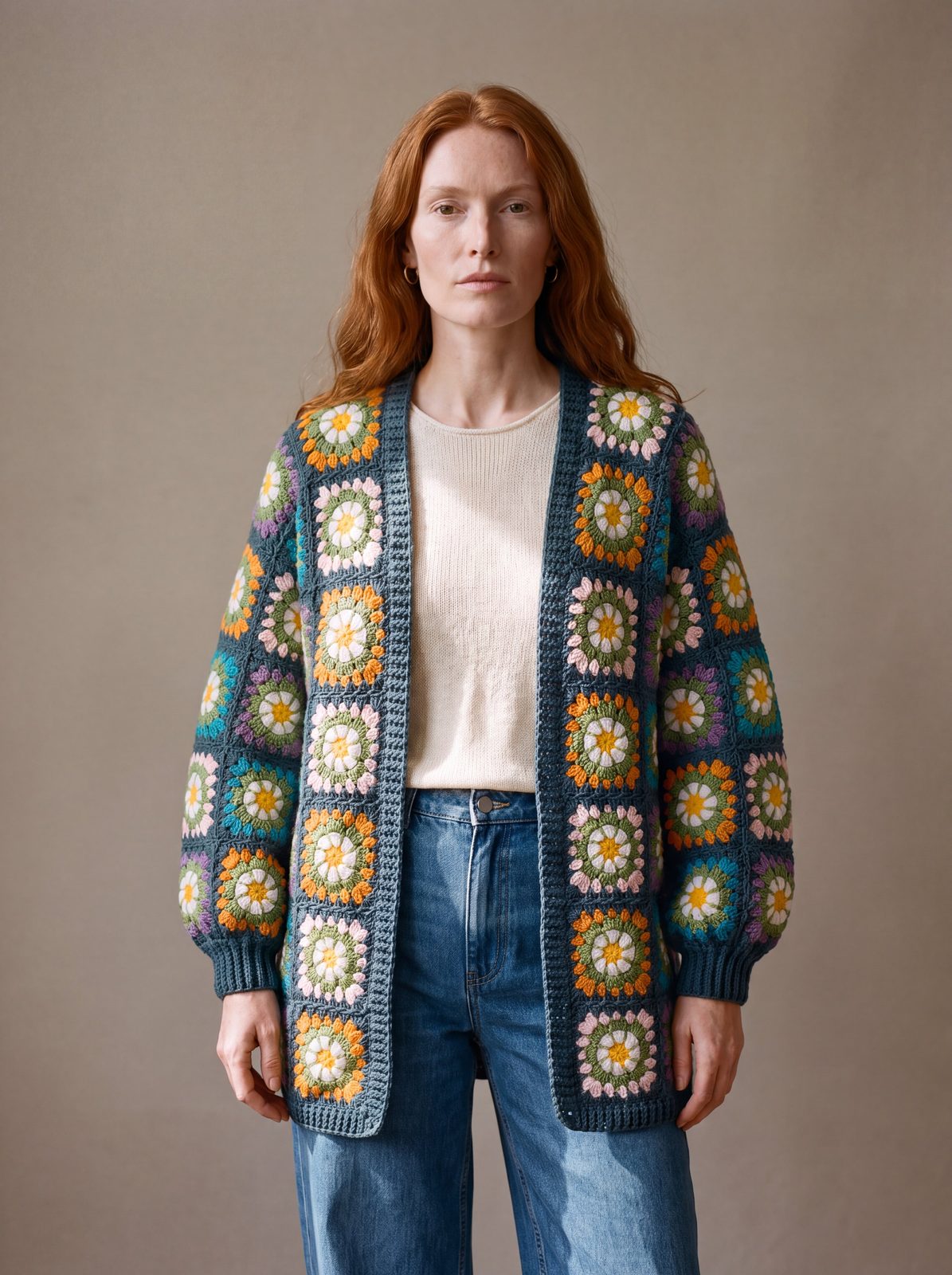
When evaluating a palette, imagine it beside likely companions rather than against a blank studio background. A teal cardigan with multicolored floral squares brings a lively focal point; the Daisy Balloon Sleeve Long Cardigan – Teal has a deep ground that holds the daisy colors together. It may appeal to a customer ready for a more expressive layer. To make the choice approachable, show it with simple cream, denim, or another quiet base. Avoid buying multiple statement palettes that all demand the same styling space unless the store has a clear reason to support that breadth.
Color balance also matters across the fixture. Grouping related tones can help shoppers compare, while a deliberate contrast at the end of a rack can draw the eye into the selection. The aim is to make differences visible, not to force every item into a single palette.
Buy for silhouette, layering, and fit confidence
Length and volume affect whether a knit feels easy to wear. Open-front cardigans can be layered over different necklines, but sleeve fullness, body width, and overall length still shape the look. A long cardigan has a different presence from a hip-length style; a balloon sleeve reads more expressive than a straight sleeve. Buyers should not assume that one silhouette suits every customer simply because it is visually appealing.
Review available product measurements, size ranges, fit notes, and photographs before committing. Compare the garment with familiar pieces in your assortment and consider what a shopper may wear beneath it. A bulky base layer may need more room than a fitted tee. If sizing or material behavior is uncertain, confirm the details with the product information and team rather than inventing an assurance. Direct customers to the actual garment label and verified care guidance for fiber and maintenance questions.
Make fit information easy to find both online and in store. A concise note about intended layering, actual measurements, or the model view—where verified—can help customers decide without implying that all bodies will experience a fit the same way. The size and care guide is a useful place to direct shoppers for verified general information, while product-specific details should remain tied to the item itself.
Merchandise the story without overstyling it
On the sales floor, give customers a quick read of the assortment. Keep similar lengths together when comparison is useful, or arrange by color when the visual story is stronger. Leave enough room for textured and openwork pieces to be seen clearly; crowded sleeves and overlapping fronts hide the details that justify a closer look.
Build simple outfit suggestions around each focal knit. A bold cardigan can sit beside a plain top and denim; a quieter layer can be shown with a patterned dress. A single accessory or complementary garment may clarify the use, but too many props can make a piece seem harder to wear than it is. Online, use clear product imagery and captions that describe observable features—length, opening, sleeve shape, and colors—rather than unsupported claims about warmth, fiber performance, or care.
Staff can help by asking what the customer wants to wear the knit with, not by pushing a single “right” outfit. That question turns styling into a useful conversation and can reveal whether the shopper is seeking a versatile layer or a standout piece. Keep answers grounded in the product’s confirmed description and measurements.
Review the buy before adding depth
When considering additional units or options, look at the assortment as a whole. Which silhouette is missing? Are several pieces competing for the same customer and occasion? Does the color mix include a clear bridge between the easiest-to-wear layer and the most distinctive design? These questions are more useful than adding depth simply because a print is attractive.
Use your own store’s sales and customer conversations to inform future decisions, but separate observation from assumption. A strong response to one color does not automatically mean every related color will perform the same way. Likewise, a slow start may reflect placement, styling, or timing rather than the intrinsic appeal of a garment. Review results alongside how and where the pieces were presented.
For retailer-specific questions about ordering or product details, use the wholesale information page or contact the team for confirmation. A considered knitwear assortment does not need to be large to feel complete. When each piece has a clear role, a coherent visual relationship, and honest fit information, customers can make confident choices—and the boutique’s point of view comes through without overwhelming the wardrobe.