A knitwear size is a starting point, not a verdict. The same letter can describe a neat cardigan, a roomy layer, or a silhouette with deliberately full sleeves, because construction and intended shape matter as much as the number on a label. Instead of asking whether a garment is simply true to size, decide what you want it to do: skim a tee, sit over a shirt, or act as the most substantial layer in an outfit. That practical question makes fit easier to judge than a universal chart ever could.
Start with the garment’s shape, not the label
First identify the silhouette. An open cardigan has no closure to define a fitted waist, so its front edges naturally fall where they fall. A long style may cover the hips and create a vertical line; a shorter piece may finish near a waistband. Neither is automatically more or less fitted. Look at the product description and images for cues about length, sleeve shape, and whether the body is described as straight, relaxed, or close. Those details tell you more about the intended look than a size letter by itself.
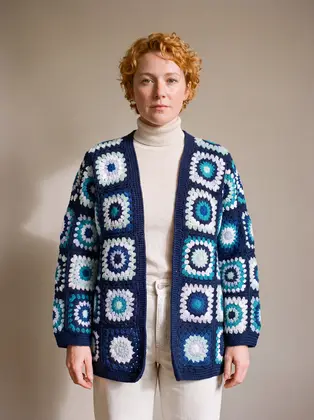
For example, the Long Cardigan – Navy & Turquoise is described as falling past the hips and hanging open. If you want that long line over a dress or tee, prioritize the way its length and front opening work with your proportions. A shorter cardigan might be more convenient with high-rise trousers, but that is a styling preference, not a sizing rule. Check the product page for its available sizes and garment details rather than assuming every style in the category shares one cut.
Use your usual clothes as a fit reference
Think about the garments you reach for most often and how they fit where movement matters. A tee that feels comfortable across the chest and upper back can serve as a useful reference for a close layer. If you expect to wear a cardigan over a button-front shirt, compare it with a shirt you already layer comfortably. A bulky sleeve beneath a narrow armhole can feel restrictive even when the body has plenty of room, so consider the full outfit rather than measuring the torso alone.
When measurements are available, compare them with a garment you own rather than trying to translate a body measurement directly into a size. Lay a similar piece flat and measure it in the same way the product page describes. Pay attention to whether the stated figure is a garment measurement or a body measurement; those are not interchangeable. If the listing does not provide a measurement you need, ask the team through contact before deciding. Do not infer precise dimensions from a model photograph, since angle, posture, and styling change how a garment appears.
Ease is the room between your body and the garment. Positive ease feels looser; less ease gives a closer impression. The right amount depends on the layer underneath and the effect you prefer. You do not need to calculate a perfect number to make a sound choice. Instead, check whether the shoulder area, upper arms, and front opening will feel comfortable in the real outfit you have in mind.
Read sleeve volume and shoulder placement together
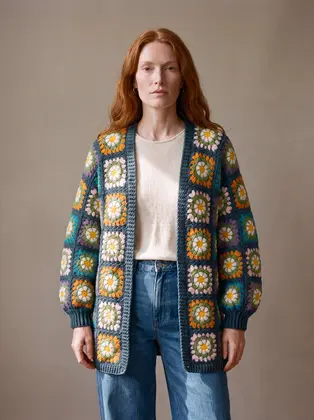
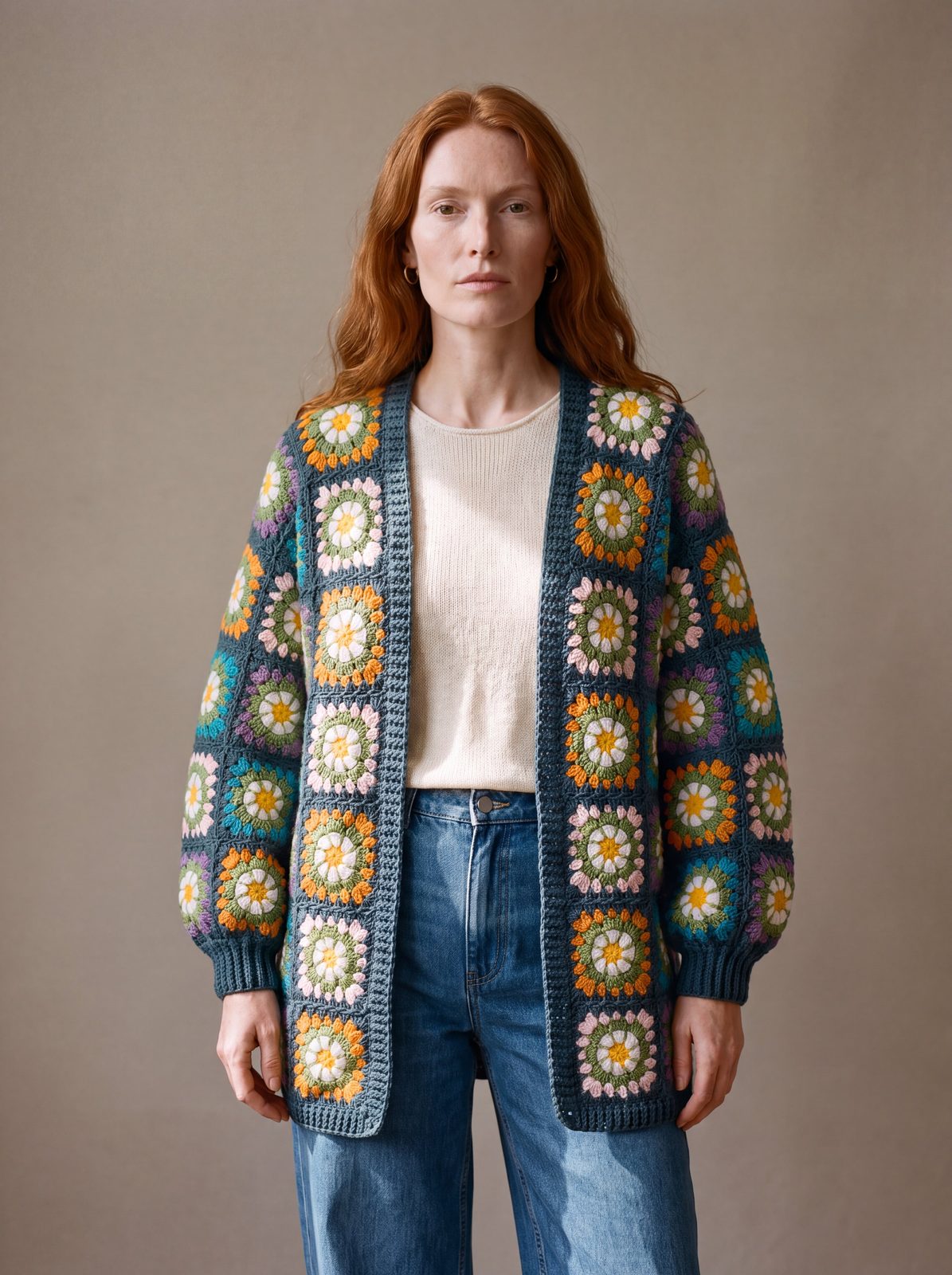
Sleeves often determine whether knitwear feels effortless or cumbersome. A balloon sleeve is designed to hold volume, often narrowing toward a cuff. That extra shape is part of the design rather than proof that the garment is oversized everywhere. The Daisy Balloon Sleeve Long Cardigan – Teal, for instance, combines a long body with softly full sleeves and ribbed cuffs. Imagine the cuff at your wrist and the sleeve volume over your usual top; ask whether you want that presence or a straighter line.
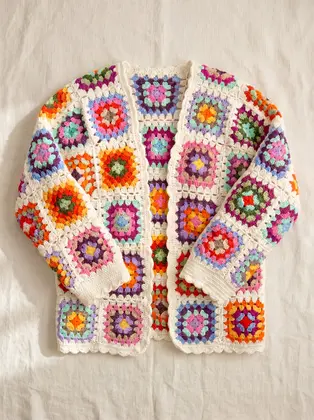
Shoulder seams can also offer clues, but not every knit uses a conventional set-in shoulder. A dropped shoulder is meant to sit farther down the upper arm, while a more defined shoulder can feel tidier and may limit a thick underlayer. On a textured or crocheted garment, the joined squares and edges contribute structure, so it may not drape like a fine, smooth pullover. Consider mobility: can you reach forward, bend your elbows, and wear the garment without pulling across the back? Those everyday movements are a better test than a static front view.
Compare sleeve length with your preference, too. Some people like a cuff to meet the wrist bone; others push sleeves up or prefer a little extra length. A ribbed cuff can hold a sleeve in place, while an open or straight edge may sit differently. Product photographs can help you understand the style, but they cannot guarantee the same cuff position on every wearer.
Consider length, proportion, and the layer underneath
Length changes the balance of an outfit. A cardigan that covers the hips can pair easily with slim or straight bottoms, while a similarly long shape over a loose tunic may create more volume than you want. Try imagining the hem against the rise of your trousers or the waist of a skirt. If you wear dresses, consider whether the cardigan ends above, at, or below the dress hem. The goal is not to obey a rule about flattering proportions; it is to see whether the outline feels intentional to you.
Layering adds another practical variable. A light tee takes up less space than a shirt with a collar or a sweater underneath. Textured stitches and decorative squares may also have a different feel from a fine-gauge knit. For an open cardigan, a little extra room across the back can make reaching and moving easier, while too much width may cause the front edges to fall farther apart. If a specific silhouette is important, use the item’s own details and the team’s confirmed information rather than guessing from another cardigan.
Browse the cardigan collection to compare different lengths and sleeve treatments, or explore the broader collections for other layers and outfit options. The useful comparison is not “Which one is my size?” but “Which shape gives me the coverage and movement I want?”
Choose between a close fit and a relaxed fit deliberately
A close fit can work well when the knit is intended as a primary top or when you want a clean outline beneath a coat. It should still allow normal movement: the front should not strain, the underarm should not bite, and the shoulders should not feel pulled when you reach. For an open cardigan, a relaxed fit can make layering easier and preserve the easy, unfastened look. But larger is not automatically safer; too much fabric can overwhelm the proportions or make sleeves difficult to manage.
Try a simple decision: name the thickest layer you expect to wear underneath, then choose for that use rather than for an imaginary range of outfits. If you mostly wear a cardigan over a tank or tee, a closer option may feel more considered. If you regularly add a collared shirt, leave room for it. When you are between listed options and the product page does not answer the question, ask the team which garment details are confirmed. Avoid relying on assumptions about stretch, because fiber content and knit structure vary from item to item.
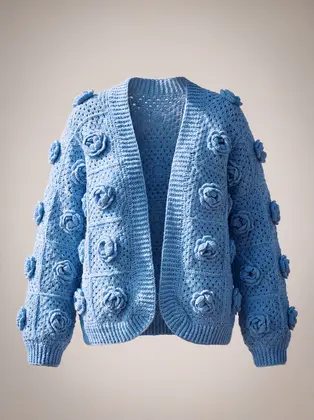
The Rose Cardigan – Cornflower Blue offers another useful reminder: a defined ribbed band and textured floral surface create a different visual impression from a long, open-front style. It can still be worn undone, but judge its proportions on their own terms. Look at where the band and hem sit, how the sleeves finish, and whether the texture suits the way you intend to layer.
Check the product details and care information
Before ordering, confirm the available size options on that exact product page. Never assume that a letter has the same measurements across different designs, and do not apply one garment’s fit notes to another. If fiber content, exact measurements, or construction details are not shown, treat them as unknown until confirmed. For care, rely on the actual garment label and confirmed product information; do not assume that all knits can be washed or dried in the same way. The size and care guide can help direct your questions, but the item’s own label takes precedence.
A confident knitwear choice comes from matching shape to purpose. Notice the body length, sleeve volume, shoulder construction, and the clothes you plan to wear underneath. Check the actual listing, ask when information is missing, and choose the fit that supports your routine.