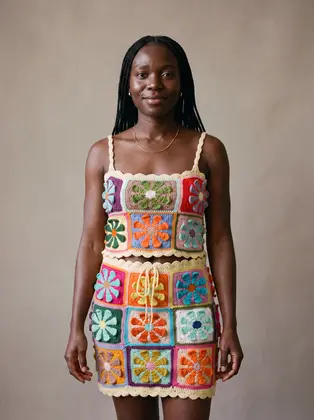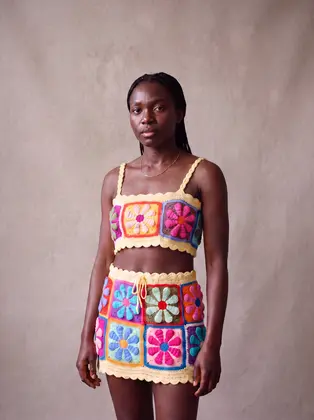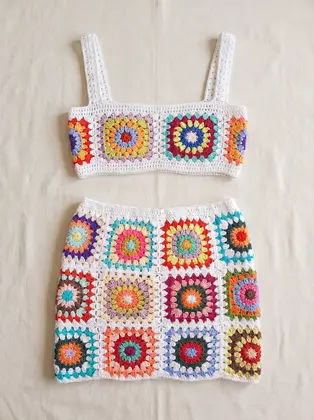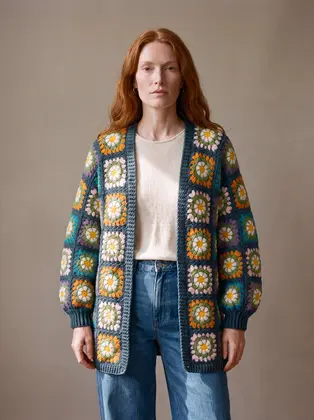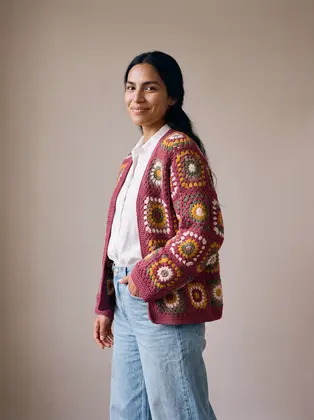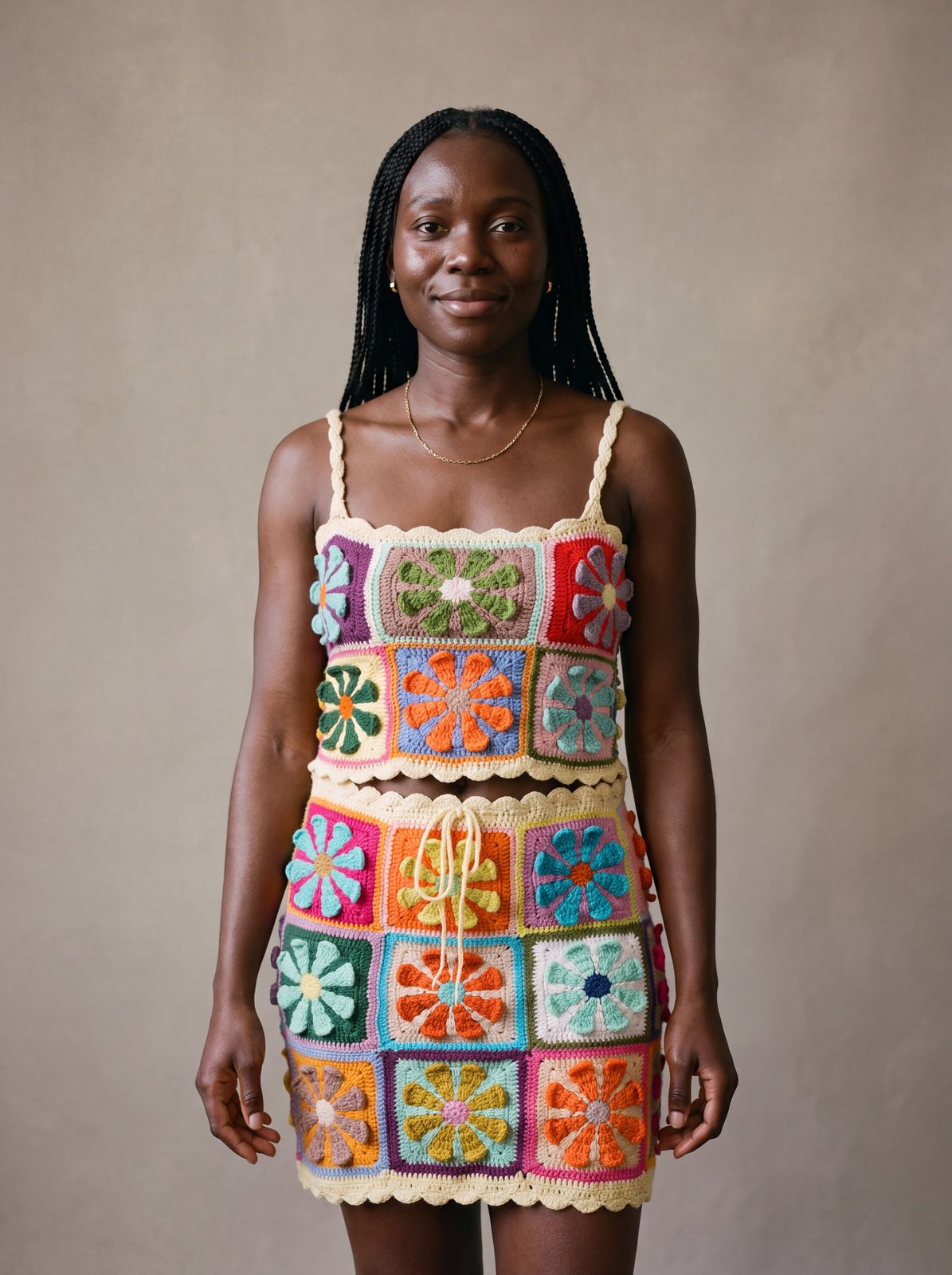
Start with the set, then loosen the formula
A coordinated knit set earns its place in a wardrobe because its pieces already speak the same visual language. The useful surprise is that they do not need to stay together. Separating a top and a skirt lets each piece take a turn with quieter basics, while the original pairing remains an easy outfit when time is short. Think of the set as a small palette rather than a uniform: identify its strongest color, its texture, and the amount of visual detail, then build around one or two of those qualities at a time.
Begin by looking at the pieces individually in daylight. Notice whether the knit reads as a solid from a distance or whether its stitch pattern, motifs, or color changes are prominent. Check where the top ends and where the skirt sits on you; proportions matter more than a styling rule about what is universally flattering. A cropped or waist-length top may pair neatly with high-rise trousers, while a longer top could work best with a slim base layer beneath it. The aim is comfortable movement and a deliberate line, not forcing every item into a prescribed silhouette.
For an easy first experiment, keep one half of the set visually quiet. Wear the patterned skirt with a plain tee, or let a distinctive knit top sit over uncomplicated jeans. If both pieces are colorful or richly textured, give them separate outfits before trying to mix them with another print. A little space around a statement knit makes its details easier to appreciate.
Give the top a different supporting cast
A knit top can move between casual and polished settings simply by changing what sits below it. Try it with straight-leg denim for an unfussy daytime combination, or with a clean, solid-color skirt when you want a softer outline. If the knit is cropped, a higher rise can make the transition between top and bottom feel intentional without requiring a visible strip of skin. If it is longer, test a relaxed tuck at the front or leave it untucked; use a mirror while sitting and reaching to check that it stays comfortable.
A light shirt underneath can add a collar, cuffs, and another layer of color. Let only a small amount show, and keep the shirt smooth enough that it does not bunch beneath the knit. On cooler days, a simple cardigan or jacket can provide warmth; choose a layer that does not catch on the knit or compress its texture. For a more summery feel, wear the top on its own with easy trousers and minimal accessories. These are styling options, not claims about a specific garment's construction: use the actual fit and care information on the item's product page when deciding how to wear it.
Color linking is a reliable way to make separate pieces feel related. Pick one shade present in the knit and repeat it in a shoe, bag, or understated layer. Alternatively, anchor a bright top with black, denim, cream, or another neutral already in your wardrobe. Avoid matching every accessory exactly; a single echoed color usually looks more relaxed.
Make the skirt work beyond the matching top
A patterned or textured knit skirt can be the most versatile half of a set. Pair it with a plain tee or fine-gauge top that does not compete with the skirt's surface. A close-fitting base layer can balance a fuller-looking bottom, while a looser shirt can work when you define the waist with a neat tuck or a short outer layer. There is no requirement to wear a particular cut: compare the proportions in a full-length mirror and choose the combination that feels easy to walk and sit in.
For a casual outfit, try a simple tank, a tee, or a lightweight shirt, then add flat shoes or sneakers you already trust for a full day. For a more composed look, use a solid top with a clean neckline and a jacket that ends at a point that feels balanced with the skirt. If the skirt carries several colors, a top in one of those colors can connect the pieces without making them look like a second matching set. A neutral top is an equally useful choice when you want the skirt to remain the focal point.
Consider the practical details before leaving home. Check that the waistband sits comfortably, that the hem does not interfere with your stride, and that any tucked layer stays in place. If you are unsure about a garment's length, fit, or care, consult its listing and the boutique's size and care guide rather than guessing. Real comfort is part of a successful outfit, not an afterthought.
Mix texture without making the outfit busy
Knitwear has presence even when its color is restrained. When one piece has an open, raised, or visibly patterned surface, pair it with smoother fabrics to create contrast. Denim, crisp cotton, and uncomplicated woven pieces can give the eye a rest. If both the knit and the supporting item have strong texture, keep their colors close or their shapes simple so the outfit still has a clear focal point. The same principle applies to prints: start with one noticeable pattern, then add a second only if the scale and colors feel balanced together.
Accessories can either underline the knit's mood or steer it elsewhere. A plain belt can make a waistline feel defined; a simple bag and understated jewelry allow a colorful piece to stand out. If the knit already has a lively palette, avoid adding several competing accent colors at once. If it is quieter, a scarf or a single bright accessory can bring energy without changing the outfit's foundation. Shoes are useful anchors: a neutral pair often grounds a bold skirt, while a color picked up from the knit creates a more deliberate connection.
Keep layering functional. Choose a coat or jacket with enough room to sit over the outfit without pulling at the shoulders or distorting the knit. A smooth lining can help garments slide over one another. For indoor transitions, a removable layer gives you flexibility without asking the knit set to do every job.
Build three repeatable outfit plans
A small set of outfit formulas makes separating coordinated pieces genuinely useful. First, make a simple weekday combination: set top plus jeans, with a clean shoe and one accessory. Second, wear the skirt with a plain tee and an easy layer, keeping the rest of the palette quiet. Third, use each piece with a different solid from your closet: a knit top with a neutral skirt or trousers, then the set skirt with a plain shirt. These are starting points; adjust them for your climate, daily activities, and personal comfort.
Before deciding that two items do not work together, try them with different proportions. A top that feels awkward fully tucked may look balanced untucked or with only the front lightly tucked. A skirt that seems too dressy with one blouse may feel relaxed with a casual tee. Try the outfit with the shoes you actually plan to wear, because footwear changes the visual weight of a hem. Take a quick mirror photo if useful, then compare how the outfit looks from the front and side rather than judging only while standing still.
When browsing the collection, use real pieces as inspiration rather than assuming every knit is part of a matching set. Explore the set collection for coordinated options, and browse all collections to find separates that complement what you own. For example, the Bloom Set, Sunny Petal Set, and Mosaic Set are catalog pieces to consider as coordinated starting points. Check each listing for its own description and current details before choosing; this guide does not assume that separate pieces are sold individually or make claims about availability.
Care for the pieces as individual garments
Once a set is in rotation, care for each piece according to its own label and the boutique's care guidance. Different knits can have different fiber content and care requirements, so do not infer washing instructions from the fact that two items coordinate. Read the product information before cleaning, and use the size and care page for the store's guidance. When the instructions call for gentle handling, avoid rough agitation and high heat; reshape carefully if appropriate to the stated instructions, and allow the garment to dry in a way that does not stretch it.
Storage matters too. Keep knitwear folded when hanging could pull it out of shape, and avoid crowding it against items with hooks or rough fasteners. Before storing a set, make sure both pieces are clean and fully dry. Keeping the top and skirt together in a drawer can make the original outfit easy to find, while leaving each piece accessible with everyday separates encourages more combinations. The goal is not to create an elaborate capsule wardrobe; it is to make getting dressed simpler.
A coordinated knit set is most valuable when each half feels like something you would wear on its own. Start with a familiar basic, balance texture and proportion, and repeat a color only where it helps. Let the full set remain one option among many. With a few thoughtful combinations, the same coordinated pieces can feel fresh, personal, and practical without losing the ease that made you choose them.