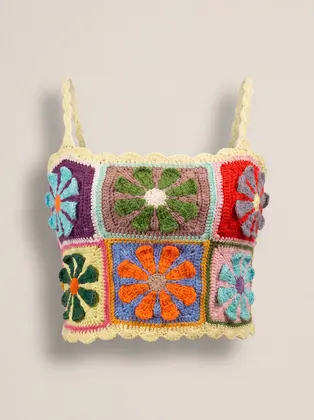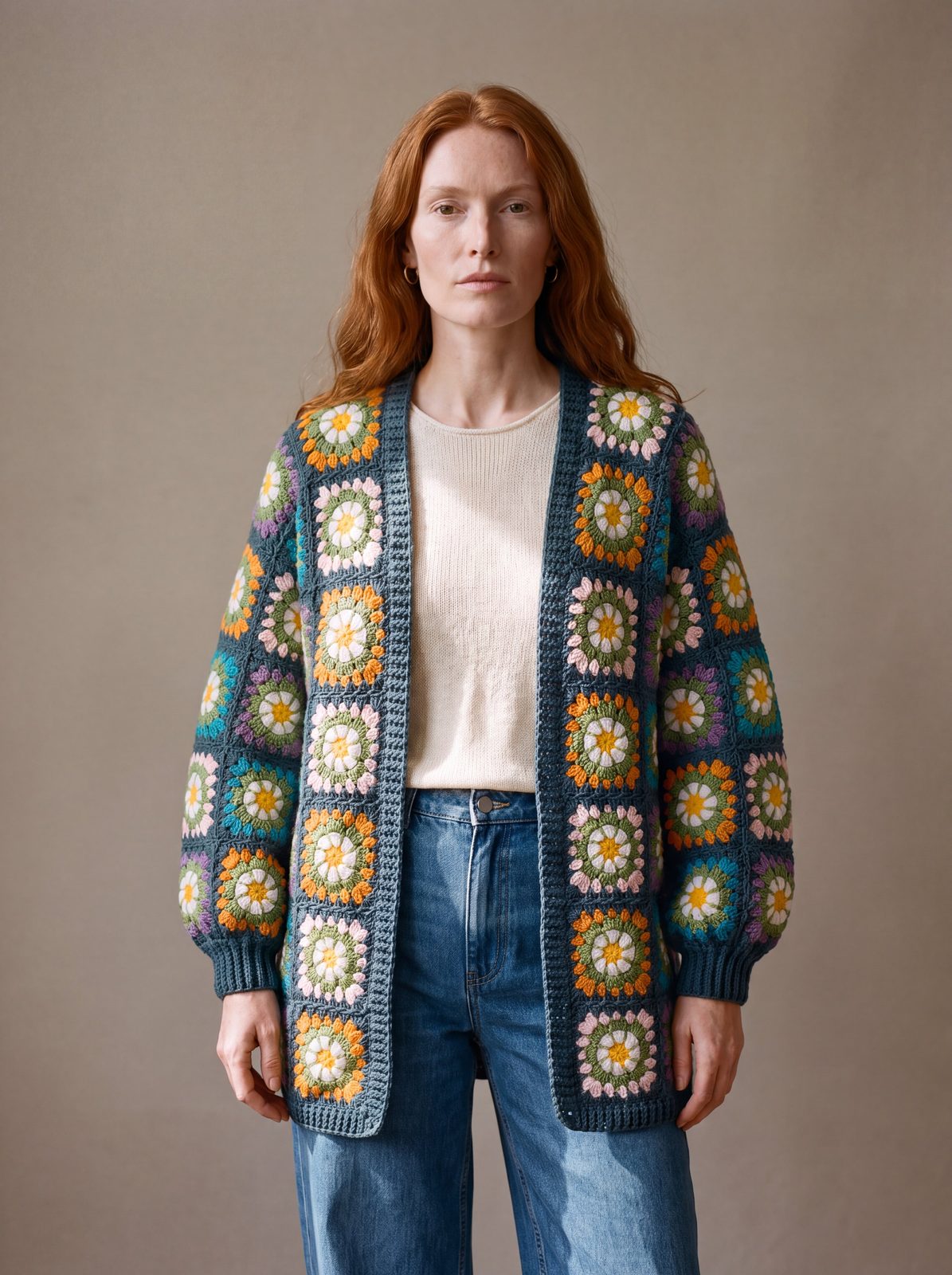
Colorful knitwear does not require a colorful closet. In fact, a wardrobe built on denim, cream, black, gray, navy, and warm brown gives a vivid cardigan room to do its best work. The trick is not to mute the knit; it is to give its colors a few quiet companions, then let texture and proportion keep the outfit feeling considered rather than costume-like.
Start with the neutral that already works for you
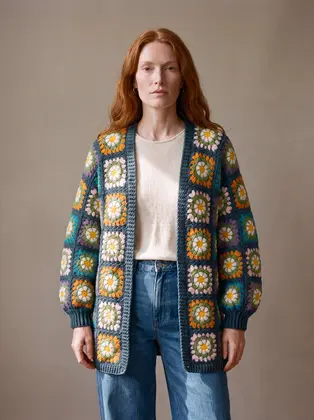
“Neutral” is not one shade. Cream, ivory, oatmeal, stone, camel, chocolate, charcoal, ink navy, and black each set a different mood beside bright yarn. Choose the base by looking at the colors already in the knit, not by following a rule that everything must go with white. A teal ground with scattered floral color, for example, has enough depth to sit comfortably over cream, faded denim, or dark indigo. The Daisy Balloon Sleeve Long Cardigan in Teal can be the only saturated layer in an otherwise simple outfit.
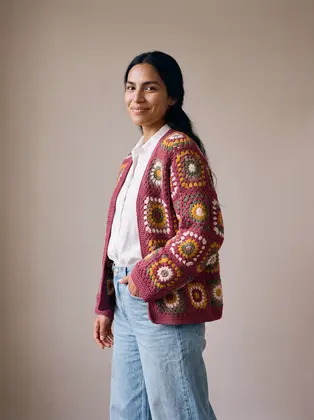
For a softer contrast, pair warm, multicolored stitches with ecru or oatmeal; for a sharper one, use black or crisp white. Cool blues often feel especially easy with gray, denim, and navy. You do not need to match one of the smaller accent colors exactly. Repeating a major color from the knit can make an outfit harmonious, but a neutral with a compatible temperature is usually enough.
Give the knit one clear role
Before getting dressed, decide whether the sweater is the focal point, a layer, or a supporting accent. With a statement cardigan, make it the focal point and keep the rest of the outfit visually calm. A plain tee, straight-leg jeans, and uncomplicated shoes leave the color and stitch pattern easy to read. A long open shape can also work over a simple column of dark trousers and a dark top, letting the cardigan provide the change in scale and color.
If you want the knit to play a quieter role, wear it under a neutral coat with just the neckline or cuffs showing, or tie it loosely over the shoulders when the weather allows. Avoid adding another strongly patterned layer by default. A stripe, check, or floral can work, but it should share a color or scale with the knit and have a clear reason to be there. Otherwise, the eye has nowhere to rest.
Consider the shape as carefully as the palette. A roomy cardigan over a relaxed tee and wide trousers can feel intentional when the trouser fabric falls cleanly and the hem does not bunch awkwardly. If both the knit and bottom are generous, show a little wrist, ankle, or neckline to keep the proportions from feeling swallowed. For more tailored pants, a softly fitted base layer can balance a cardigan with fuller sleeves.
Use denim and simple separates as a bridge
Denim is a useful middle ground between bright knitwear and a neutral wardrobe because it has color without demanding attention. Medium-wash jeans soften a saturated palette; dark indigo makes it more polished. A white or cream tee underneath creates a clean frame, while a charcoal or black base gives the outfit more contrast. Keep the wash and finish in mind: distressed denim leans casual, whereas an even, dark wash can carry a more composed look.
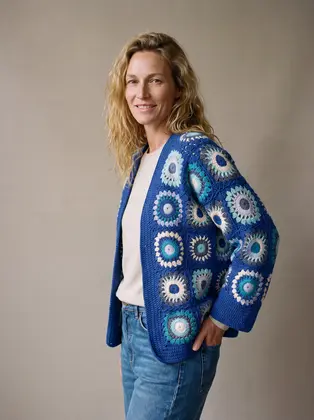
For a cardigan with a strong blue base and several lighter shades, repeat one quiet blue through jeans or a simple shirt without trying to reproduce the exact shade. The Mosaic Cardigan in Cobalt and Aqua offers a good example of a knit whose dark ground anchors the brighter rings. Try it with a white tee and straight jeans for daytime, or over a plain dark dress when you want the same layer to feel less casual. The rest of the outfit need not be elaborate to look finished.
Skirts and dresses are equally useful partners. A plain black slip-style dress, a neutral knit dress, or a simple denim skirt gives a colorful cardigan a straightforward backdrop. Pay attention to where hems meet: a hip-length cardigan can sit neatly over a skirt with a defined waist, while a longer style may look better over a column-shaped dress or slim trousers. These are starting points, not fixed rules; comfort and movement matter more than a prescribed silhouette.
Choose accessories with a light hand
Accessories can connect colors, but they do not need to repeat every shade in the sweater. A leather belt or bag in cognac, black, or deep brown can ground a busy knit. Simple metal jewelry adds polish without introducing another color story. If you choose a scarf, keep its pattern quiet or let it echo just one shade from the cardigan. The same restraint applies to shoes: loafers, ankle boots, sneakers, or a simple flat can all work, depending on the formality of the rest of the outfit.
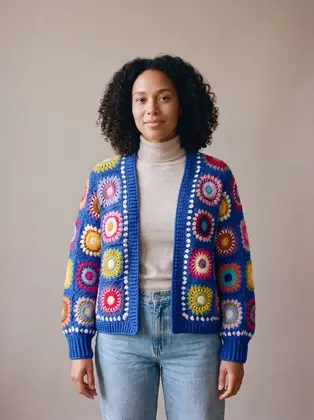
Texture is often more effective than extra color. Smooth denim beside a tactile knit, a crisp cotton shirt under a soft cardigan, or a clean leather accessory gives the outfit contrast while preserving a coherent palette. The Ribbed Cuff Cardigan in Cobalt Multicolour already combines a deep ground with lively shades, so pairing it with a neutral tee and uncomplicated bottoms lets the pattern stay legible. If you add a bright accessory, make it small and deliberate rather than matching the cardigan from head to toe.
Build repeatable outfits, not one-off styling tricks
A practical way to make a colorful piece earn its place is to identify three neutral combinations before buying or wearing it: one with jeans, one with a skirt or dress, and one with tailored trousers. If the knit works with several pieces you own, it is more likely to become part of your actual rotation. The cardigan collection is a natural place to compare shapes and palettes, while the broader collections can help you consider other layers and basics.
Keep a small set of reliable formulas in mind, then adjust them to the particular color and cut. A vivid cardigan over a white tee and dark denim is an easy casual option. A patterned knit over a simple black dress can turn a familiar outfit into something more expressive. A saturated layer with a cream top and camel or stone bottoms feels softer, while charcoal and navy make the same piece read cooler and more graphic. These combinations work because the surrounding garments provide visual space, not because there is only one correct pairing.
Fit and comfort should decide the final details. Check that sleeves sit comfortably over the layer beneath, that the front hangs as intended, and that the hem works with your chosen rise and length. For exact fiber content, sizing, and care instructions, follow the product’s own label and the team’s confirmed information; do not assume that every knit can be treated alike. The size and care guide is a useful reference, and questions specific to a piece can go to the team.
Let color feel natural in your everyday wardrobe
The most convincing outfits usually have one energetic element and several pieces that make wearing it easy. That does not mean the rest must disappear: a good neutral has its own character in texture, shape, and tone. Choose companions that you already reach for, keep the color relationships simple, and let the knit’s pattern provide interest. When the base outfit feels like you, colorful knitwear becomes less of a special occasion and more of a useful layer with personality.
Start with the neutral you trust most, whether that is worn-in denim, a black dress, or a cream tee. Add the cardigan, make one small adjustment to balance its volume, and stop before the outfit becomes overworked. That is the practical advantage of a neutral wardrobe: it gives color room to be expressive while keeping getting dressed straightforward.