Before ordering knitwear online, treat the product gallery as evidence, not simply a set of attractive pictures. The first image may sell a color story; the remaining views should help you judge proportion, texture, construction details, and how the piece might work with clothes you already own. A careful review takes only a few minutes, and it can show both what the listing answers and what you should clarify before buying.
Start with the full silhouette
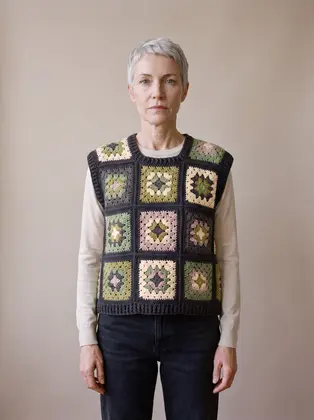
Look first for a clear view of the entire garment, ideally on a person and against a relatively simple background. Notice where the hem falls in relation to the hips, waist, or thigh, and whether the sleeves appear fitted, straight, or voluminous. These are visual clues rather than measurements: camera angle, pose, and the model’s proportions can change how length reads. Use the image to form a question, then check written sizing information rather than treating the photo as a fit guarantee.
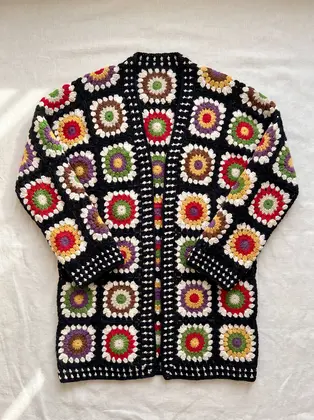
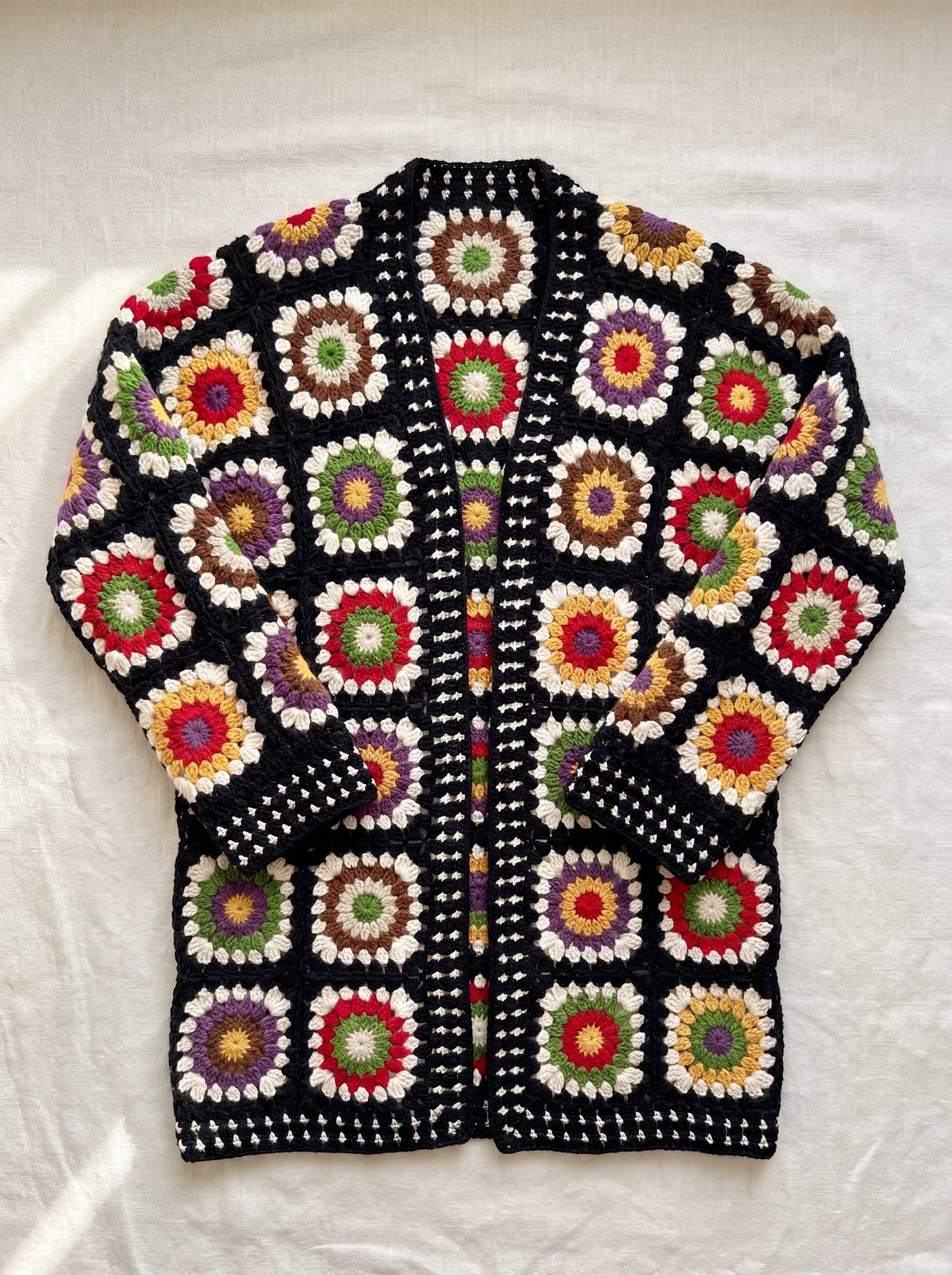
For example, the Mira Long Cardigan has a dark ground and bright floral squares, so its length and open-front shape matter as much as the motif. Imagine it over the kind of outfit you actually wear. Would the hem interrupt a skirt at an awkward point? Do you want the cardigan to be the focal layer, or would a quieter option be more useful? A gallery helps you picture styling, but it cannot substitute for garment measurements or a fit check.
Compare front, side, and back views when available. A front-facing pose can hide shoulder width or the way fabric falls behind the body. If the gallery shows only a cropped detail, do not infer the overall shape from it. Browse the broader cardigan collection to compare lengths and proportions across similar pieces, while remembering that one style’s appearance does not establish another style’s measurements.
Read texture and construction from multiple views
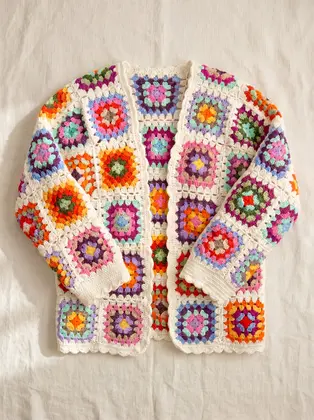
Knitwear is dimensional. A close-up can show whether a surface looks open, dense, ribbed, looped, or patterned, while a full-length image shows how those details combine across the garment. Look at seams, cuffs, necklines, opening placement, and transitions between panels. For crochet or openwork, check the spaces between stitches and the way motifs meet. Ask whether the visible structure suits your intended use: an open fabric may call for a layer beneath, while a heavily patterned front may feel visually busy under a coat.
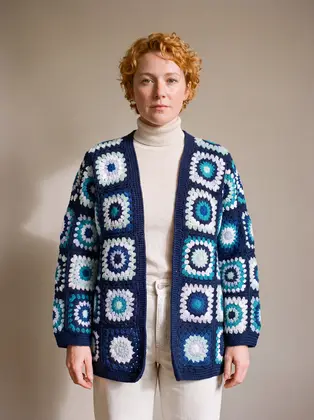
Gallery lighting and image processing can make color and texture look more dramatic than they are in person. Check whether the same color appears consistent across several photographs. If a navy-and-turquoise design catches your eye, inspect the Long Cardigan – Navy & Turquoise in its wider view and detail images together. Color may shift between screens, and a close crop can emphasize one section more than the overall design. Think in terms of dominant color and contrast, not the exact shade on your device.
Do not confuse a styled photograph with a construction promise. A gallery may communicate a piece’s look without answering fiber content, lining, stretch, weight, or finishing details. When those facts matter to comfort or care, rely on the product’s written specifications and the actual garment label. If the listing does not provide an answer, ask the store team before placing the order rather than guessing from an image.
Use styling photographs to test versatility
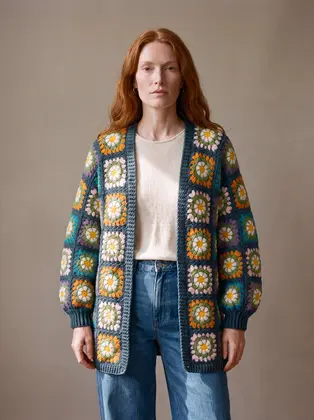
Styling is useful when you read it as an idea rather than an instruction. A cardigan worn over a plain top shows how a bold knit can anchor an outfit; the same piece layered over a print may compete for attention. Consider the clothes, shoes, and outerwear you already own. A multi-color square pattern may connect several colors in your wardrobe, but it may also be harder to coordinate than a solid. Decide which outcome you want before being persuaded by a polished outfit image.
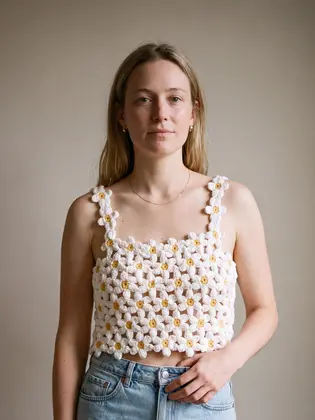
Ask how a piece would work in more than one setting. Could you wear it open over a simple dress, or layer it with jeans and a tee? Would a cropped top fit your preferred styling and layering habits? The Daisy Cami Top is a useful example of why a gallery should be read for context: open floral construction makes the choice of underlayer part of the outfit. Consider coverage and comfort for your own plans, and consult the listing for the design’s actual details.
For other silhouettes, scan the tops collection rather than assuming a related-looking image has the same cut. Galleries can help you compare visual mood and styling possibilities, but product pages govern the specifics. If you are shopping for a particular season, think about realistic layering: room under a jacket, warmth over a tee, and whether sleeves can sit comfortably beneath a coat. Those personal-use questions are not claims a photograph can settle by itself.
Match the images with fit and care information
Before ordering, find the size options and any measurement chart or fit notes supplied on the product page. Compare garment measurements with a similar item you own, laid flat and measured in the same way, when such details are available. A model’s size or height, if listed, offers context, not a promise that the same size will fit you identically. If measurements, stretch, or intended ease are unclear, contact the team for confirmation instead of sizing up or down based only on appearance.
Care is another area where photographs are easy to overread. A knit surface does not tell you whether a garment can be washed at home, whether it should be reshaped, or how it will respond to heat. Check the care information on the product page and garment label; where details are missing or conflicting, ask before purchase. Do not rely on generic advice for a particular fiber or stitch. The size and care information page may help you find store guidance, but the item’s own label and confirmed product instructions take priority.
Keep a short list of unresolved questions: fiber content, approximate garment measurements, opacity, fastening, or care. Ask only about details that change your decision. Clear, specific questions are more useful than “Will this fit?” because fit depends on your measurements, preferred ease, and the garment’s own dimensions. A gallery can prompt the right questions, but the written details and a direct answer should close the gap.
Make a decision from the whole listing
Before adding knitwear to your cart, look through every image in order and then return to the first. Does the overall shape still appeal after you have inspected the details? Can you identify what you know, what remains uncertain, and which source can answer it? If the item’s visual character is right but a crucial question remains unanswered, pause. A few minutes spent checking the listing is better than ordering on assumptions about fabric, fit, or upkeep.
Finally, separate desire from usefulness without dismissing either. A standout cardigan may earn its place because it transforms familiar basics; a simpler knit may be easier to wear repeatedly. Consider where it will sit in your wardrobe, the layers it needs, and whether its proportions suit your habits. The strongest purchase is not necessarily the most photogenic one. It is the piece whose appearance you like and whose real-world details you understand well enough to choose confidently.