A cardigan can have the right color and still feel wrong once you put it on. The difference is often in two details that are easy to overlook on a product page: where the sleeve ends and how much room its shape takes up. Start with your real day—what you wear underneath, what you reach for, and whether you need to push the sleeves back—and choose the silhouette that works with those habits.
Begin with the layer underneath
Sleeve shape is easiest to judge against the clothes it will cover. A close, straight sleeve slides neatly over a fitted tee or a thin blouse. A puffed or balloon sleeve needs more space; a crisp shirt with a gathered cuff can bunch beneath it and make the upper arm feel crowded. If you expect to layer over a substantial shirt, look for a cardigan whose armhole and sleeve have enough ease, not merely a generous body.
Think about the shoulder, too. A dropped shoulder creates a relaxed line and gives room through the upper arm, but it can add visual width. A sleeve that begins closer to the natural shoulder tends to read tidier and may sit more comfortably beneath a coat. Neither is inherently more flattering. The useful test is whether the seam or shoulder line sits where you want it and whether you can bend your arm without the fabric pulling across your back.
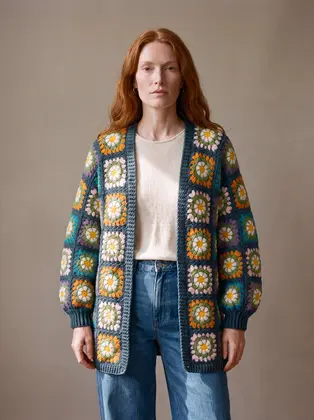
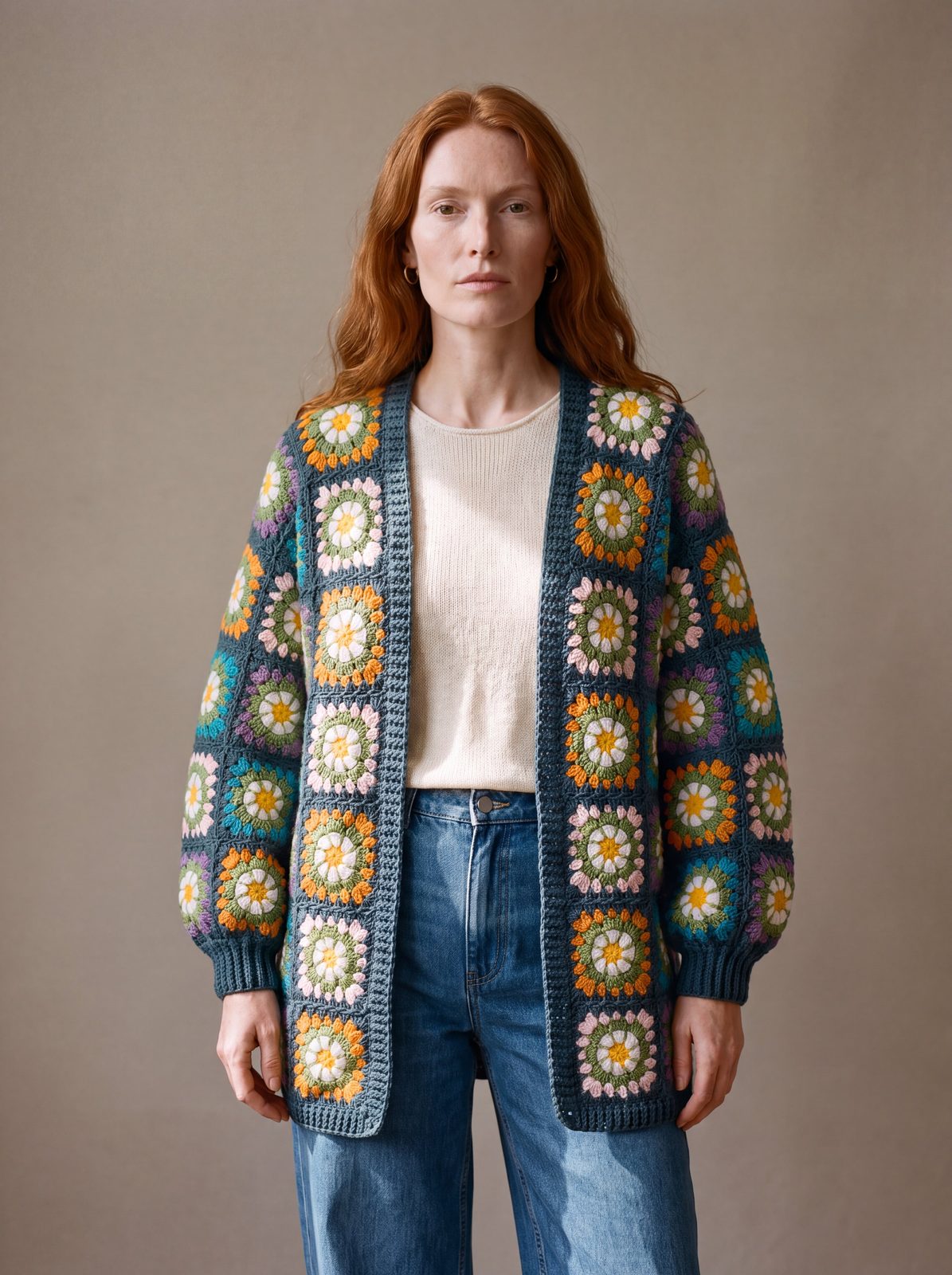
For a patterned layer with a noticeable sleeve, keep the base simple enough that the shapes do not compete. The Daisy Balloon Sleeve Long Cardigan in Teal pairs its softly full sleeves with a long body, so a smooth tee and straight-leg denim let the silhouette read clearly. Browse the broader cardigan collection when comparing open-front shapes and sleeve finishes.
Choose a sleeve shape for how you move
A straight sleeve is the easiest choice for frequent layering and daily errands. It follows the arm without demanding much styling, and it usually slips beneath a roomy jacket more easily than a dramatic sleeve. Check the cuff opening: a narrow finish can keep the sleeve in place, while a straight, unstructured edge feels less restrictive but may fall toward the hand when you reach.
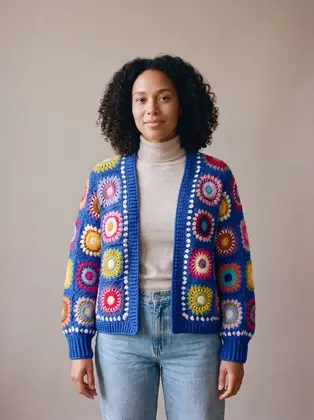
A ribbed cuff gives you a practical stopping point. It can be pushed up toward the forearm when cooking, working at a desk, or carrying a bag, then pulled down again without repeatedly rolling the fabric into a thick band. The cuff should feel secure rather than tight. A ribbed finish is especially useful when the body is relaxed, because it adds a clear endpoint to the sleeve. For instance, the Ribbed Cuff Cardigan in Cobalt Multicolour combines an open shape with defined cuffs; wear it over a close-fitting top if you want the sleeve detail to stay the focus.
Balloon and puff sleeves make a cardigan feel more expressive, but they ask for a little planning. Volume gathered at the cuff can create a rounded shape along the forearm; volume higher on the sleeve changes the balance near the shoulder. Pair that fullness with a relatively clean neckline and a base layer whose sleeve does not add bulk. If you like the look but need it to work under outerwear, test the actual coat you intend to wear. A cardigan that looks comfortable alone may feel cramped under a narrow armhole.
Also notice how the sleeve behaves when your arms are relaxed at your sides. If the cuff covers much of your hand, reaching for a phone or fastening a bag may become irritating. If it stops well above the wrist, it can leave a visible strip of the shirt beneath. The right endpoint depends on your proportions and preference; product photos are a starting point, not a substitute for checking garment measurements where available.
Use sleeve length to set the outfit’s proportion
Full-length sleeves that finish near the wrist are the most adaptable: they make a cardigan feel finished and offer coverage without calling attention to the arm. A slightly shorter sleeve can be useful when you prefer a bracelet or watch to remain visible, or when longer cuffs tend to get in your way. Cropped sleeves, when offered, create an intentional break and work particularly well over a fitted long-sleeve top. Avoid assuming that “three-quarter” or “full length” will land identically on every wearer; arm length and shoulder placement change where the hem sits.
When you try a cardigan, stand naturally rather than holding your arms out for the mirror. Check the cuff with your hands at your sides, then reach forward and bend your elbows. A sleeve that stays comfortable through both positions is more useful than one that looks perfect in a still pose. If the design has a cuff, see whether it rests at the wrist bone or catches at the widest part of your hand. That small difference can determine whether you will wear it often.
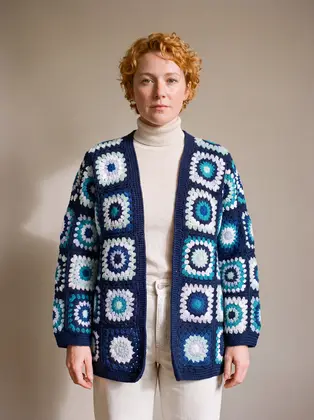
Length through the body affects the impression of sleeve length. A cardigan ending near the waistband keeps the outfit compact and gives high-rise trousers or a skirt room to show. A hip-length style creates a familiar, easy layer. A longer cardigan draws the eye down and can feel more like a light outer layer, especially when worn open. The Long Cardigan in Navy & Turquoise is described as falling past the hips; balance that length with a streamlined base such as a fitted tee and straight trousers, or let a dress continue the vertical line.
Balance the cardigan’s body length and volume
Think of the sleeve and body as one silhouette. A roomy sleeve with a long, loose body can feel deliberately relaxed, but it may overwhelm a fine-gauge, delicate outfit. Bring in structure elsewhere: a narrow trouser leg, a defined waistband, or a simple skirt gives the eye a clear counterpoint. Conversely, a close sleeve and shorter body can make a soft dress or wide-leg pant feel less covered up.
There is no rule that a long cardigan must be worn with slim bottoms. Wide-leg pants can work beautifully when the top underneath is simple and the cardigan falls in a clean line. What matters is managing the amount of fabric at the same time. If the knit is textured, colorful, or visually busy, keep at least one neighboring piece quiet. A bold cardigan needs room to be itself; adding another loud print and a complicated sleeve underneath can make the outfit feel accidental.
For proportions, notice where the hem lands relative to the widest part of your hip and the top of your thigh. If you prefer a shorter visual line, choose a cardigan that stops higher or wear it open over a top that creates a clear vertical center. If you want more coverage, a longer hem can be reassuring without requiring oversized sleeves. The best choice is the one that works with the clothes you already own, not an abstract body-shape rule.
Check fit, feel, and care before deciding
Before choosing a size, consult the product’s own measurements and fit notes when available. Compare them with a cardigan you already like, laid flat and measured in the same way. Consider the shoulder width, chest or body width, sleeve length, and total length together. A size label alone cannot tell you whether a sleeve will be roomy enough over a shirt or whether the body will reach your preferred point.
Move in the garment if possible: lift your arms, cross them comfortably, and see whether the front edges pull apart more than you like. An open cardigan is meant to hang rather than close like a fitted jacket, but it should not strain at the upper arm or drag at the shoulder. If fit or measurements are unclear, ask the team through the contact page before deciding. For general garment guidance, use the site’s size and care information, and always follow the care instructions on the actual item label. Fiber blends, construction, and finishes vary, so do not assume every knit can be washed or dried the same way.
Picture three outfits you would genuinely wear. A straight sleeve may earn its place through easy layering; a balloon sleeve may make a simple outfit feel considered; a longer body may solve the practical question of coverage. Choose the sleeve that suits your movement and the length that fits your wardrobe.