A crochet top already brings texture, pattern, and a little openwork to an outfit. The trick to layering it is not to hide those qualities under more fabric. Choose a smooth, close-fitting base, keep the next layer easy through the shoulders, and let the crochet remain the most interesting surface. With a few considered proportions, a top that might seem reserved for warm afternoons can work through shifting temperatures without feeling padded or fussy.
Start with a base that lies flat
Because crochet has dimensional stitches and openings, the layer underneath matters as much as the top itself. Reach first for a fine cotton or other lightweight knit tee, a simple tank, or a slim long-sleeve crewneck. A close fit at the shoulder and underarm prevents fabric from bunching through the open stitches, while a modest neckline keeps the eye on the crochet rather than creating a second focal point.
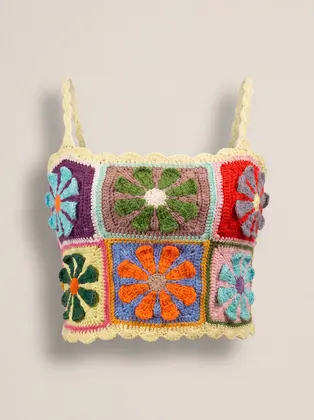
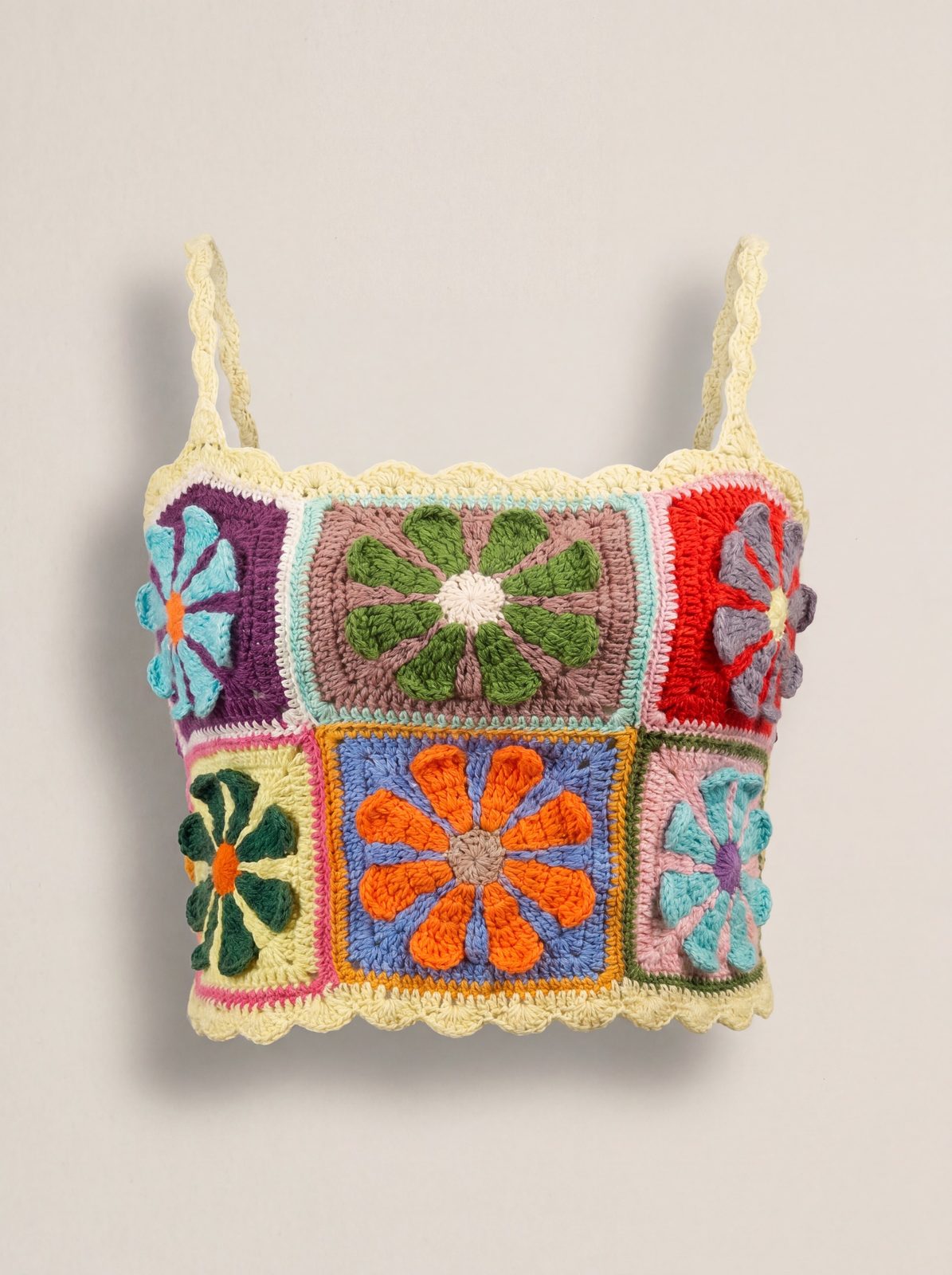
Color can make the base read as intentional. A tonal layer—cream beneath a pale top, black beneath a dark floral one—creates a quieter field and lets the stitchwork show. A contrasting base is equally useful when you want the open pattern to register clearly, but keep the contrast simple: one clean color is usually more effective than a printed shirt competing with a busy motif. For example, the multicolored squares of the Bloom Cami Top can sit over a plain ivory or warm brown tank without losing their detail.
Check the neckline and armholes before you commit. A base layer that rises higher than the crochet can peek out neatly; a narrow strap can work when the top has a similar shape. Avoid letting a wide sleeve or bulky seam gather directly under a fitted crochet armhole. If the garment is meant to be worn over a camisole, use that as a starting point, then adjust coverage to your comfort and the setting.
Keep the silhouette clean through the waist
Bulk often comes from fabric accumulating at the waist, not from the crochet itself. Try a slim base tucked smoothly into high-rise jeans, a straight skirt, or tailored trousers, then wear the crochet top over it. If the hem is short, a high rise can bridge the gap without adding a thick extra layer. If the crochet is longer, let it fall naturally over a streamlined bottom rather than forcing a tight tuck that distorts the pattern.
A partial front tuck is useful only when the fabric is light enough to stay flat; a bulky knot or tightly rolled hem tends to create a lump beneath the openwork. Smooth the base first, then check the side view. The goal is a gentle definition at the waist, not a compressed stack of hems. Straight-leg denim, a column skirt, or fluid trousers gives the top room to be expressive without adding volume everywhere at once.
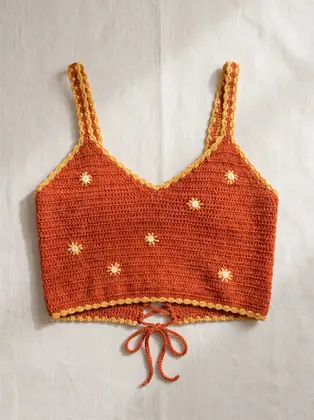
Proportion also helps when the crochet is colorful. A quieter bottom in denim, black, ecru, or a tone picked from the top gives the outfit an anchor. The Floria Cami Top in Rust, for instance, has a warm, decorative surface; pairing it with a clean dark trouser or simple skirt keeps the look grounded rather than busy.
Choose outer layers for smooth movement
When the temperature drops, reach for a layer that glides over the top rather than gripping it. An unlined or lightly structured jacket, a relaxed blazer with a clean sleeve, or a cardigan worn open can add warmth while leaving the crochet visible. A narrow sleeve opening is easier to pull over a close-fitting underlayer than a sleeve already crowded with gathers. Put the outer piece on slowly and guide it over the shoulder; snagging is more likely when textured layers are tugged against one another.
Keep the outer layer visually simple. A solid jacket in denim, canvas, or a smooth knit offers contrast without competing with the stitch pattern. If you choose another crochet layer, make the relationship deliberate: vary the scale or color, and let one piece clearly lead. Two highly patterned, similarly textured pieces can obscure each other and feel heavier than either one alone.
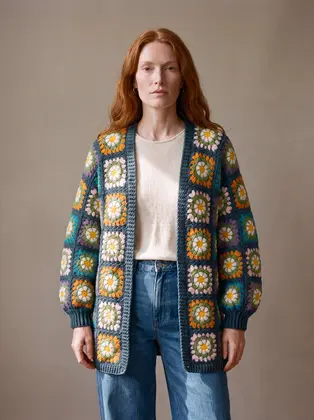
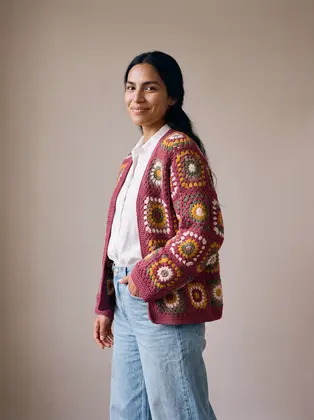
For an easy three-piece outfit, start with a fitted tee, add the crochet top, and finish with an open cardigan that ends near the hip. The open front creates vertical lines; pushing or gently arranging the sleeves at the wrist can keep the look relaxed. Browse the cardigan collection for open-front options, and use the broader collection to compare shapes and colors. The point is not to add layers for their own sake, but to make one removable outer layer do a clear job.
Use color and texture with restraint
Crochet brings its own visual texture, so a smooth supporting cast often looks freshest. Pair open stitches with denim, crisp cotton, or a softly draping skirt rather than piling on additional lace, fringe, or chunky ribbing. A little contrast in texture adds depth; repeating texture at every point can make the outfit feel crowded. Consider the whole silhouette in a mirror, including the back and sides, where a strap or seam may show through the openings.
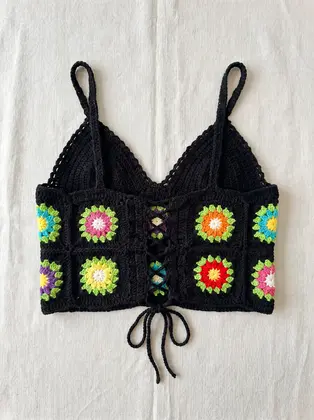
Color does not need to match exactly. Choose a neutral pulled from the motif, or set a vivid crochet piece against a deep, solid shade. With a black ground and bright floral details, the Midnight Garden Cami Top can work over a black base for a quieter effect or a cream base for more definition. Both approaches are valid; the deciding question is whether you want the top to blend into a tonal outfit or stand out as the focal point.
Accessories can finish the outfit without adding fabric. A simple belt, small earrings, or a clean shoe shape is usually enough. If the crochet is colorful, avoid using several accessories to repeat every shade. One small echo—a bag or shoe in a single accent color—feels considered, while a full set of matching details can compete with the garment.
Make the outfit work across settings
For daytime, a slim tank, crochet top, straight jeans, and low-profile shoes make a practical combination. For a more polished setting, use a smooth fitted base, tailored trousers, and a blazer worn open; keep the neckline and accessories uncomplicated. For a breezy evening, swap the blazer for a light cardigan or bring one along to put on after sunset. These changes preserve the central outfit rather than requiring a new styling formula for every occasion.
Think about movement before leaving home. Raise your arms, sit down, and reach forward. The base should remain comfortable, the hem should not ride up unexpectedly, and the outer layer should slide without catching the crochet. If a strap is visible in a way you do not like, adjust the base or choose a different neckline rather than trying to pin the crochet itself. A garment should feel secure and easy to wear, not require constant correction.
Use the same practical eye when choosing a size or caring for a textured piece. Read the individual product details and check the garment's actual care label; fiber content and fit can differ from one style to another. When a material, size, or care instruction is unclear, confirm it with the product information or the team before deciding. Do not assume a particular washing method is safe for every crochet garment. The size and care guide is a useful place to review general guidance, with the item's own label taking priority.
A simple test before you head out
Before adding another layer, ask what problem it solves: warmth, coverage, or a change of setting. If it does not solve one of those, it may only be adding bulk. Smooth the base, check the waist and sleeve seams, and make sure the crochet remains visible from the front and side. One close-fitting foundation, one defining top, and one easy outer layer is often enough. That balance gives the openwork room to breathe—and makes the outfit feel like your own rather than a stack of clothes.