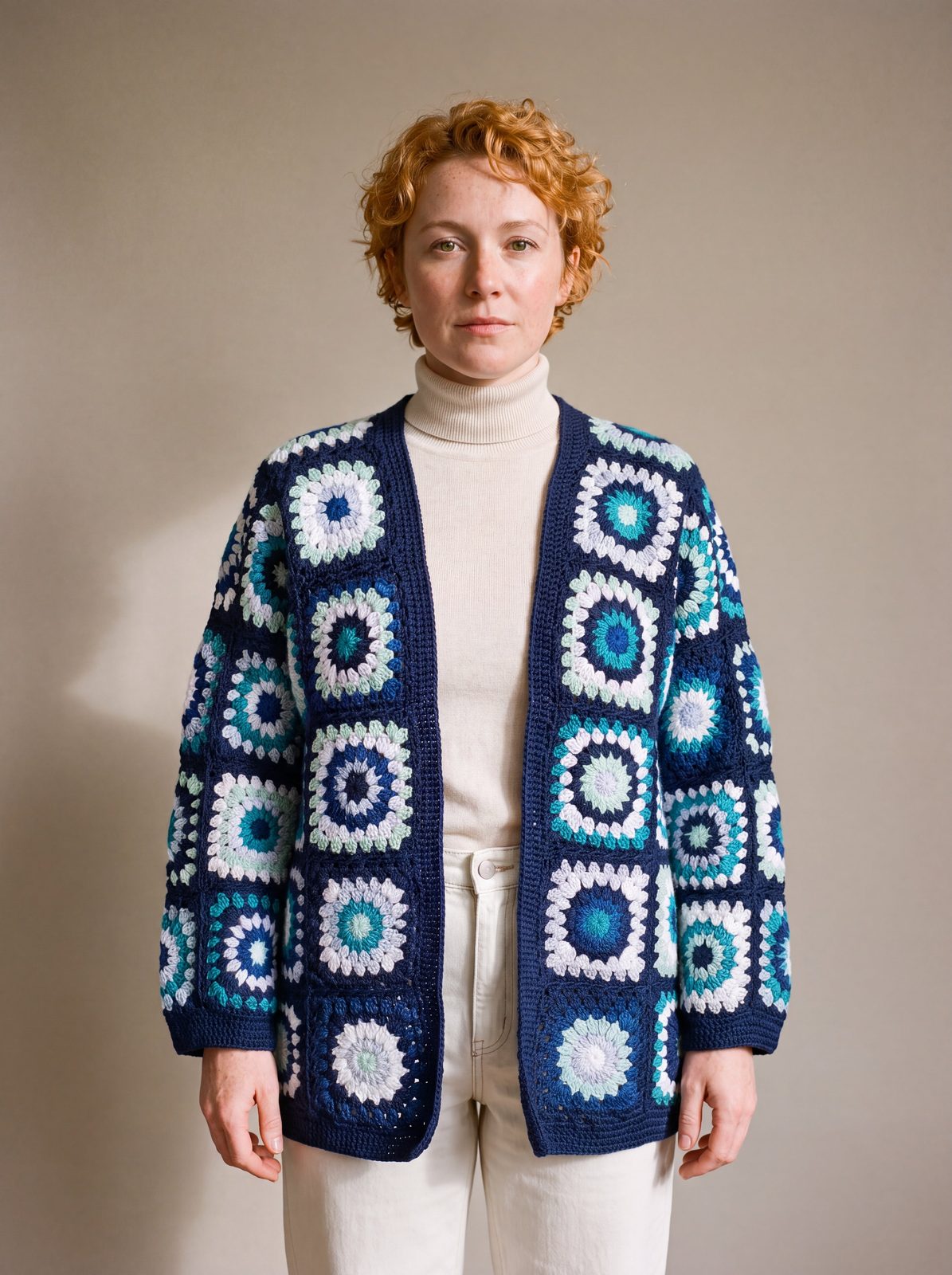
A useful travel wardrobe is not a miniature version of your closet. It is a small set of pieces that work across changing plans, temperatures, and levels of polish—and still feels like you. Colorful layers make that easier, not harder, when each one has a job. Start with a calm base, add one expressive top, and bring a cardigan that can turn a simple outfit into a finished look without demanding special handling or a complicated packing plan.
The aim is not to pack for every hypothetical occasion. It is to make a few reliable combinations: a tee with trousers for a travel day, the same tee under a statement layer for dinner, and a top that can stand on its own when the afternoon is warm. Here is a practical way to build that rotation with color, comfort, and room left in the bag.
Choose a compact palette, not a uniform
Pick two quiet anchors you already enjoy wearing—perhaps denim, cream, navy, black, or an easy neutral trouser—and let color come from one or two pieces. The anchors repeat without looking like a strict capsule formula; the colorful layer supplies a point of view. Navy is particularly forgiving on the road because it pairs naturally with white, faded denim, and many brighter shades. Cream can soften a saturated print, while black gives pinks, reds, and jewel tones a sharper frame.
A handy test is to imagine each top with both bottoms you plan to bring. If a color only works with one specific pairing, it may be an outfit rather than a wardrobe piece. That is not automatically a reason to leave it home, but it should earn its space. A colorful item that relates to at least two basics gives you more choices and makes getting dressed less dependent on the exact day’s plan.
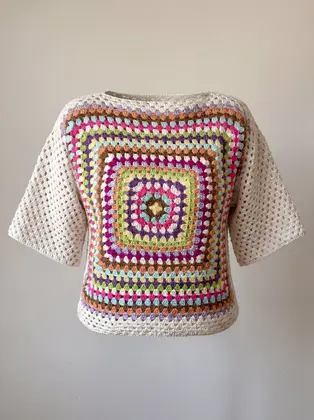
For a lively focal point, the Patchwork Blouse brings magenta, purple, lime, orange, and teal into a cream-ground design. Treat the panel as the outfit’s color source: pair it with straightforward jeans or a plain skirt, rather than adding several competing prints. Its boxy shape also gives you options—wear it loose when you want ease, or tuck just the front to define the waist without making the outfit feel formal.
Build around layers with different jobs
Think in terms of a base, a mid-layer, and an optional outer layer, rather than packing multiple garments that all do the same thing. A light tee is a comfortable starting point for transit and sightseeing. A cardigan adds warmth in an air-conditioned room or on a breezy evening. A light jacket, if your destination calls for one, should fit over the cardigan or replace it—not simply duplicate it.
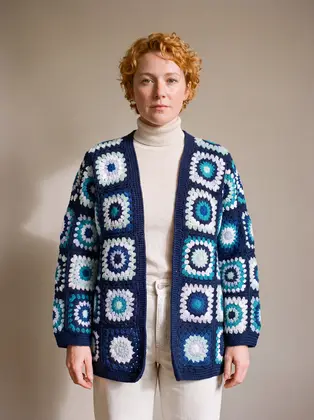
One colorful cardigan can carry several outfits if its dominant shade connects to your basics. A long open style creates a strong vertical line over a simple base and can make a tee-and-jeans combination feel considered. The Long Cardigan – Navy & Turquoise combines a deep navy ground with turquoise, mint, ice blue, and white. Wear those colors with a white tee, blue denim, or a simple dress; you do not need to echo every color in your accessories.
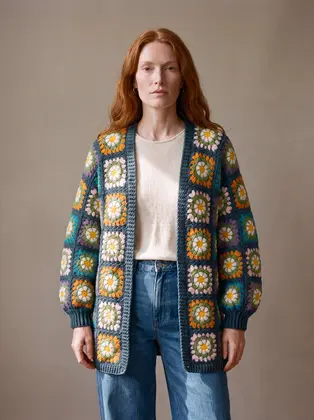
For a different effect, the Long Cardigan – Black & Pink makes pink the accent while the dark ground keeps the overall look anchored. Choose one cardigan for a short trip unless the forecast or itinerary gives a clear reason for another. Before packing, try it over your bulkiest planned top and check that the sleeves and shoulders still move comfortably. Leave enough room to sit, reach, and carry a day bag; a layer that feels restrictive at home will not improve on a long travel day.
Make each top earn more than one outfit
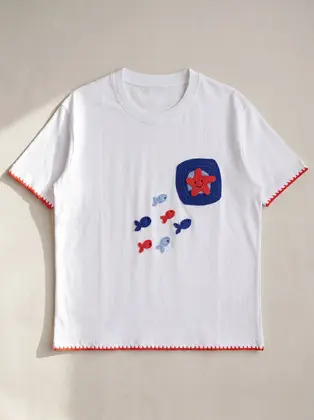
Plan outfits as combinations rather than isolated looks. A tee that works under a cardigan in the evening should also feel complete on its own during the day. The Rockpool T-Shirt has a crocheted starfish and small fish details, so it already has visual interest. Keep the rest simple: jeans, an uncomplicated skirt, or relaxed trousers. When the temperature drops, add a solid layer over it instead of trying to match its motif with another busy pattern.
Consider where the outfit needs to work. A travel-day combination should be easy to move in and comfortable through changing indoor temperatures. For a museum, market, or casual meal, the same base can look more intentional with a cardigan and a small adjustment—sleeves pushed neatly, a front tuck, or a simple necklace you already wear. For a dinner that calls for something different, swap the tee for the colorful blouse and leave the rest of the outfit familiar. Small changes matter more than bringing an entirely separate outfit for each activity.
Use a two-bottom limit as a planning tool, not a rule. If you pack jeans and a skirt, test every top with both. If one combination feels wrong, decide whether it is worth the space or whether a different base would give the piece more use. This quick try-on also reveals practical gaps: perhaps the cardigan is longer than expected over a skirt, or a top needs a camisole underneath. Resolve those details before departure rather than packing extra options “just in case.”
Keep color balanced and personal
When a layer is colorful, let its shape and palette lead. Pair a multicolor cardigan with a plain tee and simple bottoms; pair a bright blouse with a quiet cardigan or no extra layer. Mixing color does not require a perfect match. It is often enough for one shade in a printed piece to connect to denim, shoes, or a bag. If the palette is already energetic, repeat a neutral rather than adding another vivid accessory.
Proportion matters as much as color. A long cardigan over a loose top and wide trousers can feel like too much fabric at once, while a clean, closer-fitting base gives the knit room to be seen. With a boxier blouse, straighter or more streamlined bottoms can balance the volume. These are options, not rules: if you prefer a relaxed silhouette, keep it, and use a simple color relationship to make the outfit feel deliberate.
Accessories should solve real needs first. A scarf can add warmth on a cool flight, but it need not match the cardigan exactly. A compact crossbody or tote should fit your day essentials; a neutral bag is especially useful when the clothes already have several colors. Shoes deserve the same practical thought: choose a pair you can comfortably walk in, then check that it works with both bottoms before packing it.
Pack for real conditions and care for the pieces
Lay your planned outfits together before placing them in a suitcase. This catches redundant layers and makes sure the color story works in daylight, not just in your imagination. Wear the bulkiest cardigan while traveling if that is comfortable and practical; otherwise, fold it with the sleeves tucked in and avoid compressing textured or openwork pieces under heavy items. Keep a simple base and an extra layer accessible if you expect temperature changes during the journey.
Do not assume that every knit or embellished top can be washed the same way. Check the care information attached to the actual item and follow it; if a fiber blend, construction, or cleaning method is unclear, confirm with the team before washing. Avoid promising yourself that a piece can be machine-washed, soaked, or tumble-dried unless its own care instructions say so. When traveling, a small spot-cleaning kit is not a substitute for checking the garment’s directions, and delicate textures are best protected from snagging against zippers and rough hardware.
For a closer look at options that suit this approach, browse the cardigan collection and the tops collection. If you need help interpreting a garment’s fit or care details before a trip, use the size and care guide and contact the team for item-specific confirmation. The best small travel wardrobe is not the one with the fewest pieces at any cost. It is the one where every layer feels comfortable, works with what you brought, and gives you a reason to wear it again tomorrow.