A knitwear capsule works when it solves the moments you actually get dressed for: a chilly commute, a cool office, an air-conditioned room, or an evening that calls for one more layer. You do not need a stack of nearly identical sweaters. Begin with a small set of pieces that serve different jobs and combine with the shirts, dresses, trousers, and skirts you already wear. The goal is useful choice, not a perfectly uniform closet.
Start with your week, not a shopping list
Before choosing a color or silhouette, think through a typical week. Which outfits feel unfinished without a layer? Do you need something easy to take on and off, or a warmer piece that stays on outdoors? How often do you wear a dress, a button-front shirt, or a simple tee? These answers matter more than a generic list of capsule essentials. A person who spends most days in a warm climate may need light, open layers; someone facing a long winter will likely prioritize substantial knits and room for layering.
Look at the clothes you reach for most, and notice their necklines, sleeve shapes, and usual colors. A cardigan should sit comfortably over those clothes rather than compete with them. If your closet is mainly relaxed denim and tees, an easy cardigan can earn frequent wear. If you mostly wear tailored trousers, look for a cleaner line that does not bunch at the waist. Browse the broader cardigan collection as a way to compare lengths and visual weight, not as a reason to buy every style.
Choose a palette with one dependable anchor
A capsule does not have to be beige, gray, and black. It does need a few colors that connect easily to your existing wardrobe. Choose one anchor shade you already wear often—perhaps navy, denim blue, cream, charcoal, or brown—and use it to make outfit decisions simpler. Then decide whether your other pieces should stay tonal or provide deliberate contrast. A bright or patterned cardigan can belong in a capsule if the rest of its colors already appear in your closet.
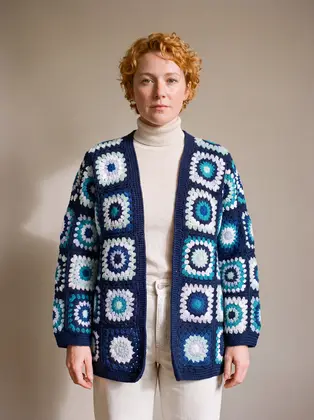
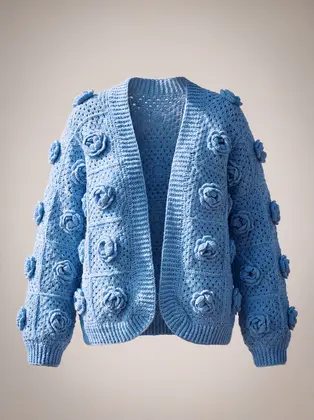
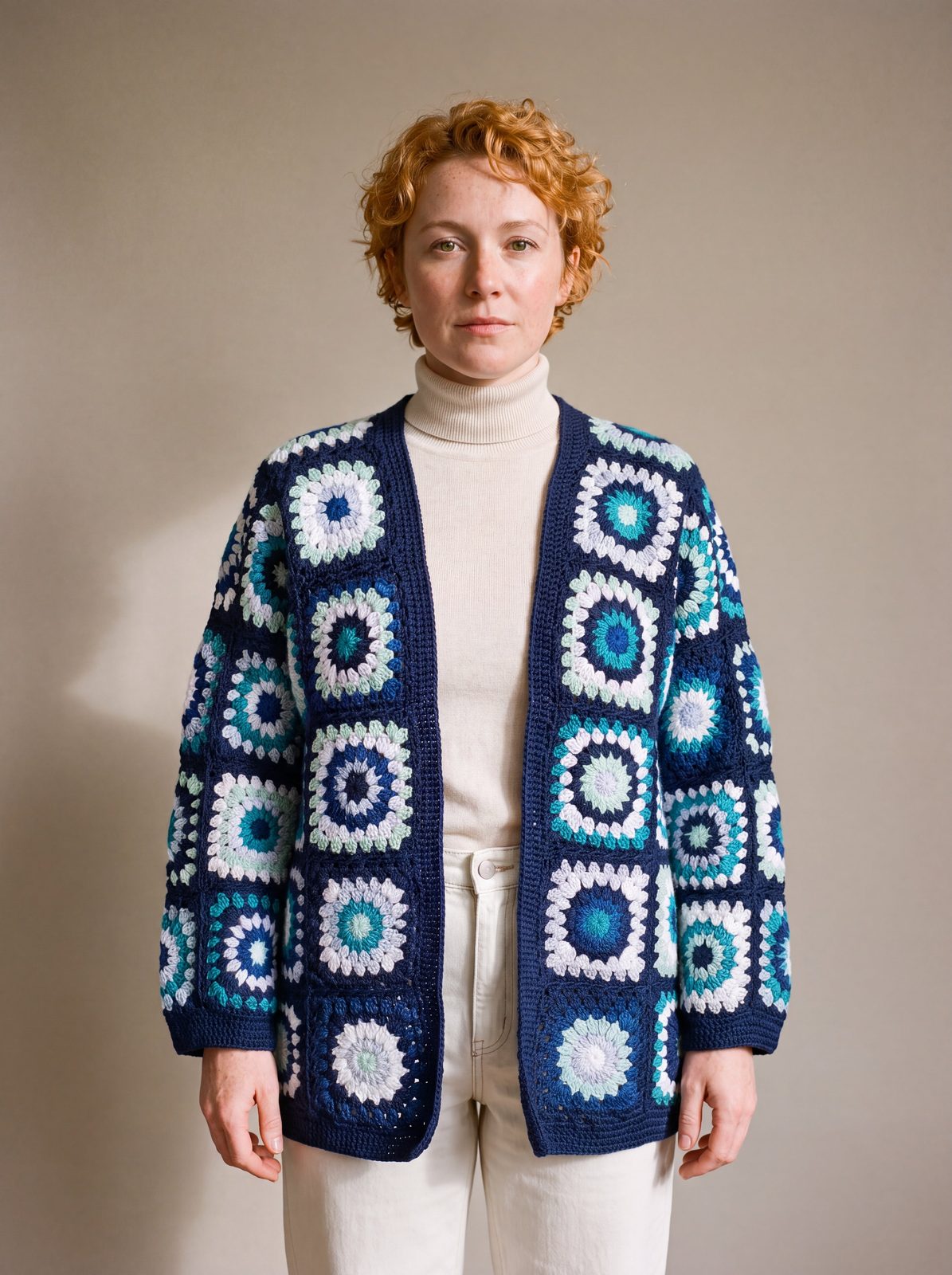
For instance, a navy-based wardrobe can pair with a Long Cardigan – Navy & Turquoise: the dark ground gives the color pattern a clear context, while the open long shape can layer over a simple top and jeans. For a subtler approach, the blue-on-blue detail of the Rose Cardigan – Cornflower Blue adds texture without introducing a second strong color family. A piece with a noticeable pattern is not automatically difficult to style; repeat one of its colors in a top, shoe, or accessory and keep the other elements uncomplicated.
Set a practical limit for your first round. Three or four well-chosen pieces may be enough to test the idea. If you are unsure whether a shade works, lay the garment beside your frequently worn clothes in daylight. Think about combinations you would genuinely wear, not theoretical outfits that depend on buying several new items.
Give each knit a different job
Versatility comes from variety of function. A capsule might include a light layer for indoor temperature changes, a midweight cardigan for everyday use, and one more expressive piece for days when you want texture or color to lead. You may need fewer pieces if you live in a mild climate, or a separate warm layer if your winters are cold. The point is to avoid filling the same role repeatedly while leaving a real need unmet.
Pay attention to length and volume. A hip-length cardigan often works neatly with high-rise trousers and skirts; a longer, open style can create an easy vertical line over a dress or slim base layer. Sleeves should allow comfortable movement and fit over the tops you plan to wear underneath. If a knit has generous sleeves or a bold surface, keep the layer beneath it relatively smooth so clothes do not catch or feel bulky. If a piece is cropped, check where its hem lands with your usual bottoms before deciding it will be a regular option.
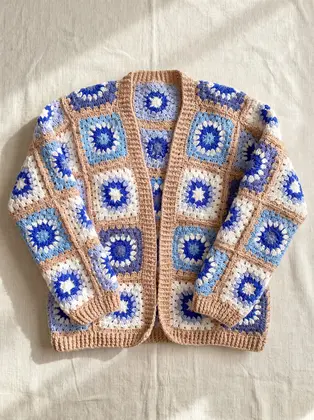
Texture also changes how a garment behaves in an outfit. A dense, textured crochet can act as the focal point, while a quieter knit may sit comfortably under a coat. For a warm neutral option with blue detail, consider the Patchwork Cardigan – Beige & Blue. Treat it as a statement layer and let a plain tee, simple denim, or an uncomplicated dress give its pattern room. Product descriptions can suggest styling direction, but actual fiber content, garment measurements, and fit should be checked on the product listing and confirmed with the team when anything is unclear.
Use a few repeatable outfit formulas
Rather than planning a unique look for every piece, create two or three reliable formulas. Try a cardigan over a fitted tee with straight-leg jeans; a shorter layer over a simple dress; or an open longer cardigan above a column of similar-colored top and trousers. These are starting points, not rules. Change the shoe, hem, or proportion to suit your own clothes and comfort.
When an outfit feels off, check proportion before adding accessories. A long cardigan over a wide, long top and loose trousers may feel heavy because every layer occupies similar visual space. Tuck or shorten the base layer, show more of the waist, or choose a closer-fitting bottom. Conversely, a cropped cardigan can work well with a fuller skirt when the waistline remains visible. Leave an open cardigan unfastened if doing so creates a better line, but try it fastened too if the garment is designed to close and the fit feels comfortable.
Let color do some of the coordination. A patterned knit can echo the color of a skirt or bag without requiring a perfect match. If the garment is already vivid, keep jewelry and other prints restrained; if it is tonal, use a contrasting shirt or a small accessory to give the outfit definition. Try each formula with the shoes and outerwear you own. A capsule that only works in a mirror at home but not with your daily coat is not doing its job.
Check fit, feel, and practical details
Online size labels vary, and knit construction can affect drape, stretch, and ease. Review the listed measurements and compare them with a garment you already like, laid flat. Check shoulder width, body length, sleeve length, and the intended ease; do not rely on a single size letter as a guarantee. If measurements or fiber details are missing or ambiguous, ask the team before ordering rather than guessing. Do not assume that every piece described as a knit will feel equally warm, stretchy, or soft.
Consider how the piece will be worn. If you plan to layer over a shirt, allow enough room through the shoulders and sleeves. If you prefer a closer fit beneath a coat, look for a profile that will not bunch at the armhole or hem. Check the front opening, cuffs, and edges for details that fit your habits: an open style can be quick to throw on, while a closure may help hold a layer in place. A beautiful garment that pinches, catches on your usual layers, or needs constant adjustment is unlikely to become a capsule favorite.
Care for the garment you actually bought
Knitwear care is not one-size-fits-all. Fiber blends, construction, embellishment, and labels differ, so follow the care instructions attached to the specific garment and seek clarification when they are uncertain. Do not assume a piece can be machine washed, soaked, tumble dried, steamed, or hung wet. In particular, a heavy or open-knit garment may change shape under its own weight; use only handling and drying methods supported by its label or confirmed guidance.
Between wears, let a garment air out when appropriate and store it in a way that does not distort its shape. Fold heavier or loosely constructed knits rather than leaving them on a hanger if hanging appears to stretch the shoulders. Keep textured surfaces from snagging on jewelry, rough bags, or fasteners, and avoid pulling a loose loop. For specific guidance on sizing and garment maintenance, consult Size & Care; if a question remains about a particular piece, use the site’s contact page before treating a general tip as a care instruction.
Build slowly: wear each new layer with several outfits you already own before deciding what the capsule still lacks. A dependable knitwear wardrobe is personal, repeatable, and adaptable to your climate. Choose pieces for real gaps, make sure they work with your clothes, and let a strong color or texture earn its place through wear.