Mixing prints with crochet works best when each piece has a clear job. Let one bring the pattern and the other bring texture, then connect them with color or proportion. You do not need a perfectly matched set or a strict rule that only one item can be interesting. You need a point of focus and enough visual breathing room for the eye to understand the outfit.
Crochet already has a pattern of its own: stitches, openings, seams, and sometimes color blocks or motifs. A printed skirt or shirt adds another rhythm. The trick is not to hide either one, but to choose how much information they deliver at once. Begin with the piece you most want to wear, and build around its scale and palette.
Give the Outfit One Lead Voice
Choose a lead piece before reaching for the rest of the outfit. A highly colored crochet cardigan can take the lead, with a print playing a supporting role. Or make a bold printed dress the center and use crochet as a calmer frame. This small decision prevents the common problem of two equally loud pieces both asking to be noticed first.
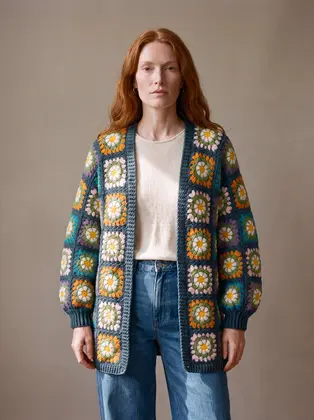
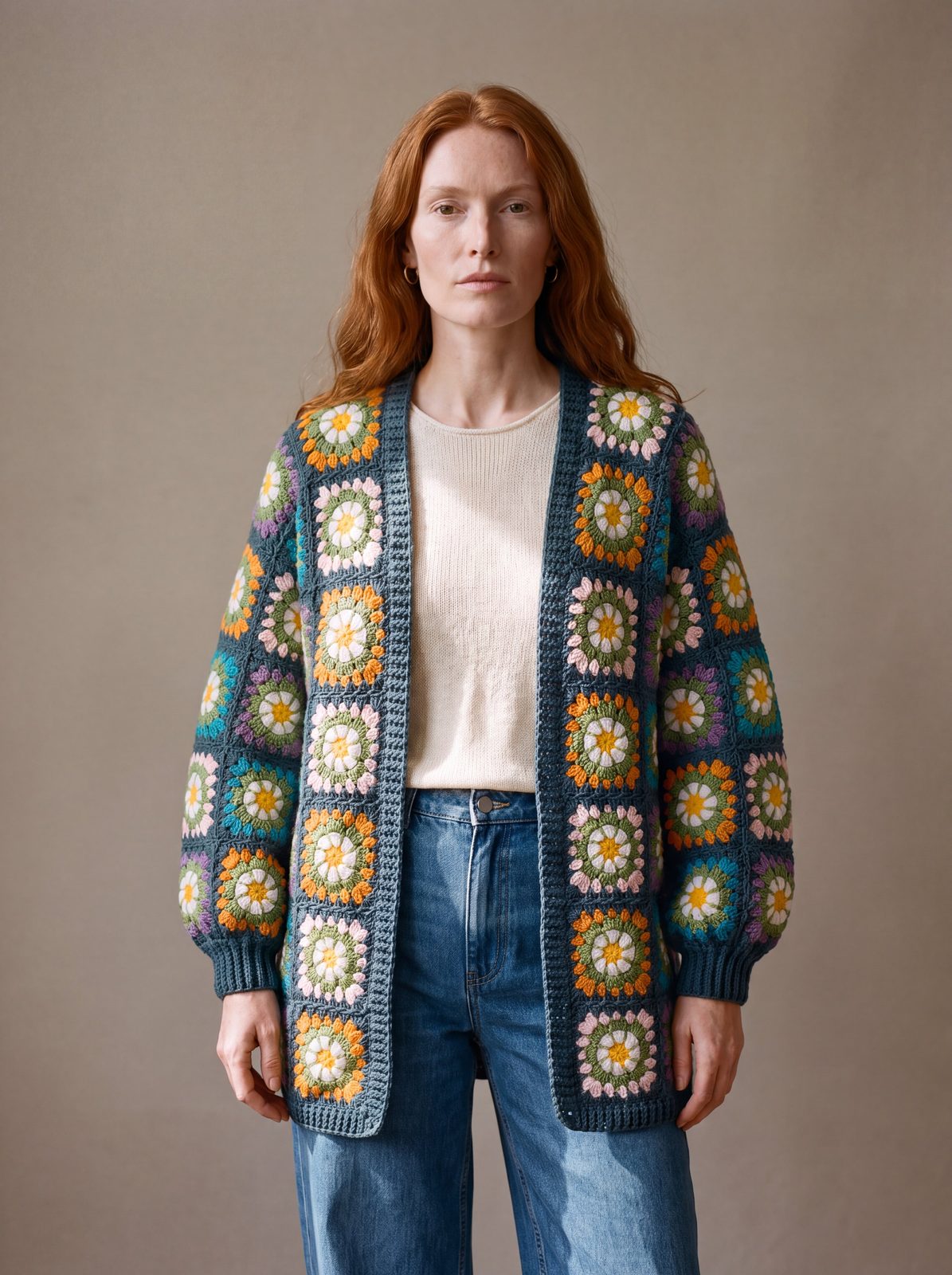
For a vivid crochet layer, keep the printed piece comparatively restrained: a narrow stripe, a small repeated flower, or a simple check. A Daisy Balloon Sleeve Long Cardigan – Teal already brings a lively field of colorful flowers. It can sit comfortably over a fine-striped tee or a skirt with a modest, spaced motif when the rest of the outfit is quiet. Avoid adding several unrelated statement accessories; clean shoes and a simple bag leave the pattern legible.
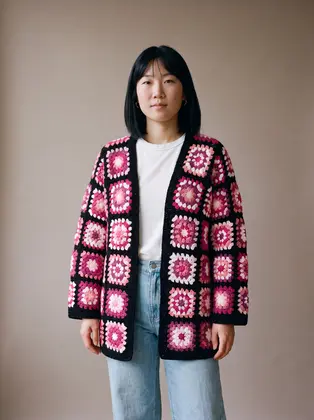
If your print is the lead, choose crochet that supports rather than duplicates it. A solid crochet layer can pick up one shade from a printed dress without repeating the print itself. Open fronts also leave the center of the outfit visible, so the garment reads as a frame instead of another panel of pattern. The Long Cardigan – Black & Pink has a strong color-blocked motif and a dark ground; a small, low-contrast print beneath it may feel more coherent than a second large floral.
Use Scale to Keep Patterns in Conversation
Scale is a useful guide, not a law. Two small patterns can feel quietly layered, while a small print next to a large crochet motif can create an easy contrast. Trouble often comes when both patterns have similar size, density, and contrast: the eye cannot decide where to settle. Change one of those qualities. Pair a close, fine print with large open crochet, or a bold motif with a print that has more plain background.
Look at the outfit from a few steps away, not only in a mirror close-up. If both patterns merge into visual noise at a distance, reduce the scale or contrast of one. If one seems to vanish, give it more space or let its color appear elsewhere, perhaps in a shoe or bag. These adjustments are more dependable than trying to match every motif exactly.
Texture counts as pattern, too. Chunky stitches, raised clusters, and openwork all create movement even when they use one color. A small, airy print is often a kinder partner for dense crochet than a tightly packed, high-contrast print. Conversely, a smoother crochet surface can work with a more detailed pattern because the fabric itself is not adding as much visual weight. Consider the finish of the actual garment rather than assuming every crochet item has the same degree of texture.
Borrow a Color, Then Leave the Rest Alone
Color is the simplest bridge between a print and crochet. Pick one shade that appears in both pieces, even if it is only a small accent. The match does not have to be exact: a muted teal can sit naturally beside a brighter blue-green, and cream can connect warm and cool colors. Repeating one note helps the pieces belong together without making them look like a coordinated costume.
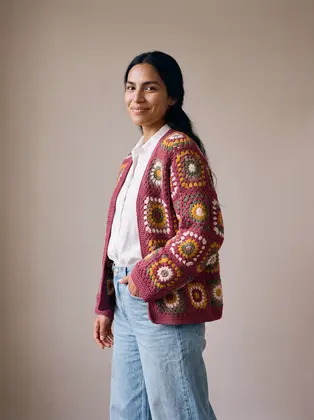
When a print contains several colors, resist the temptation to echo all of them. Choose one, then let the remaining colors stay in the print. A Mosaic Cardigan – Burgundy & Mustard brings a palette of burgundy, mustard, sage, taupe, and cream. Pairing it with a skirt that repeats only mustard or cream creates a clear link while giving the cardigan room to show its full palette. A plain neutral top underneath can make the transition between the two pieces feel intentional.
Color temperature can help when no shade repeats exactly. Warm rust, mustard, and burgundy often sit well together; cool blues and greens can create a similar family. Neutrals are useful buffers, but they need not be blank. Denim, black, ivory, and brown each change the mood. For more outfit options, browse the cardigan collection or explore the broader collections and start with a color already present in a piece you own.
Let Shape Create a Little Breathing Room
Proportion can calm an outfit even when both patterns are noticeable. If a crochet layer is long or roomy, try a cleaner line below it: straight-leg trousers, a simple skirt, or a dress with a defined silhouette. If the print is a flowing maxi skirt, a shorter crochet top or a cardigan worn open can keep the outfit from feeling like one continuous expanse of fabric. The goal is not to conceal your shape, but to create changes in line that help each piece read clearly.
An open cardigan makes a vertical frame and breaks up a printed surface. A cropped layer leaves more of a skirt or dress visible and can make a large print feel deliberate rather than overwhelming. Sleeve volume matters as well: a full sleeve beside a wide, ruffled print may feel crowded, while a simpler bottom half restores balance. Try the combination while moving and sitting; the proportions that look neat in a still pose should also feel comfortable in real life.
Leave a plain area somewhere in the outfit. It might be a simple tank between a patterned skirt and textured cardigan, a solid belt, or a stretch of bare neckline. That pause is not wasted space. It gives the eye a place to rest and makes the two expressive pieces look chosen rather than accidental. For a straightforward starting point, combine a printed blouse, straight jeans, and one colorful crochet layer, keeping shoes and jewelry uncomplicated.
Try Pairings That Fit the Moment
For daytime, wear a printed cotton shirt with a solid crochet cardigan and relaxed denim. Pick up one color from the shirt in the cardigan, and keep the shirt's pattern small or widely spaced. A half-tuck, sleeves pushed back, or an open neckline can make the layers feel less formal without requiring extra accessories.
For a dinner or gathering, a printed dress can work with a crochet layer that shares its ground color. A dark floral dress with a dark-ground cardigan creates a connected base; a lighter crochet piece can instead brighten the look if the print has a light accent. Keep the layer open if you want the dress print to remain visible, or fasten and style it according to the garment's intended shape. Do not assume a crochet item is a jacket or a top until its design supports that use.
For a low-key weekend, use printed trousers as the lead and let a neutral crochet piece soften the outfit. A striped top and a crochet cardigan can also work, especially when stripe spacing is simple and the cardigan adds a solid visual block. Try one change at a time: switch the shoes, then reconsider the bag, rather than adding several competing colors at once. Small edits make it easier to see which choice improved the balance.
Make the Combination Feel Like Your Wardrobe
Before buying something new, test the idea with clothes you already wear. Lay the print next to the crochet piece in daylight and notice the dominant color, the scale of the motifs, and where the outfit becomes busiest. Put them on together, then remove one accessory or swap one layer. Often the solution is simpler than expected: a solid base, a different shoe, or wearing the crochet open rather than closed.
Comfort and garment care belong in the decision, too. Crochet can have open stitches or raised details that call for thoughtful handling, and printed fabrics vary widely. Check the individual product information and the sewn-in care label; when fiber content, sizing, or cleaning instructions are unclear, confirm them with the team rather than guessing. The size and care guide is a useful place to start, but the actual item's label and confirmed product details should guide its care.
The most reliable formula is simple: choose a lead, connect one color, balance the scale, and leave a little space. From there, adjust the proportions to suit the pieces and the occasion. Prints and crochet do not need to match perfectly; they need a reason to sit together. Once that reason is clear, the outfit can be expressive without feeling overworked.