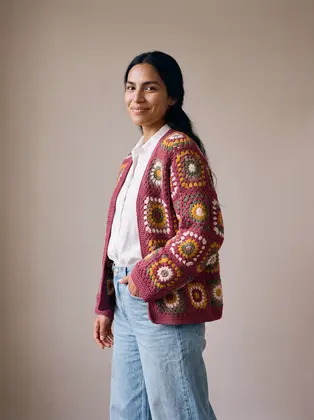
A short cardigan changes the visual math of an outfit. Its hem lands near the waist or high hip, so the layers beneath it become part of the silhouette rather than disappearing under a long knit. That can make a familiar pair of jeans feel sharper, give a skirt a clearer waistline, or add structure to a flowing dress. The key is not to chase one supposedly perfect proportion. It is to decide where you want the eye to pause, then balance the volume above and below that point.
Start with the hem, not a rule about height
“Cropped” can describe several different lengths. A cardigan ending at the natural waist reads differently from one that reaches the top of the hip, and the same garment can look shorter or longer depending on the rise of your trousers. Try it with the bottoms you actually wear, and note where the hem meets the waistband. If the two lines sit close together, the outfit often looks intentional; if they overlap awkwardly, a small adjustment can help. Tuck or smooth the base layer, raise the trouser rise, or choose a cardigan with a slightly longer body.
Rather than measuring your body against a formula, look at the full outfit in a mirror. Do you like the point where the knit stops? Does the lower half have enough visual weight to balance the sleeves and shoulders? A petite frame may enjoy the uninterrupted leg line of a high-rise trouser, while someone who prefers a longer torso might leave a little shirt visible beneath the cardigan. Neither choice is more correct. The useful question is whether the break between top and bottom feels deliberate.
Open-front styles create a vertical line that can soften a short hem. Wear the cardigan open over a close-fitting tee or tank, and let the two front edges frame the center of the outfit. With a very busy cardigan, keep the layer underneath uncomplicated so the outline remains easy to read. Browse the cardigan collection for open silhouettes and varied lengths.
Give the lower half a considered shape
A short cardigan works especially well with high-rise jeans because the waistband provides a natural partner for its hem. Straight-leg denim keeps the look relaxed and balanced; a wide leg adds movement and makes the compact top feel like a choice rather than a mismatch. For a neat everyday proportion, try a slim tee tucked into the jeans, then leave the cardigan unbuttoned or open. If the sleeves or stitch pattern bring noticeable volume, a straighter trouser leg usually keeps the outfit from feeling crowded.
Skirts make the same principle more expressive. A full midi skirt has volume of its own, so a cardigan that follows the upper body can supply contrast. Keep the waist visible with a tidy tuck or a hem that ends near the waistband. With a narrow or column skirt, you can use more texture or sleeve volume on top; the contrast between a compact waist area and a long lower line feels clean. A patterned knit over a printed skirt can work, but give the patterns room: choose a shared color, vary their scale, or let one piece be plainly colored.
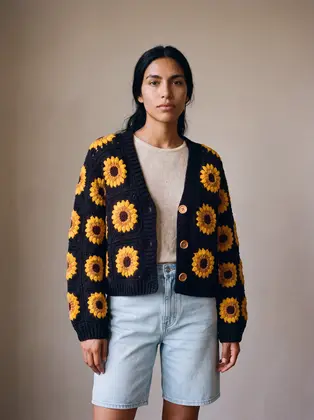
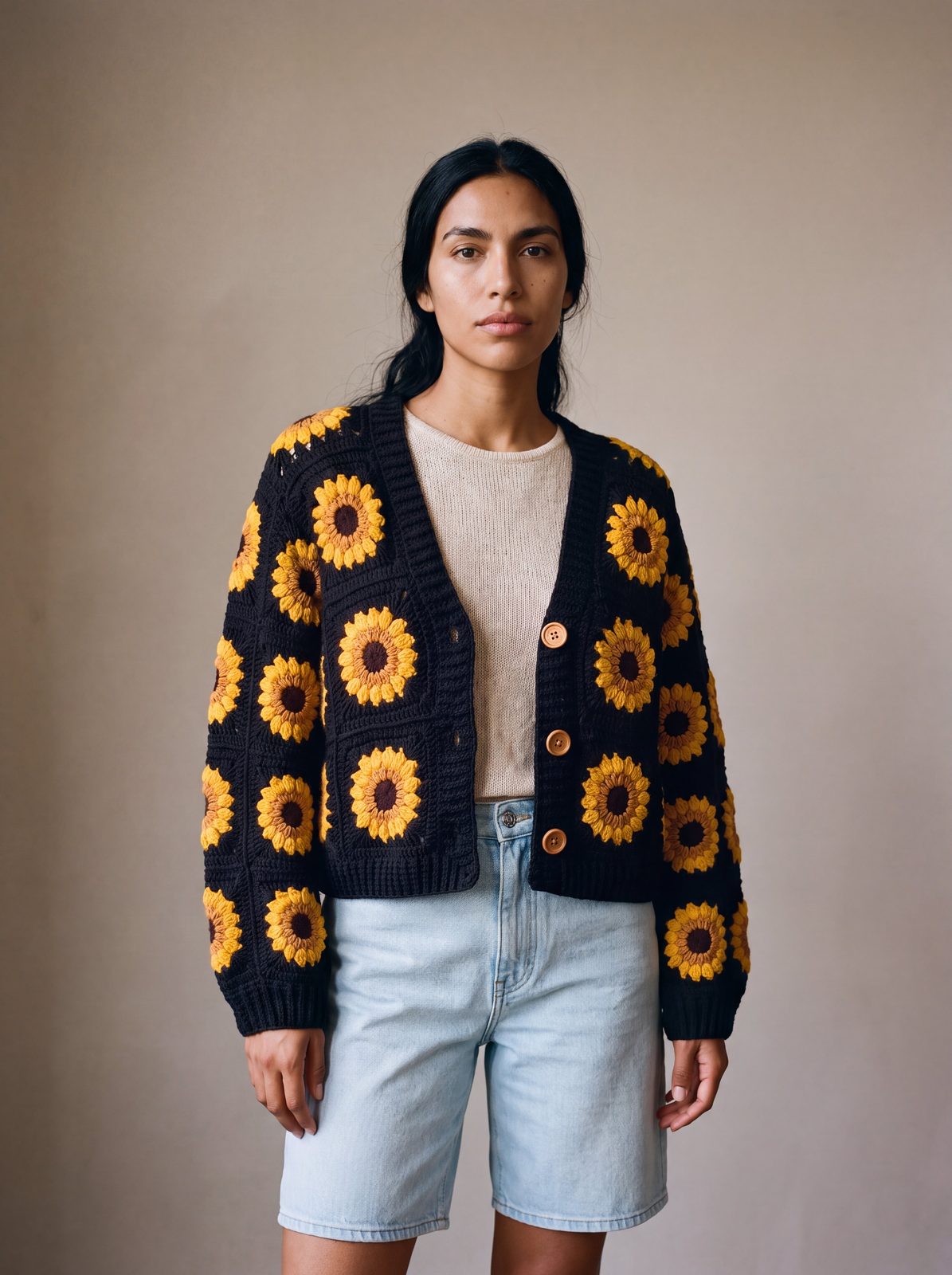
For a direct example of the cropped shape, the Sunflower Cropped Cardigan brings a strong motif to the upper half. Pair a lively knit like this with dark straight jeans, a simple skirt, or a solid dress. When a garment already supplies color and detail, the best balancing piece is often quiet rather than equally decorative.
Use dresses and long layers to control the line
A short cardigan over a dress creates a visible waist without requiring a belt. It can make a loose, gently gathered dress feel more defined, or add a soft layer to a slip-style shape. Let the cardigan sit where the dress naturally narrows, and check that its edge does not bunch against a seam or gathered section. If the dress has a high waist, a very short cardigan may stop above that seam; a longer crop that reaches the top of the hip can connect the pieces more smoothly.
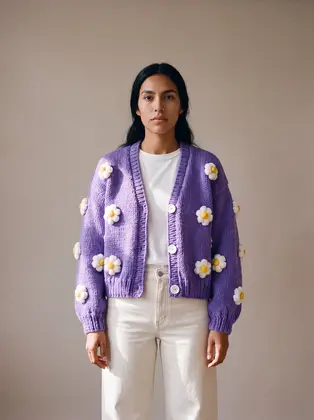
Length contrast is useful, too. A cropped knit over a long dress makes the outfit feel layered rather than uniformly flowing. If the dress is voluminous, keep the cardigan relatively close through the body; if the dress is narrow, a puff sleeve or textured knit can provide welcome contrast. Leave the front open when you want a long uninterrupted view of the dress, or close it when you want the waist to read more clearly. Try the Daisy Cardigan – Lilac over a simple solid-color dress so its floral contrast has space to show.
For extra warmth, a longer coat can sit over a cropped cardigan without competing for the same hemline. Keep the cardigan smooth underneath and avoid stacking several bulky layers at the waist. A light base layer, short knit, and clean-lined outer layer create three distinct lengths; each should be visible enough to look purposeful. For more layering ideas, explore the collection and compare the shapes you already like wearing.
Balance texture, color, and sleeve volume
Proportion is not only about inches. A dense crochet pattern, a puff sleeve, or a high-contrast color block can make the upper half feel visually larger even when the garment is short. Balance that emphasis with a substantial lower half: dark denim, a structured skirt, or a trouser with a crisp crease. Conversely, if the cardigan is fine-gauge and close to the body, a fluid skirt or wide-leg pant can add movement without making the outfit feel top-heavy.
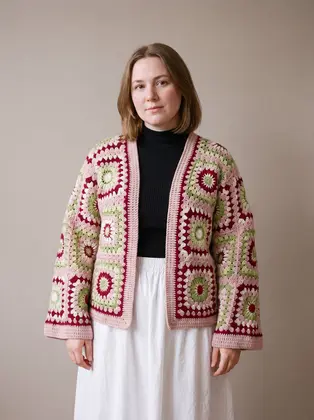
Color offers an easy way to set priorities. A tonal outfit—cream with tan, navy with denim, or shades of one color—lets the waist and silhouette lead. A vivid cardigan over neutral separates turns the knit into the focal point. If you prefer a pattern-rich look, repeat one color from the cardigan in a shoe, bag, or skirt detail instead of trying to match every shade. The Mosaic Cardigan – Pink can be treated as the outfit’s main color story; a plain tee and uncomplicated bottoms let the pattern do its work.
Sleeve volume deserves a practical check. Balloon or generously cut sleeves can look charming, but they may catch beneath a fitted jacket or bunch at the wrist when paired with a long-sleeved base. Push the sleeves slightly up only if the knit returns comfortably and does not strain; otherwise choose a smoother underlayer or wear the cardigan as the outermost piece. A clean cuff and visible wrist can make a layered outfit feel lighter, especially with wide or full bottoms.
Make the fit feel intentional in real life
Before deciding that a cardigan is too short, test it in motion. Sit, reach, and lift your arms; the hem should still feel comfortable for how you plan to wear it. Check the shoulder seam, sleeve length, and ease across the back, because a cropped body cannot compensate for a fit that pulls or restricts. If you want to layer a shirt underneath, allow room for that layer without sizing up automatically; compare the product’s actual measurements and fit notes when available.
Small styling choices do much of the work. A front tuck can reveal the waistband while keeping a shirt relaxed. A slim belt can clarify the waist under an open cardigan, but skip it if the layers already create a firm line. Shoes matter as well: a low-profile shoe keeps a wide trouser outfit casual, while a boot or loafer can lend structure to a skirt and short knit. These are adjustments, not rules. Use the version that lets you move comfortably and still feels like you.
When garment composition, sizing, or care is not clear from the product listing, rely on the item’s actual label and confirm details with the team rather than assuming all knits behave alike. Review size and care guidance before choosing a size or cleaning method. A thoughtful fit and a balanced outfit will serve you longer than a trend-driven proportion formula.