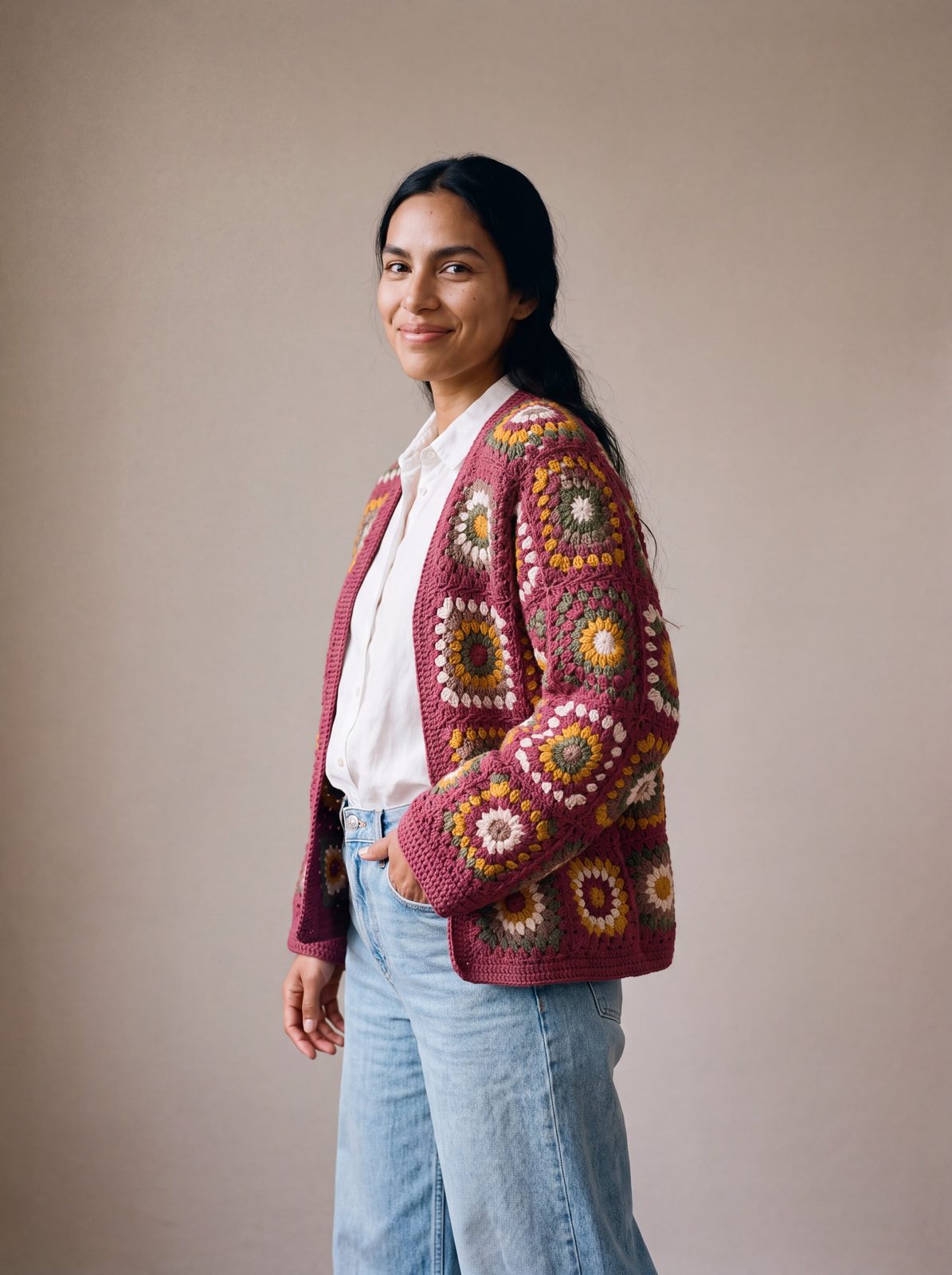
Burgundy and mustard work together because one is deep and the other is bright, but neither feels icy or sharp. The trick is not to give them equal volume by default. Let one color lead, keep the rest of the outfit quiet, and decide where you want the eye to land. A burgundy layer with a mustard accent reads different from a mustard top against burgundy trousers, even when the palette is the same.
Choose which color leads
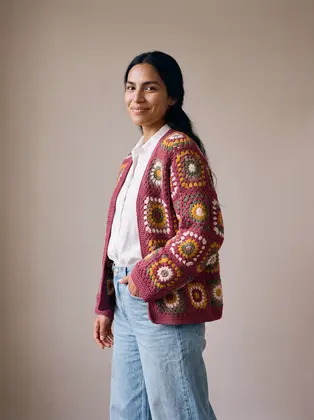
Start by choosing a dominant shade. Burgundy is usually the easier foundation: it behaves like a dark neutral, adds definition, and gives mustard a little breathing room. Try a burgundy cardigan over a cream top with straight-leg denim, then bring mustard in through a scarf, bag, or shoe. The color stays noticeable without making the whole outfit feel like a color-blocking exercise.
If you prefer mustard near the face, reverse the proportions. A mustard blouse or sweater can be the focal point, with burgundy in a skirt, trousers, or outer layer. Keep the silhouette uncomplicated so the color contrast does the work. For a ready-made interpretation, the Mosaic Cardigan in Burgundy & Mustard already combines the shades with cream, sage, and taupe in its squares. Since the cardigan itself is visually active, wear it over a plain base rather than adding another bold print.
Think in terms of visual area, not strict percentages. A narrow burgundy belt and mustard blouse are enough to make both colors present; you do not need matching blocks on top and bottom. If the first outfit feels loud in the mirror, remove one competing element before abandoning the palette.
Use neutrals to give the colors room
Cream, ecru, denim blue, charcoal, and medium brown all make useful partners. Cream softens the contrast and works especially well between the two shades: a cream tee under a burgundy jacket, for example, creates a clean pause before a mustard bag or knit. Blue denim lends a casual note and prevents the combination from reading too formally.
Black can work, but a large black area may make the combination feel more graphic than warm. If black is your usual anchor, try it in shoes or a small bag while keeping a lighter neutral near the face. Gray is another option; warm charcoal tends to sit more naturally beside mustard than a very cool, blue-toned gray.
Use one neutral consistently rather than adding every possible supporting shade. A simple base of cream tee, dark jeans, and brown shoes gives the colors a clear setting. The cardigan collection is a useful place to look for an open layer that can sit over that kind of uncomplicated outfit; for lighter foundations, browse the tops collection.
Balance pattern, texture, and silhouette
When both colors appear in a patterned piece, treat that piece as the outfit's focal point. The burgundy-and-mustard mosaic cardigan has repeating squares and additional accent colors, so a solid shirt and calm trousers keep the composition legible. A straight or gently wide trouser can balance a cardigan that has texture and presence; if you wear a full skirt, a neater top underneath helps keep the outline intentional.
Texture matters because these shades are strong even when they are not bright. A textured knit beside smooth denim creates contrast without adding another color. Corduroy, brushed cotton, or a soft-looking woven fabric can also complement the palette, but avoid piling several bulky textures together if the outfit already has a substantial cardigan. The goal is a mix that feels considered, not a head-to-toe theme.
For a subtler take, put burgundy and mustard in separate pieces with a little distance between them. Burgundy shoes with a mustard top can feel easier than a scarf wrapped directly beneath a mustard collar. Conversely, if you want a more deliberate pairing, repeat one color in a small detail: burgundy earrings with burgundy shoes, or mustard socks that pick up a stripe in a top. One repeat is enough.
Build outfits for different levels of boldness
Use these combinations as starting points, adjusting the color area to suit your comfort:
- Everyday: Cream tee, blue jeans, burgundy cardigan, and a small mustard accessory. Keep shoes simple and let the knit carry the color story.
- Polished: Mustard blouse, charcoal or deep brown trousers, and burgundy loafers or a structured bag. A clean neckline and tailored proportions make the warmer shades feel composed.
- Weekend: A burgundy skirt with a simple cream shirt and mustard knit tied loosely over the shoulders. This gives the color contrast without requiring a matching set.
- Statement layer: Wear the burgundy-and-mustard mosaic cardigan with a plain dark base and one neutral shoe. Avoid adding a second multicolor item nearby.
These are formulas, not rules about which garment belongs to which gender or occasion. A loose shirt can look relaxed with straight jeans; a more fitted layer can sharpen a fuller trouser. Pay attention to where hems meet: a top that ends at the widest point of a skirt or trouser may interrupt the line, while a tuck or a longer open layer can create a clearer shape.
Try the palette in small doses first
If you are unsure about the pairing, start with accessories. A burgundy bag and mustard knit, or mustard scarf with a burgundy coat, tests the relationship without asking you to commit to two large garments. You can also use a patterned accessory that includes both shades and wear it with denim and cream.
A second option is to soften one color. Instead of a bright golden mustard, choose a muted, earthy yellow; instead of vivid wine red, choose a deeper, brown-based burgundy. The exact shade changes how much contrast you see, so use the colors already in your wardrobe as a guide. Hold pieces together in natural light when possible; indoor lighting can make warm tones look flatter or more orange than they do outside.
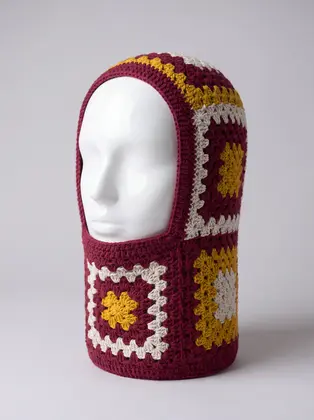
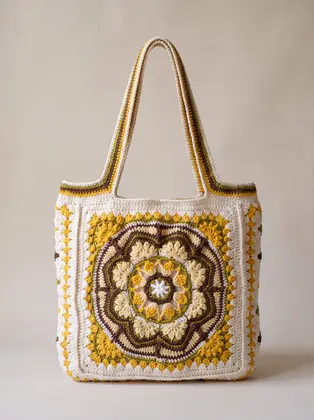
Headwear can be an especially easy accent in cooler weather. The Burgundy & Mustard Balaclava brings the combination close to the face, so keep the coat and top calm—navy, cream, or a simple dark neutral will let its squares read clearly. For a more understated accessory, a mustard tote can echo the same warm note while leaving burgundy to a smaller detail. These alternatives show how the same palette can shift from a prominent layer to a controlled accent.
Make the outfit feel like you
The best burgundy-and-mustard outfit is not necessarily the one with the most matching pieces. It is the one with a clear focal point, a comfortable shape, and enough quiet around the colors. Repeat a shade only when it helps the outfit connect; leave space for denim, cream, or another neutral to do its grounding work.
Before heading out, check the complete look rather than judging the two colors in isolation. If the outfit feels busy, remove a print or accessory. If it feels too dark, bring cream closer to the face; if mustard seems too dominant, add burgundy in a larger, grounding area. For questions about garment fit, fabric, or care, rely on the individual product details and labels, or review the size and care guidance before making assumptions. A measured approach makes this warm pairing versatile well beyond one season.