A crochet bag adds texture before you have chosen a single accessory, so styling it well is less about piling on more detail and more about giving each surface room. Pair openwork with one or two contrasting materials, keep the color story deliberate, and consider where the bag sits against your clothes. The result can feel collected rather than busy, whether you carry a small shoulder bag with a tee or a roomy tote beside a substantial cardigan.
Start with contrast, not a matching set
Open stitches have a light, airy quality. They show space as much as yarn, which is why they read differently from a dense ribbed sweater or brushed fabric. Put those textures together and the contrast does the work: the bag looks distinct, while the clothing gives the outfit substance. A smooth cotton tee, crisp shirt, or simple tank is an especially easy partner because it does not compete stitch for stitch.
For a relaxed daytime outfit, try straight-leg denim, a plain top, and a crochet bag in a color already present in your shoes or belt. The denim supplies a firm, familiar texture; the bag softens the combination. If the bag is multicolored, leave the top calm and repeat just one of its shades in a small detail. A single echo is enough. Matching every accent can make an outfit feel assembled around the bag instead of worn naturally.
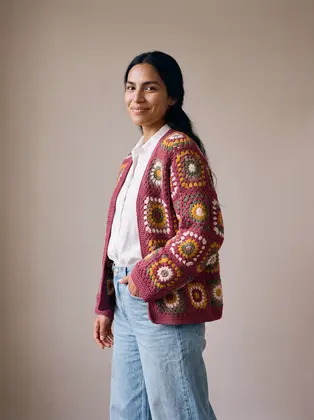
When the clothes are also textured, vary the scale. A chunky knit beside open crochet can work because the stitches are clearly different, but two similarly sized, highly detailed surfaces may blur together. Give them a visual pause with a plain layer, a solid skirt, or a simple neckline. For a patterned cardigan, such as the Mosaic Cardigan in Burgundy & Mustard, choose a bag that draws on one color from the garment rather than adding a separate competing palette.
Use knitwear with a little breathing room
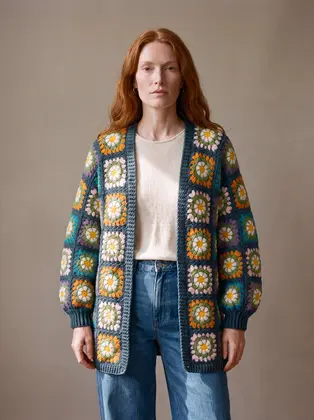
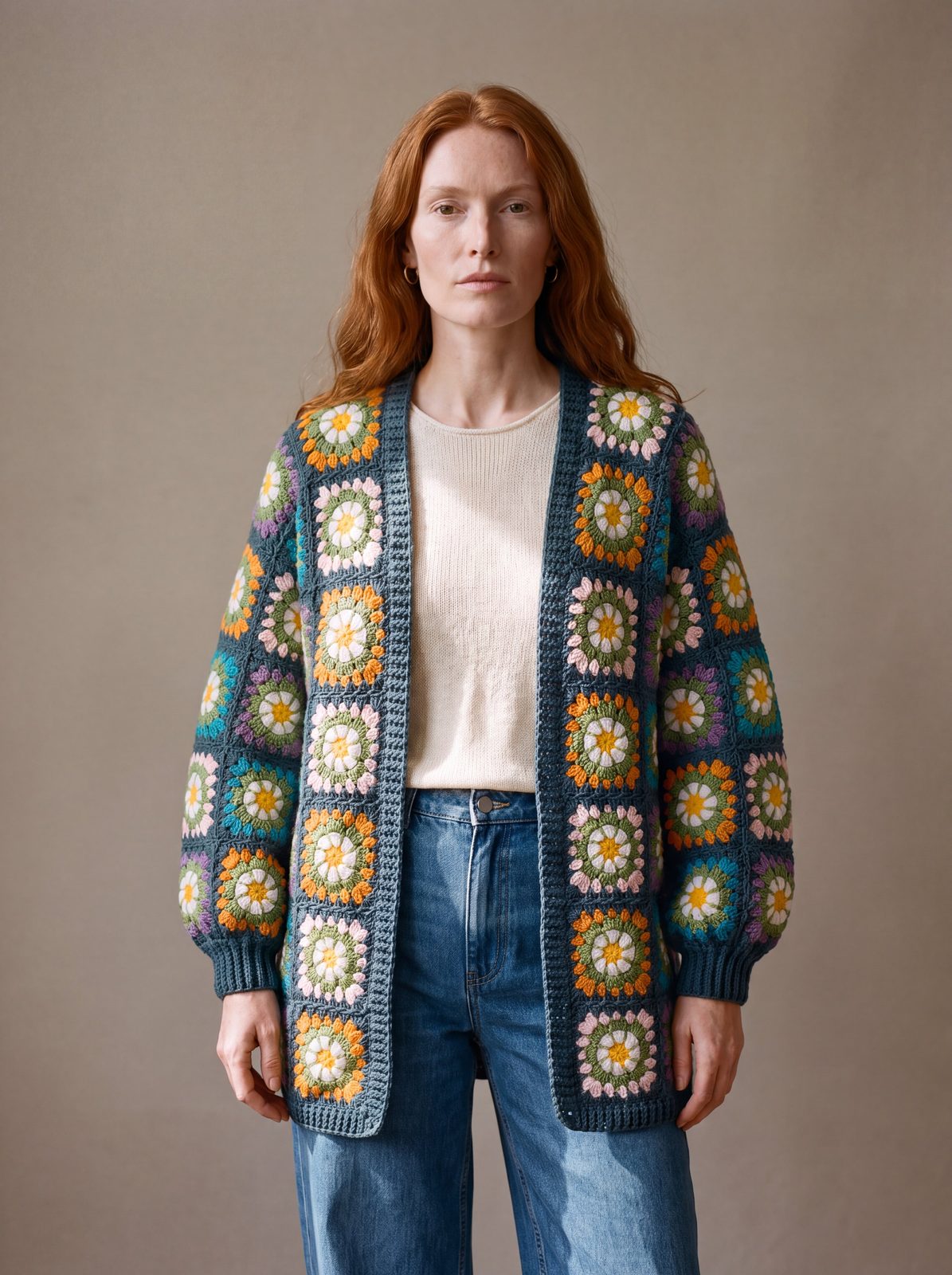
Color helps set the mood. Cream, charcoal, denim blue, and soft brown are flexible backdrops for a bag with several colors. A tonal outfit is quieter: a cream bag against an oatmeal knit looks subtle, while a dark bag against navy can blend in and let texture show up close. For a more defined contrast, pick one saturated shade and let it be the accent. A colorful layer such as the Daisy Balloon Sleeve Long Cardigan in Teal can be balanced by a bag with a restrained ground color and a small shared note.
Pay attention to sleeve and strap placement. Bulky sleeves can catch a shoulder strap or make it slide, so try the bag with the outer layer you plan to wear. A crossbody strap over a cardigan may create a strong diagonal line; that can be useful for breaking up a long open front, but it can also compress a delicate stitch or bunch a sleeve. Move the strap, shorten it if adjustable, or carry the bag by hand when the layering feels awkward. Comfort is part of a good outfit, not an afterthought.
Let denim, linen, and smooth fabrics do the editing
Linen offers a different balance: it has a visible weave and a relaxed drape, but usually reads as a broad, quiet surface rather than a raised knit. A linen shirt or simple skirt can sit comfortably beside a crochet bag, especially when the colors are related. Choose one warm neutral family—such as sand, cream, and brown—or pair cool white with blue. If both pieces are loose, define the shape somewhere else: tuck the shirt at the front, add a belt, or choose a bag with a clear outline. That small adjustment keeps generous proportions from becoming shapeless.
Make print and color feel considered
Print can be a natural companion to crochet, but scale matters. A small print may disappear beside a high-contrast bag, while a large print can pull focus from it. One straightforward approach is to use a printed garment whose colors include the bag’s main shade. Another is to keep the bag neutral and let the print lead. Avoid introducing several unrelated accent colors at once; texture already gives the eye something to notice.
For a quiet outfit, repeat a color rather than an exact motif. A green bag could sit with a muted floral blouse if the greens are compatible, while a bright bag can lift a mostly denim-and-white outfit. If you are unsure, lay the pieces together in natural light and look at them from a few steps away. Ask which item catches your eye first and whether that is the intended effect. A busy combination is not automatically wrong, but it should feel deliberate rather than accidental.
Build outfits for real days and real proportions
For errands, combine a crochet tote with a sturdy jacket, straight jeans, and comfortable shoes. Keep the top simple so the bag’s openwork is visible, and check how it hangs when loaded; a sagging silhouette may change the proportion of the outfit. For lunch or an afternoon out, try a small bag with a flowing skirt and a close-fitting tee, or use a relaxed cardigan over a plain dress. A compact top layer and a bag worn higher on the body can give a long skirt more definition.
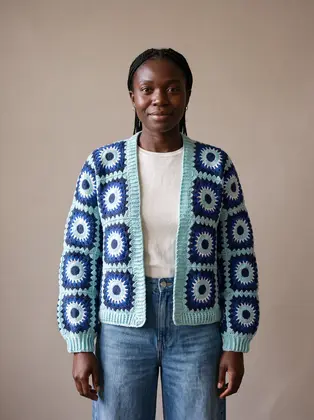
For a layered look, use three distinct roles: a smooth base, a textured outer layer, and the bag as the smaller accent. For example, a white tee beneath an open cardigan and dark jeans creates a calm foundation. A patterned layer like the Ribbed Cuff Cardigan in Navy & Aqua can bring substantial color and stitch detail, so pair it with a bag in a single related shade rather than another high-contrast pattern. The same principle works with a neutral cardigan and a brighter bag: choose which piece is the lead and let the other support it.
Keep the bag in good shape between outfits
Styling starts with condition. Crochet surfaces can catch on rough hardware, sharp jewelry, or exposed fasteners, so take a moment before putting the bag on with a heavily embellished jacket. Avoid overfilling it if the shape depends on a relaxed structure, and store it where its stitches will not snag against zippers or hooks. These are sensible precautions, not guarantees; construction and fiber content vary from one bag to another.
A crochet bag works best when it feels like part of your wardrobe rather than a special-effect accessory. Let one texture lead, use color to connect the pieces, and keep proportion in mind as you layer. A plain tee and denim make a reliable starting point; a substantial knit or print can be just as successful when the scales and colors have room to breathe. Make the final choice by wearing the outfit, checking the strap and shape, and choosing the balance that feels comfortable to you.