When a knit neckline feels right, the rest of the outfit tends to fall into place. It frames the face, changes how a layer sits, and determines which jewelry or collar can share the space. Choosing one is less about following a rule for your body shape than deciding what you want the opening to do: show a little collarbone, make room for a shirt, or keep the line close and uncomplicated.
Start with the outfit, not a neckline rule
Think first about the pieces you wear most often with knitwear. A crew neck is an easy companion to a crisp shirt, but only if the sweater has enough room at the neck and shoulder for the collar to lie flat. A V opening can reveal a shirt collar or a simple chain without adding bulk. A wide scoop or square shape creates a more open frame and works well when the knit is the main event rather than one layer among several.
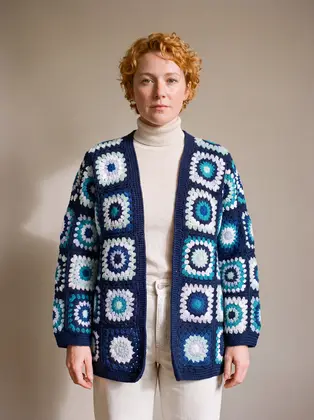
Consider your day, too. If you are moving between indoor and outdoor temperatures, a cardigan worn open over a crew tee gives you useful flexibility. An open-front shape has no fixed neckline in the same way a pullover does; the lapel and the layer beneath create the visual frame. For a reference point, the Long Cardigan – Navy & Turquoise has an open front that can sit over a high crew or a more open top without competing with a shaped sweater collar.
Then look at the garment itself. A neckline is not only a cutout: its width, depth, edging, and texture all matter. A high, close opening can feel neat in a fine-gauge knit and crowded in a dense, highly textured one. The same scoop can look understated in a solid color and become a focal point when framed by scallops or openwork. Assess the whole front, not just the name on the product page.
Crew neck: simple, close, and easy to layer
A crew neck sits near the base of the neck and gives the upper body a clean, contained line. It is a strong everyday choice when you want the knit to work with denim, a collared shirt, or a jacket. The key is avoiding a fight between layers. If you plan to wear a button-down underneath, check that the collar can emerge without bunching and that the sweater shoulder is not so tight that the shirt pulls across the chest.
Jewelry can be kept minimal: small hoops or a short pendant that rests below the neck edge. A long necklace may be more comfortable over the knit than trapped between it and a shirt collar. If you prefer a little more space at the throat, a V-neck or scoop may feel less enclosing while keeping a similarly practical silhouette.
Use a crew neck to balance an expressive lower half or a patterned jacket, because the neckline itself does not add another strong angle. But a close opening is not automatically the most versatile one. If you often wear scarves, broad collars, or statement necklaces, the extra fabric near the throat may feel busy; choose the neckline that leaves your usual accessories room.
V-necks: a useful opening for layers and jewelry
The V-neck draws the eye downward and makes a clear space at the center front. A shallow V feels polished and can reveal a shirt collar, while a deeper V reads more open and may call for a camisole or simple base layer, depending on how you prefer to dress. Check the point of the V against the neckline of what you already own. A shirt collar that lands awkwardly above or below the knit can make layering look accidental.
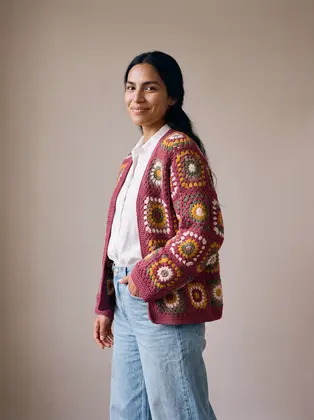
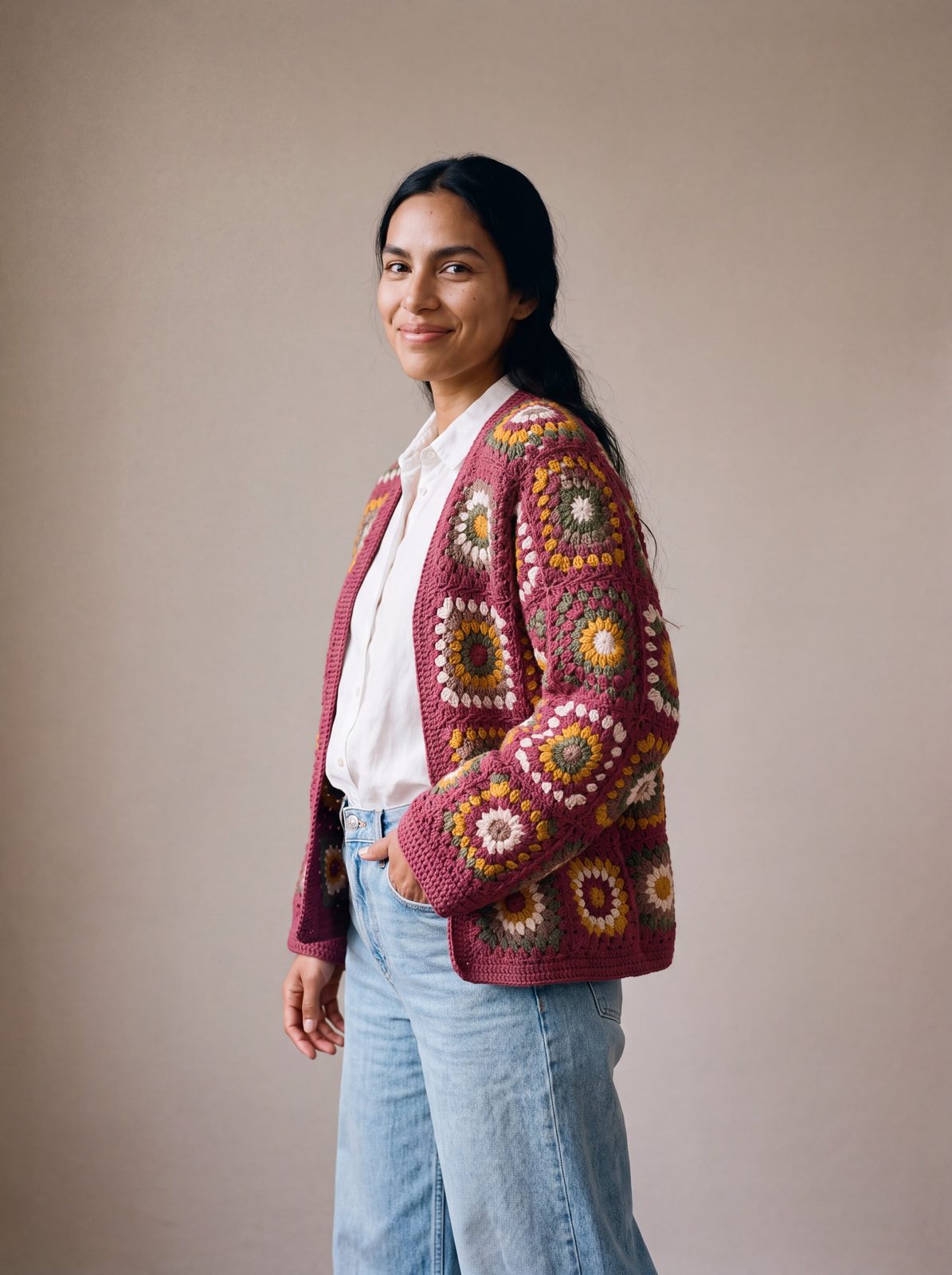
For a cardigan, an open V-shaped front can be adjusted by how far you fasten it—or left open to show the base layer. The Mosaic Cardigan – Burgundy & Mustard is an open-front example: its patterned squares already bring visual interest, so a plain top beneath lets the outfit breathe. A quieter base also makes it easier to judge where the cardigan edges fall on your frame.
Necklaces tend to sit naturally in the open space, but proportion still matters. A very short chain may disappear against the edge; a pendant can echo the V without needing to match it exactly. Try the knit with the jewelry you actually wear rather than assuming every V requires a necklace. If the knit has a vivid pattern, a bare neckline can be the more composed choice.
Scoop and square necks: open frames with different moods
A scoop neck curves across the chest and offers a softer, broader opening than a crew neck. It can be useful when you want a little breathing room around the neck or plan to wear a fine chain. A wide scoop may shift when you move, so check the shoulder placement and how securely the edge sits before building an outfit around it. If you prefer more coverage, a camisole beneath can provide it without changing the sweater.
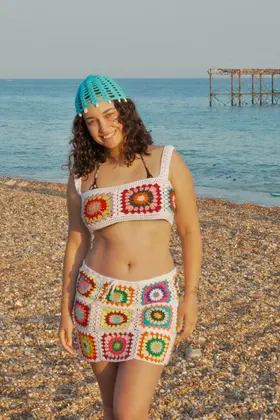
A square neck has straighter edges and a more defined frame. It can feel graphic even in a simple knit, particularly when the straps or shoulders are wide. The Mosaic Crop Top uses a square neckline with wide straps; that geometry makes the opening part of the design rather than a neutral detail. For styling, keep other lines straightforward: a clean trouser waistband or an uncomplicated overshirt will let the neckline read clearly.
Open necklines invite attention to the upper chest, but there is no need to dress for an imagined ideal. Choose the amount of exposure that feels comfortable in your setting and when you move. Sit, reach, and layer before deciding: a neckline that looks appealing in a still image should also feel secure and practical in real life.
Halter and boat shapes: pay attention to shoulder balance
A halter draws fabric or straps toward the neck and leaves the shoulders more visible. In knitwear, that can make a warm-weather piece feel intentional with high-waisted pants or a skirt. Because the neck carries more of the visual structure, consider whether you like having hair, jewelry, or a jacket collar near that area. A light layer that slips off the shoulder may be more comfortable than a conventional fitted jacket.
Boat necks travel more horizontally across the upper chest, creating a broad, level line. They can look elegant with simple earrings and a neat hairstyle, but a wide neckline may meet the edge of an underlayer or bra strap. Try the piece with the undergarments you expect to wear, and check that the garment remains in place as you move. The practical fit matters more than the label attached to the silhouette.
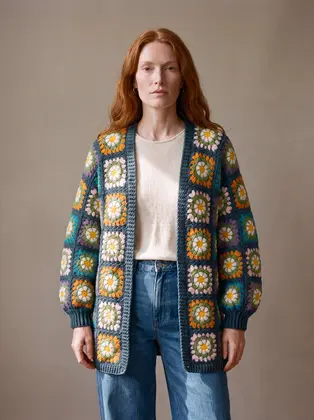
For a deliberately open shoulder line, the Star Garden Halter Top gives a clear example of a halter shape. Its floral crochet already supplies detail, so a plain layer or uncomplicated accessories can keep the overall look considered. Browse the broader tops collection when comparing neckline proportions, or explore cardigans for open-front layering options.
Make the decision in a fitting room
Use a short, repeatable check instead of judging a neckline from the hanger. Put on the knit and look straight ahead, then turn slightly to see whether the shoulder line stays balanced. Raise your arms and sit down. Notice if the edge pulls, flips, gaps, or presses against your throat. Add the jacket, shirt, or necklace you intend to wear most; a neckline earns its place by working with your real wardrobe.
Also check fabric behavior and garment information rather than guessing. Different knits can relax or sit differently, and product copy may not answer every fit or care question. Consult the item’s actual label and the store team for confirmed fiber, sizing, and care details; when in doubt, avoid assuming a particular wash method is safe. The size and care guide is a useful starting point, and contact the team if a product-specific detail needs clarification.
Finally, notice how the neckline works with the outfit at a normal distance. A crew can ground a patterned cardigan; a V can open up layers; a square or scoop can make a simple knit the focal point. The right neckline feels comfortable, suits the layers you reach for, and gives the outfit the balance you want.