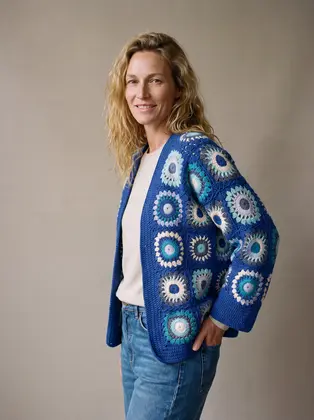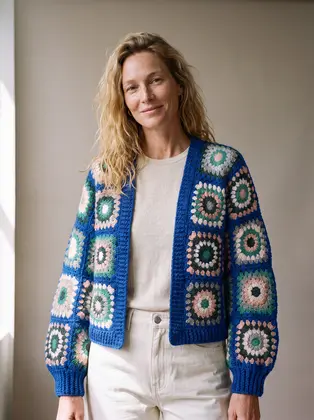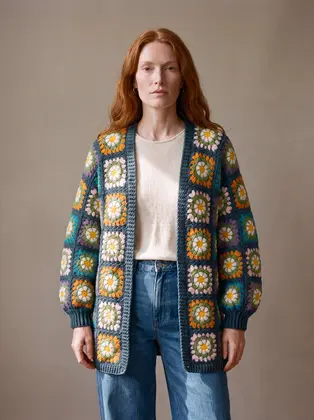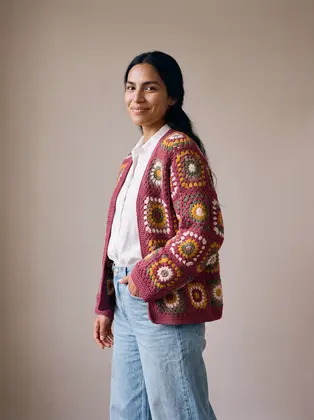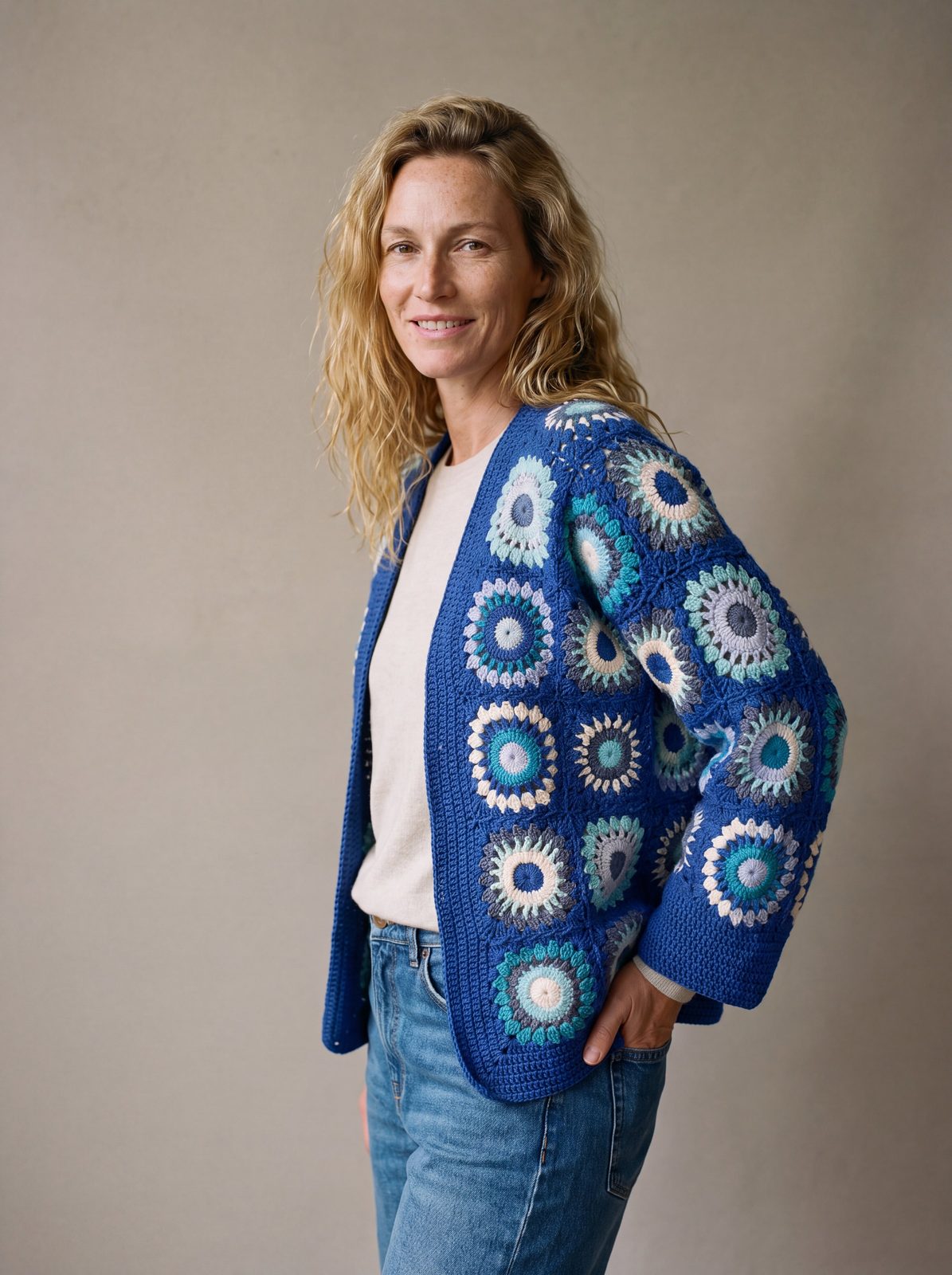
A cobalt cardigan already has a point of view. The easiest way to make it feel considered is not to mute it, but to give that saturated blue a clear role: choose one supporting color, keep the proportions intentional, and let texture do some of the work. Whether yours is a quiet solid knit or a square-by-square crochet design, the same approach makes it useful from weekday errands to dinner out.
Start with the cardigan’s shape and color story
Before choosing the rest of an outfit, notice what is happening in the cardigan itself. A clean, solid cobalt layer can behave almost like a tailored jacket; a crochet or mosaic version has more visual activity and may already contain aqua, cream, green, or other bright notes. The Mosaic Cardigan – Cobalt & Aqua, for example, pairs a cobalt ground with lighter blue and cream details. Those colors are useful clues, not rules: echoing one of them in a top or accessory creates continuity without turning the outfit into a matching set.
Length matters just as much. A cardigan that lands around the hip works naturally with straight-leg jeans, a skirt, or trousers; a longer style can read more like a light coat and benefits from a visible waist or a cleaner line beneath it. Wear open layers open when you want a vertical line, or close a buttoned style only if its front sits comfortably without pulling. If it is an open-front silhouette, a neat base layer gives the edges room to frame the outfit.
When your cardigan has a strong pattern, use a simple supporting cast. If the cardigan is mostly solid, you have more room for a stripe, small print, or another texture. In either case, avoid adding several competing focal points at once. The aim is not a perfectly restrained look; it is a clear one.
Build a dependable outfit with denim and a light top
Blue denim is an instinctive partner, but the wash changes the mood. Mid- or light-wash jeans make cobalt feel relaxed and daytime-friendly, while dark indigo brings a sharper, more polished finish. A straight or gently wide leg balances a cardigan with a relaxed body. If the top and cardigan are both roomy, a front tuck, a shorter hem, or a slimmer leg can restore shape; if the cardigan is close to the body, a fuller jean can add ease.
Underneath, try white, ivory, or pale gray. These shades create a bright break between blue layers and keep the cardigan’s color distinct. A simple tee is practical, but a fine-gauge top or a crisp shirt collar can make the same jeans feel more intentional. Keep the neckline compatible with the cardigan: a crew neck gives a clean frame, while an open collar adds length and a slightly more dressed-up note.
For a subtler tonal outfit, combine cobalt with navy or washed blue, then use a light neutral near the face. Tonal dressing works best when the blues differ in depth or texture rather than appearing almost-but-not-quite identical. A dark navy bottom, cobalt cardigan, and white base layer give each shade a separate job. Browse the cardigan collection for different lengths and patterns to build around the same reliable formula.
Use color with intention, not caution
Cobalt is vivid, but it is not difficult to coordinate. Cream and warm white soften its intensity; gray makes it feel urban; camel and tan lend warmth. For a more playful combination, pick up a color already present in a patterned cardigan. Aqua feels natural with cobalt, while leaf green or coral can add contrast in a small, deliberate dose. One colorful shoe, bag, or printed scarf is often enough.
Think in terms of proportion. If the cardigan is multicolored, let the rest of the outfit stay quiet and repeat just one of its secondary shades. With a plain cobalt cardigan, a patterned skirt or striped tee can provide interest, but keep the print scale comfortable beside the knit. Fine stripes usually act like a neutral from a few feet away; a large graphic print becomes another focal point. Pairing a cobalt layer with black is perfectly workable, especially for evening, though a pale top or a little exposed skin at the neckline can keep the combination from feeling too severe.
A second version of the color story is already built into a garment such as the Ribbed Cuff Cardigan – Cobalt & Green. Its green accents make olive, cream, or denim easy companions. Treat those hues as options rather than obligations: echoing one small detail is enough. See the broader collection for pieces that can supply a useful supporting color or contrasting texture.
Balance texture and keep the silhouette comfortable
Texture is the quiet tool that keeps a simple palette from looking flat. A crochet cardigan has visible dimension, so smooth denim, a soft cotton tee, or a fluid skirt can create a pleasing contrast. A finer, flatter knit can take more texture underneath: a subtly ribbed tank, a brushed shirt, or a corduroy bottom. Let the textures differ, but avoid stacking bulky layers if they restrict your arms or make the shoulder line feel crowded.
Pay attention to where hems meet. With a hip-length cardigan, a top that ends close to the cardigan hem can create an awkward band of competing lengths; tuck it, choose a shorter layer, or let a clearly longer shirt show intentionally. A longer cardigan usually looks balanced over a simpler, uninterrupted base, such as a column of top and trousers in one color family. If you like a skirt, consider how its volume relates to the cardigan: a straight or gently flared skirt is easy with a relaxed top, while a fuller skirt benefits from a more defined waist or a less oversized layer.
Sleeves deserve a practical check, too. If cuffs are substantial, make sure they do not bunch uncomfortably under a coat. Push them up only if the knit returns to shape easily; otherwise let the cuff sit naturally. Comfort is part of the styling decision, not an afterthought.
Take the same layer from casual to polished
For a casual day, wear cobalt over a tee with jeans and simple sneakers or flat boots. Keep accessories functional and let the color be the most noticeable element. On a warmer day, substitute a cotton skirt or a simple dress, using the cardigan as the extra layer for air-conditioned rooms or a cooler evening. A light, uncomplicated dress gives a patterned cardigan room to show without making the outfit feel busy.
To make the look more polished, swap denim for tailored trousers, choose a neat base layer, and finish with a structured bag or a clean shoe. Navy, charcoal, cream, and tan all work; the choice depends on whether you want contrast or a quieter line. A cardigan can also sit over a button-up shirt: keep the collar tidy and the shirt hem either fully tucked or clearly visible, rather than accidentally caught at the waist.
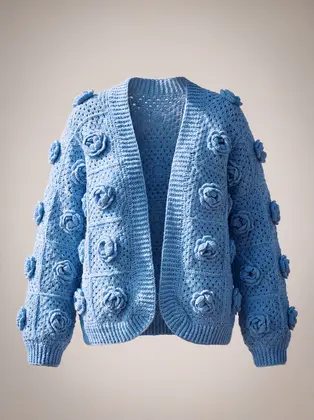
For a different take on blue, the Rose Cardigan – Cornflower Blue shows how texture and tonal detail can change the effect of a blue layer. Use that same principle with cobalt: the stronger the surface detail, the simpler the surrounding pieces can be. If you are deciding between silhouettes or need guidance on fit, check the size and care information; garment-specific measurements and care directions should always come from the product details and its actual label.
Make a small outfit plan before you get dressed
When a cobalt cardigan feels hard to style, choose the bottom first, then select a base layer that gives the outfit a clear color break. Finish with one accessory that either repeats a shade already present or adds a neutral anchor. This three-step sequence prevents the familiar last-minute pile-on of extra colors and layers.
It also makes the cardigan more versatile. A single piece can work with denim one day, a skirt the next, and tailored trousers when you need a sharper impression. Keep the combinations that feel comfortable and useful in rotation, and adjust the proportions rather than assuming the color itself is the problem. Cobalt looks most effortless when the rest of the outfit supports it with purpose: a straightforward shape, a thoughtful contrast, and enough room for the cardigan to be itself.