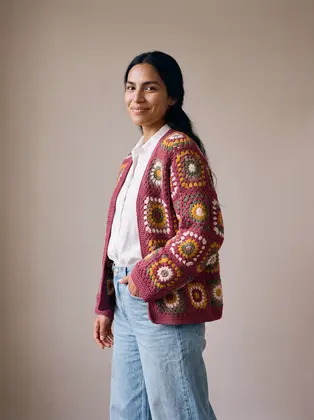
A crochet top and a midi skirt make an easy pairing when their proportions and textures have room to work. The open stitches already draw the eye; the skirt’s length gives that detail a quieter frame. The result can feel polished without losing the relaxed character of crochet, whether you are dressing for brunch, a gallery afternoon, or a warm evening out. Start with a clear choice: let one piece lead, then use the other to support it.
Choose the relationship between top and skirt
Because “midi” covers a range of lengths, look at where the hem lands on your own leg rather than relying on a label alone. A skirt that ends around mid-calf can feel graceful with a cropped crochet top, while a longer midi often benefits from a visible waistline. If both pieces are loose, define the middle with a neat tuck, a waistband, or a top that ends close to the skirt’s waist. That small break keeps the outfit from reading as one uninterrupted column of fabric.
Balance is more useful than a strict rule about body shape. A close-fitting cami works beautifully with a fluid skirt; a relaxed, boxy crochet blouse may feel better with a skirt that has some structure. Try the combination in a full-length mirror while standing and sitting. The hem should move comfortably, and the top should stay where you want it without constant adjustment. If you prefer more coverage beneath an open crochet stitch, choose a camisole or smooth base layer in a shade close to your skin or the top.
Let texture do the styling
Crochet has dimension, so give it breathing space. A skirt in a relatively smooth fabric—such as a simple cotton, satin-like finish, or lightweight woven—creates a useful contrast without competing stitch for stitch. A finely pleated skirt can work too, but keep the rest of the outfit restrained so the textures do not become busy. For a special occasion, the contrast of a handmade-looking openwork top and a clean, softly draped skirt feels considered rather than overly dressed.
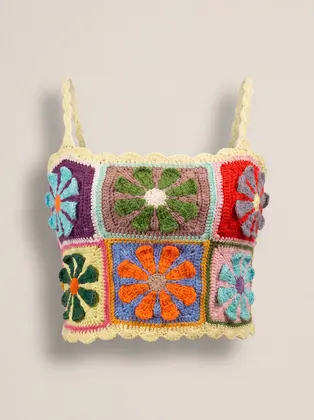
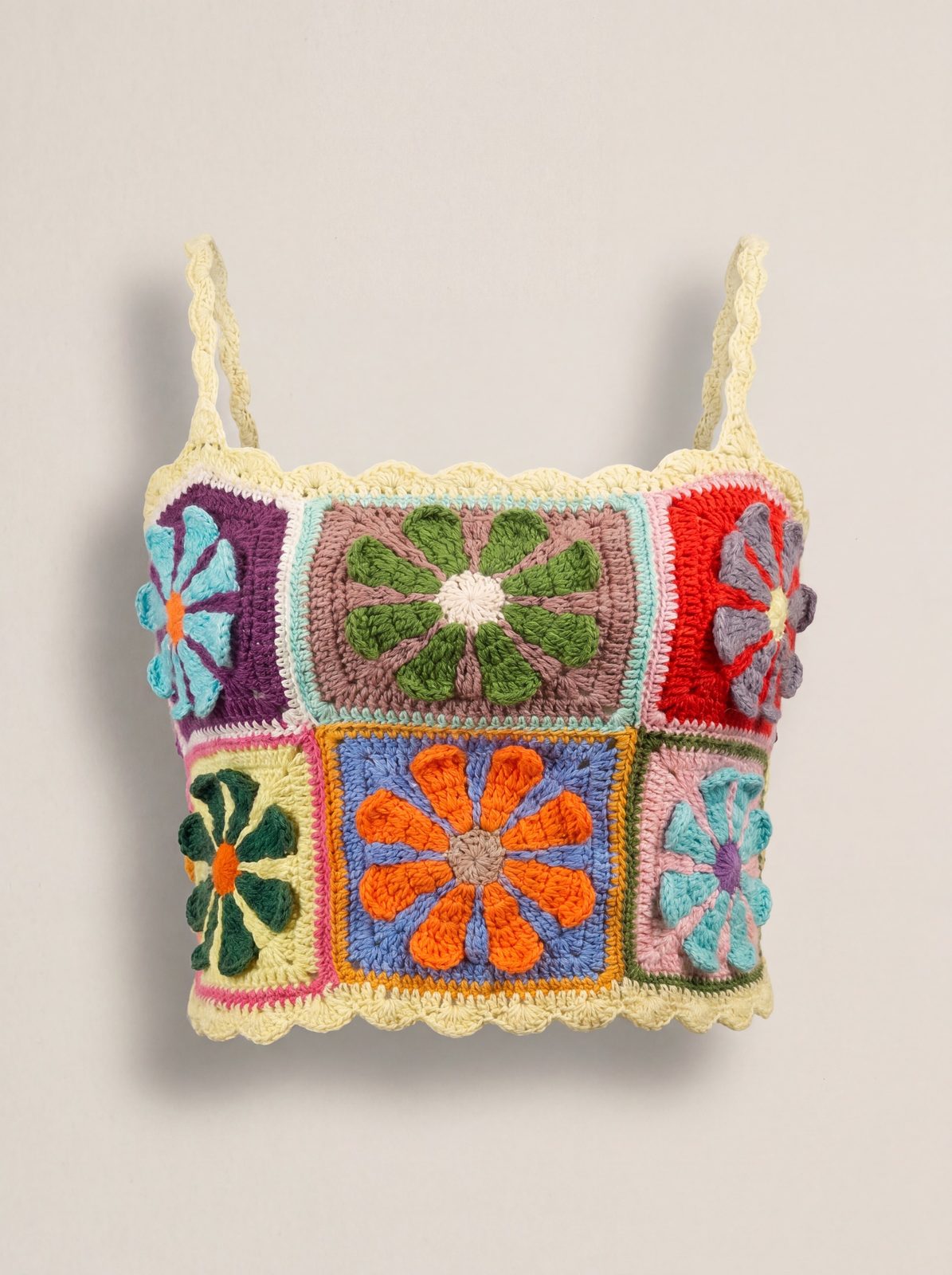
For a floral or multicolored crochet piece, pull one shade from its pattern into the skirt, shoes, or bag. A cream skirt can calm a lively top; a deep navy or espresso skirt can make brighter motifs feel grounded. If your crochet top is a solid neutral, the skirt can take the lead with a print or saturated color. Avoid trying to match every color exactly. A repeated accent is enough to make the pieces feel connected.
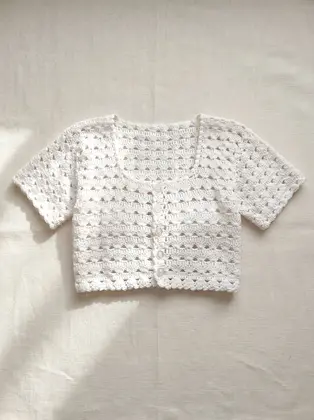
A flower-square style such as the Bloom Cami Top has color and a scalloped edge built into the design, so it pairs naturally with a plain, high-waisted midi. Keep jewelry simple and let the squares remain visible. If you want an airy, openwork effect instead, the Lace Crop Top offers a light-toned option; a smooth skirt in a warm neutral or muted color gives its stitch pattern a clean backdrop.
Work out the waist and length
The waistline is the practical hinge of this outfit. High-rise skirts usually make cropped crochet tops easy to wear because they meet at the natural waist and leave only the amount of skin you choose to show. If you would rather not show skin, layer a fitted tank underneath or select a longer top that can be tucked lightly. A full tuck can bunch up under a sleek skirt, so try a partial front tuck or leave the top untucked when its hem is meant to sit at the waist.
With a fuller skirt, keep the upper half visually tidy: a fitted top, a defined shoulder, or a short sleeve can offset the extra fabric below. With a straight or bias-cut skirt, a slightly relaxed top adds movement without overwhelming the line. A slit changes the balance by showing more leg as you walk, so pair it with a top that feels secure and comfortable through the shoulders and torso. These are starting points, not rules; proportion should serve how you want to move.
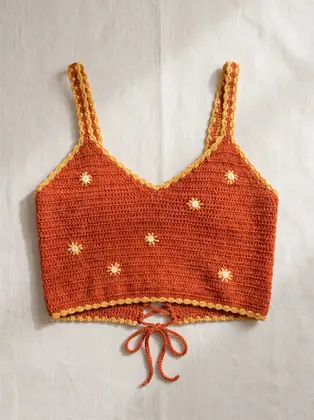
For a distinctly summery color story, consider the Floria Cami Top – Rust with a cream, tan, or dark brown midi. Its warm ground and small daisy details already provide pattern, so a solid skirt keeps the outfit intentional. The tie at the back also means the fit may be adjustable, but check the garment details and fit information before deciding how it will sit on you.
Make color and print feel intentional
When both pieces have a print, scale is the deciding factor. Tiny repeat motifs on a skirt can sit comfortably below larger crochet squares, while two equally bold florals may compete. Separate them with a solid belt, a simple bag, or a cardigan worn open. The purpose is not to make the outfit match perfectly; it is to give the eye somewhere to rest between patterns.
Monochrome dressing can be especially effective with crochet because the openwork itself supplies contrast. Try ivory with ecru, or black with charcoal, and vary the finish rather than stacking identical shades and surfaces. A lighter skirt beneath a darker top creates a clear focal point; reversing those colors can make the outfit feel grounded. Before leaving, check the look in daylight if possible, since semi-sheer stitches and color differences may appear more pronounced outdoors.
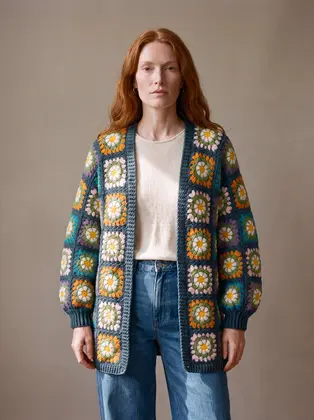
If you prefer a more layered wardrobe, browse the top collection for different silhouettes, or explore cardigans for a light layer. An open cardigan adds warmth without hiding the waistline completely; choose one that ends around the hip or lower than the skirt’s waistband, rather than stopping at an awkward midpoint.
Finish with shoes and useful layers
Shoes can shift the mood more quickly than another accessory. Flat sandals or simple sneakers keep the outfit relaxed; a low block heel or a refined flat makes it feel more dressed. With a midi hem, look at the visible strip of ankle and the skirt’s movement. A shoe with a clean profile tends to work when crochet is already textured, while a heavier boot can make a lighter skirt feel more autumnal. Choose what is comfortable for the actual distance and setting, not just the mirror.
A small shoulder bag, understated earrings, and one simple bracelet are usually enough. If the top has tie straps or a detailed neckline, skip a necklace that tangles with those details. A light layer is useful when temperatures dip: an open cardigan, denim jacket, or softly tailored jacket can all work, provided the sleeves do not pull on the crochet. Test the layer over the top before wearing it for a full day.
Check comfort and care before you go
Open stitches can catch on rough jewelry, bag hardware, or textured outerwear. Smooth those contact points and take a moment to check that straps, ties, and closures feel secure. If a top is unlined, plan the base layer before you leave rather than discovering in bright light that the coverage feels different than expected. A midi skirt should allow an easy stride; sit, walk, and take a few steps up before deciding the proportions are right.
Garment construction, fiber content, sizing, and care directions vary by item. Read the specific product information and follow the actual care label; when instructions are unclear, confirm with the team through Contact rather than assuming a crochet piece can be machine washed or dried. For fit and garment guidance, the size and care guide is a useful place to start. Thoughtful handling helps protect delicate openwork, but the item’s own label should always take precedence.
The best crochet-and-midi combination is the one that feels balanced in motion, not merely arranged for a photograph. Keep one piece simple when the other is expressive, make the waistline feel deliberate, and choose shoes and layers for the day ahead. With those decisions in place, the texture of crochet reads as part of a wearable outfit rather than a styling challenge.