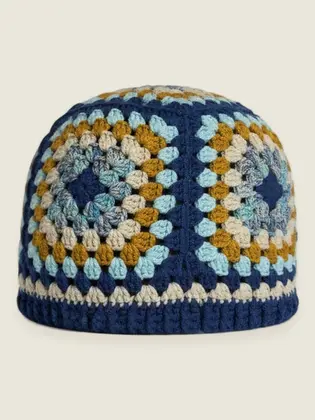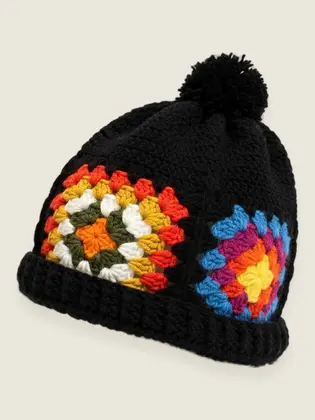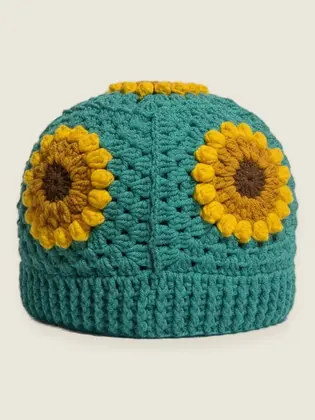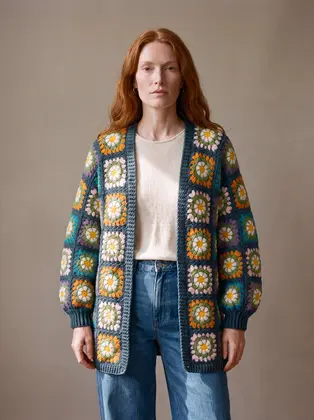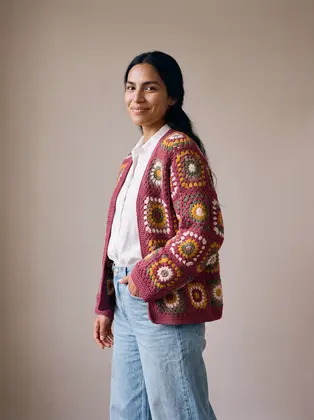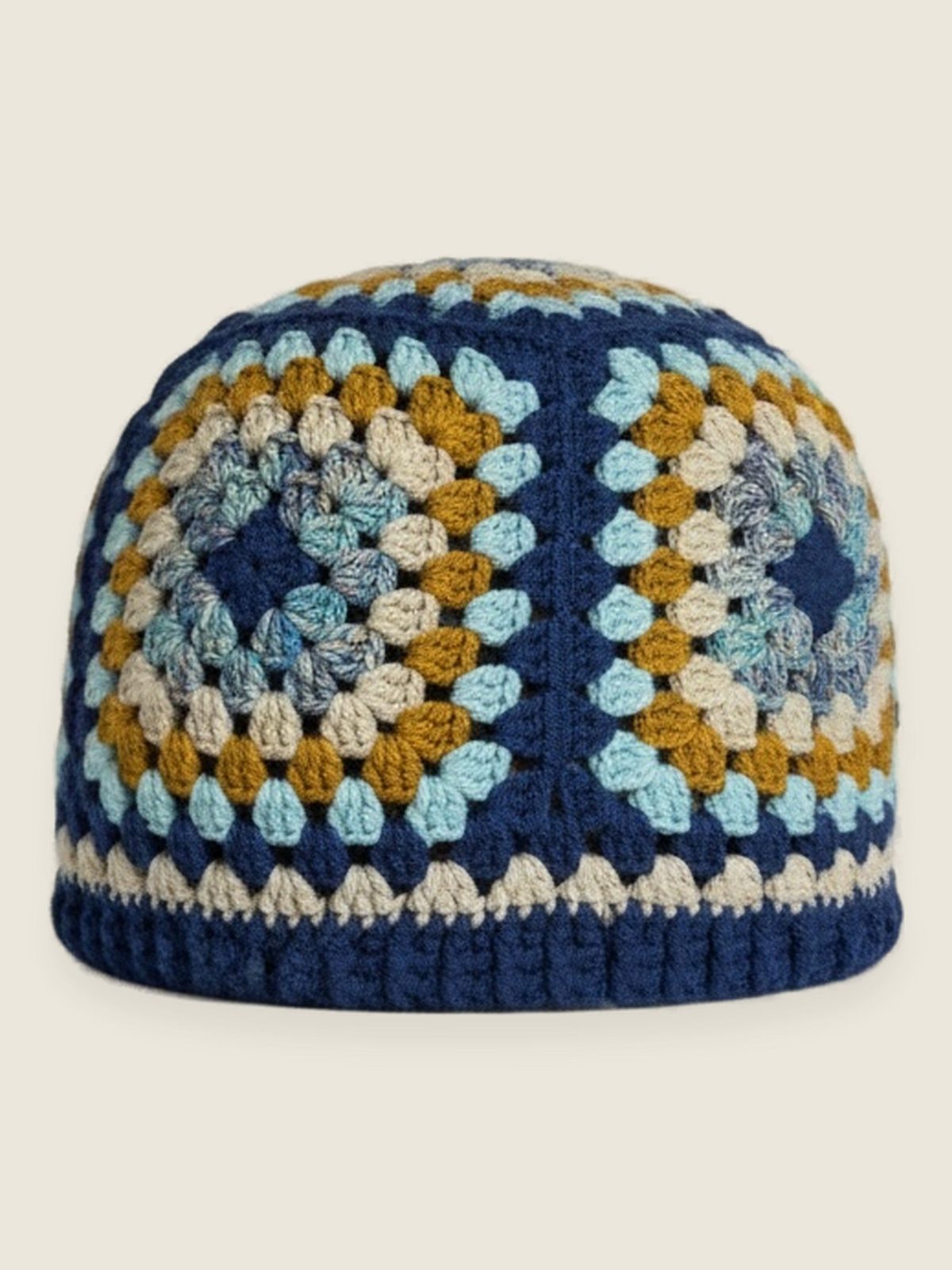
A crochet beanie can make a coat feel considered rather than simply practical. The trick is to treat the hat as part of the outfit’s shape and color story, not as an afterthought pulled on at the door. Start with the coat you actually wear most: its collar, volume, texture, and color will tell you whether the beanie should blend in or bring a little contrast. A neat ribbed beanie suits a tailored coat; a more colorful crochet design can lift a plain, familiar outer layer. Either way, balance matters more than matching everything exactly.
Begin with the coat’s shape
Look at the outline before choosing a color. A long, roomy coat already has visual weight, so a close-fitting beanie with a modest crown usually keeps the proportions easy. If the coat is narrow through the shoulders and cleanly tailored, a slightly slouchier hat can soften the formality without making the outfit look oversized. A cropped jacket gives you more freedom: a folded brim or a rounded crochet shape can add presence above the waist and make the proportions feel deliberate.
Collars matter, too. A high funnel neck or a broad lapel creates plenty of structure around the face. Keep the beanie’s edge clean and avoid adding too many competing details near the chin. With a simple crewneck coat or an open collar, a textured hat can become the main point of interest. If you wear glasses, a low-profile fit may sit more comfortably than a deep, bulky crown; try the full combination indoors and adjust the hat so it does not press the frames out of place.
Choose a color relationship, not a matching set
Exact color matching can look a little flat, especially when both pieces are saturated. Instead, choose one of three relationships: tonal, complementary, or accent. Tonal dressing uses related shades with different depth—cream with camel, charcoal with black, or navy with a faded blue. This works particularly well when the coat has a strong silhouette and you want the texture of crochet to do the talking.
For contrast, take a cue from the coat’s undertone. A warm brown or camel coat sits naturally beside rust, mustard, olive, plum, or soft cream. A cool charcoal or navy coat can ground berry, icy blue, lavender, or a clean red. The colors do not need to be opposites on a color wheel; they only need to look intentional together in daylight. A neutral scarf or top can bridge the two if the hat feels like a sudden interruption.
An accent strategy is especially useful with a multicolored crochet beanie. Pick one small shade from the hat and repeat it once elsewhere—perhaps in a stripe, a bag, or a visible knit underneath the coat. Repeating every color in the hat often makes the outfit feel over-planned. One quiet echo is enough. If the coat itself has a bold check or a noticeable texture, let the beanie’s colors be more restrained, or choose a single-color hat so the outfit has a clear focal point.
When in doubt, step back from the mirror. If the first thing you notice is the hat, that may be exactly right with a plain coat. If you notice three unrelated colors competing, remove one accent rather than adding another accessory to explain them.
Make texture work with the coat
Crochet brings visible loops and dimensional pattern. That texture pairs beautifully with smooth wool-look cloth, denim, leather, or a tightly woven trench, because each surface has room to register. With a fuzzy, heavily brushed, quilted, or highly textured coat, a simpler beanie can keep the look from becoming crowded. This is not a rule against mixing texture; it is a reminder to vary scale. A fine, compact stitch beside a plush coat is calmer than two oversized textures competing at the face.
Consider how much of the beanie shows. A scarf tucked into a coat and a high collar can leave only the crown visible, so a small motif or a strong top color may be more effective than an elaborate brim. If you plan to wear the coat open, the hat can relate to the sweater or shirt beneath it as well as to the outer layer. For styling ideas with color and stitch, the Harbour Beanie offers a useful point of reference, while the Firework Beanie shows how a lively pattern can stand apart from a pared-back coat. These are styling examples; choose the fit and warmth that work for your own wardrobe.
Build outfits around common coat colors
Camel, tan, and brown
These coats are natural partners for earthy and softened colors. Try cream for a light, classic contrast; olive or rust for a warmer, relaxed combination; or deep plum when you want a richer accent. A beanie with several bright colors can work, but keep the rest of the outfit relatively quiet: dark denim, a plain knit, and simple shoes give the hat room. If the coat is oversized, a close-fitting beanie often keeps the overall silhouette composed.
Black, charcoal, and navy
Dark coats make bright crochet easy to wear because they provide a steady background. A vivid hat can enliven a black coat without requiring a fully colorful outfit. Navy is especially flexible with cream, red, green, or pale blue. For a quieter result, choose a beanie in a related dark shade and use texture—not contrast—as the detail. Keep an eye on undertones: a very warm brown hat may look disconnected beside blue-black fabric unless another warm note appears elsewhere.
Checks, tweed, and statement coats
When the coat already contains several colors, pick one of its quieter shades for the beanie. It need not be the dominant check color; a secondary line can make a subtle, satisfying link. With a graphic or unusually shaped coat, a simple hat is often the better partner. A colorful crochet piece can still work, but avoid adding a second pattern near the face. A plain scarf and uncomplicated shoes help separate the pieces rather than making them compete.
Get the fit and layers right
Fit changes the mood of the whole pairing. A beanie pulled low and snug looks practical and clean; a little ease at the crown feels more casual. Keep the front edge comfortable rather than stretching it far down the forehead, and make sure the hat does not bunch awkwardly against the coat collar when you turn your head. If the coat has a hood, test the hood over the hat before heading out. The combination should move freely, not squeeze at the back of the neck.
Layering underneath can make a good pairing feel even more complete. A visible sweater neckline, a simple scarf, or a small glimpse of a patterned top can connect the hat to the rest of the outfit. The Sunflower Beanie has a distinct motif, so give it uncomplicated neighbors: a solid coat and a restrained scarf help its detail read clearly. If you favor crochet as a broader wardrobe texture, the top collection offers layering references, while the collection overview can help you keep a full outfit in view. Do not add a scarf automatically; if coat and hat already frame the face, an open neckline may look cleaner.
Weather and function are part of styling. A crochet structure may feel different from a tightly knit or lined hat, and the coat’s collar may already provide substantial coverage. Choose a combination that suits the conditions you expect, and do not assume that appearance alone tells you how warm or wind-resistant a piece will be. If product composition or care guidance affects your choice, check the individual product details and consult the actual garment label. For general garment guidance, see size and care; when a detail is unclear, confirm it with the team through contact rather than guessing.
A quick mirror check before you go
That is the pleasure of pairing crochet with outerwear: a familiar coat gets a personal detail, while the beanie gains a context that makes it feel like part of a considered outfit. Start with shape, edit the colors, and let texture do its work. A simple coat can carry a lively hat; a statement coat may prefer a quieter one. The right combination is the one you can wear comfortably and reach for again.