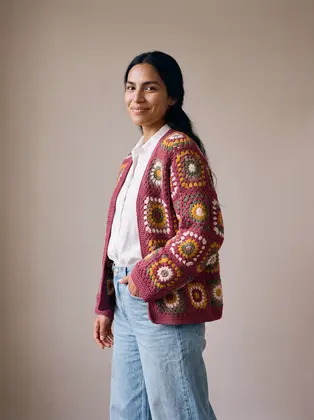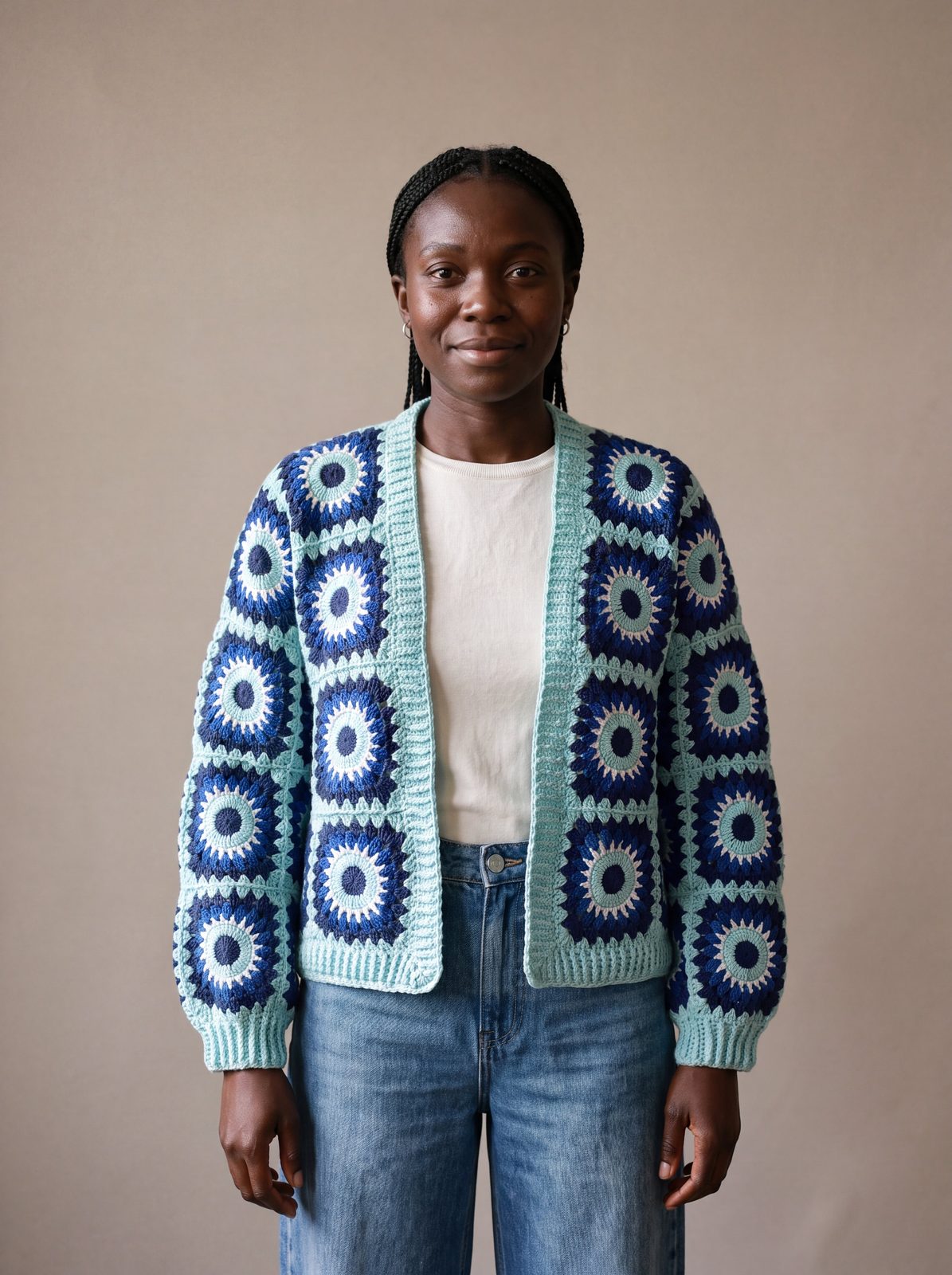
One cardigan can carry a day from the first coffee to dinner, provided the pieces around it change with purpose. Rather than packing a new outfit for every plan, begin with a textured layer and build three versions around it: relaxed in the morning, composed at midday, and a little more polished after dark. The cardigan stays the through-line; fit, shoes, and the base layer do the work of shifting the mood.
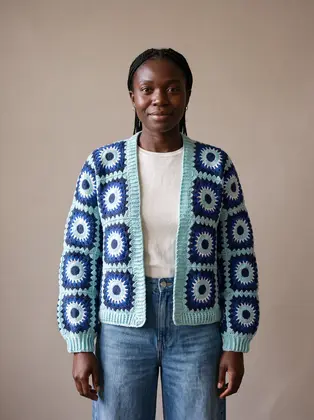
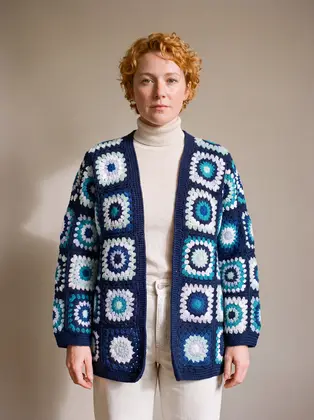
The Ribbed Cuff Cardigan – Navy & Aqua is a useful starting point. Its open front, navy ground, aqua-and-white squares, and ribbed cuffs make a statement without dictating every other choice. The styling ideas below also work with a long or tonal knit, but use the actual garment’s shape and product details rather than assuming all cardigans fit alike.
Build around color and proportion
The navy base and bright motifs already provide contrast, so a plain tee, shirt, or dress gives the pattern room. Cream, white, denim, black, and quiet blues are natural companions. This is not a ban on prints; it simply avoids competition when one layer needs to work in several settings.
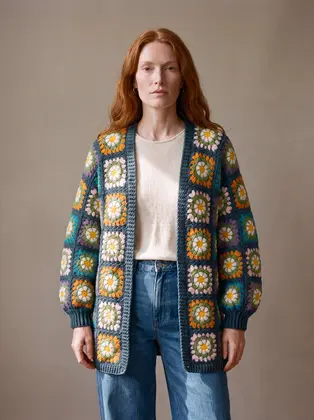
Proportion matters as much as color. An open cardigan creates a vertical frame, while textured sleeves add volume. A smoother base balances that texture. High-rise jeans can define the waist when the hem lands near the hip; a longer cardigan may look cleaner over a simple base. Try the full combination seated and standing.
Use the listing’s size information and measurements where provided. If fiber content, fit, or care instructions are not clear, rely on the garment’s actual label and confirmation from the RETROLIFE BOUTIQUE team instead of guessing. The product descriptions can suggest styling, but they do not replace product-specific details.
Morning coffee: keep it comfortable
For the first look, pair the cardigan with a white or soft-gray tee, straight-leg jeans, and sneakers or flat loafers. Wear the knit open. The simple top makes a calm center, the denim gives the color story an everyday base, and comfortable shoes make sense for walking to the café or running a few errands on the way back. A tote or crossbody bag can be practical without becoming another focal point.
A close-fitting tee sits easily beneath textured sleeves and lets the cardigan hang naturally. Pale blue can pick up a motif without matching it exactly; cream offers softer contrast. Keep accessories selective: small hoops, a watch, or a simple scarf is enough.
As the day warms, take the cardigan off rather than knotting it around your waist. A textured knit can bunch there and interrupt the line of the jeans. If the weather is chilly, use the cardigan as a layer, but bring suitable outerwear when conditions require it. A cardigan is a comfortable indoor or mild-weather layer, not a promise of protection from cold rain.
For more silhouettes to compare, browse the cardigan collection. Choose based on how you expect to wear the garment—over tees, shirts, or dresses—not solely on a photograph or a styling suggestion.
Midday plans: add a little structure
When the day moves to lunch, a studio, or a casual meeting, keep the cardigan and change the base. A crisp blouse or smooth fine-knit top tucked into tailored trousers gives the outfit a more deliberate line. Add a belt if it helps the proportions, then choose loafers or simple ankle boots. The contrast between soft crochet and a sharper trouser is the point: one element stays relaxed while the other looks organized.
Keep the blouse uncomplicated enough to sit comfortably beneath the sleeves. A large bow, dramatic ruffle, or dense print may compete with the cardigan, though any one of those can work if the rest of the outfit is quiet. Check the full look in a mirror from a few steps away; close-up details can seem more dominant than they really are. Make sure the blouse stays tucked when you reach or sit, and avoid a belt buckle that catches the knit.
A skirt offers another route. Pair a simple shell or tee with a skirt that lets you move freely, then leave the cardigan open to frame the outfit. A clean, solid skirt is particularly useful when the cardigan has colorful squares. You can turn back the cuffs slightly to reveal a watch or bracelet, provided the sleeves remain comfortable and do not stretch out. Browse tops for straightforward layers that let a distinctive cardigan stay visible.
Midday polish rarely requires more accessories. A bag with a defined shape and shoes in good condition can make a practical outfit feel considered. Keep the details that matter to your schedule: if you will walk between appointments, choose shoes for the distance rather than treating discomfort as the price of looking put together.
Dinner: let a clean base change the mood
For dinner, wear the cardigan over a simple black or solid-color dress. A streamlined silhouette lets the open knit act as a frame, and the dark base makes the navy ground feel cohesive. Choose a neckline that sits comfortably beneath the cardigan and a hem length suited to your plans. Low heels, polished flats, or boots can all work; the right choice depends on venue, weather, and how far you will walk.
If dresses are not your preference, dark trousers with a softly draped or satin-like top make an equally straightforward evening base. Keep the palette restrained—navy, black, ivory, or a quiet blue—so the cardigan remains the most colorful element. The open front is part of the garment’s design, so do not force it into behaving like a buttoned jacket. Let the edges fall naturally and make sure your top underneath provides the finish you want.
At dinner, a small structured bag or a pair of earrings can give the outfit a clear endpoint. Avoid necklaces or sharp accessories that could catch the crochet. You do not need to pile on evening details: changing the base layer and shoes already shifts the balance. If you are going directly from work, a lipstick change or a quick refresh of your hair can be more useful than carrying a second collection of accessories.
Make the transitions realistic
A three-look plan should work with your actual schedule. If you have a place to change, pack a blouse and earrings for midday, then a dress or refined top for dinner only if the evening warrants it. If changing is inconvenient, make smaller adjustments: tuck the tee, switch shoes, add a belt, or change your bag. These details can make the outfit feel different without requiring a full wardrobe in your tote.
Think about temperature before you leave. Indoor air-conditioning, a cool evening, or an unexpected change in weather can make a light layer useful, but this knit should not be treated as technical outerwear. A coat may be needed over it; make sure the coat has enough room and does not pull at the sleeves. When removing the cardigan, fold it carefully rather than crushing it under a heavy bag.
Because knit construction and fiber blends vary, follow the garment’s care label and confirmed product guidance. Consult size and care information for general help, and contact the team through contact if a product-specific question remains. Do not assume a wash method or drying technique is safe based on appearance alone. Store the garment in a way that suits its construction and avoids snagging; jewelry and rough bag hardware deserve a little attention around textured stitches.
One piece, three useful versions
The morning outfit is easy: tee, denim, practical shoes. Midday adds definition with a blouse, trousers, or a simple skirt. Dinner changes the foundation to a streamlined dress or refined top. Across all three, the cardigan keeps its own character.
Try these combinations with clothes you own. Notice which top sits comfortably beneath the sleeves, whether the hem works with your trousers, and which shoes feel wearable. One cardigan is an anchor that makes thoughtful changes easier, from the morning cup to evening.