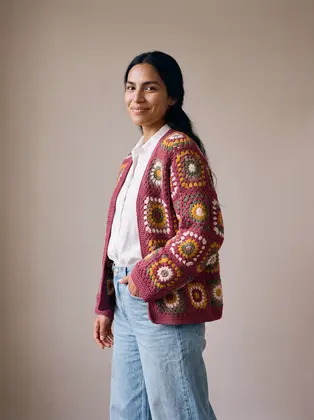
Navy knitwear earns its place in a wardrobe when it does more than repeat the familiar blue-jeans formula. Its depth can anchor pale neutrals, warm earthy colors, crisp tailoring, and easy skirts just as naturally. The key is to give the knit a different partner in texture or proportion, so the outfit feels considered rather than like a default. Think about whether the navy piece is the quiet foundation or the most expressive item, then let the rest of the look support that role.
Start with cream, ivory, and soft white
Light neutrals make navy look intentional and bring out the detail in a textured stitch. A short or hip-length cardigan over an ivory tee and cream trousers is an easy alternative to denim: the contrast is clean, but softer than black and white. Choose trousers with a straight or gently wide leg, and keep the top relatively simple if the knit has a colorful motif. A narrow belt in tan or dark brown can make the change in texture at the waist feel deliberate.
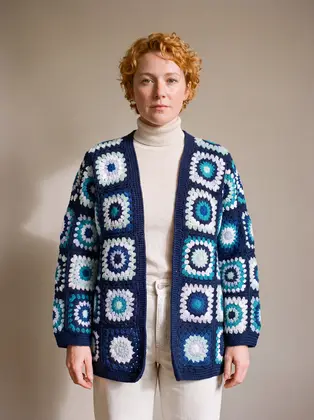
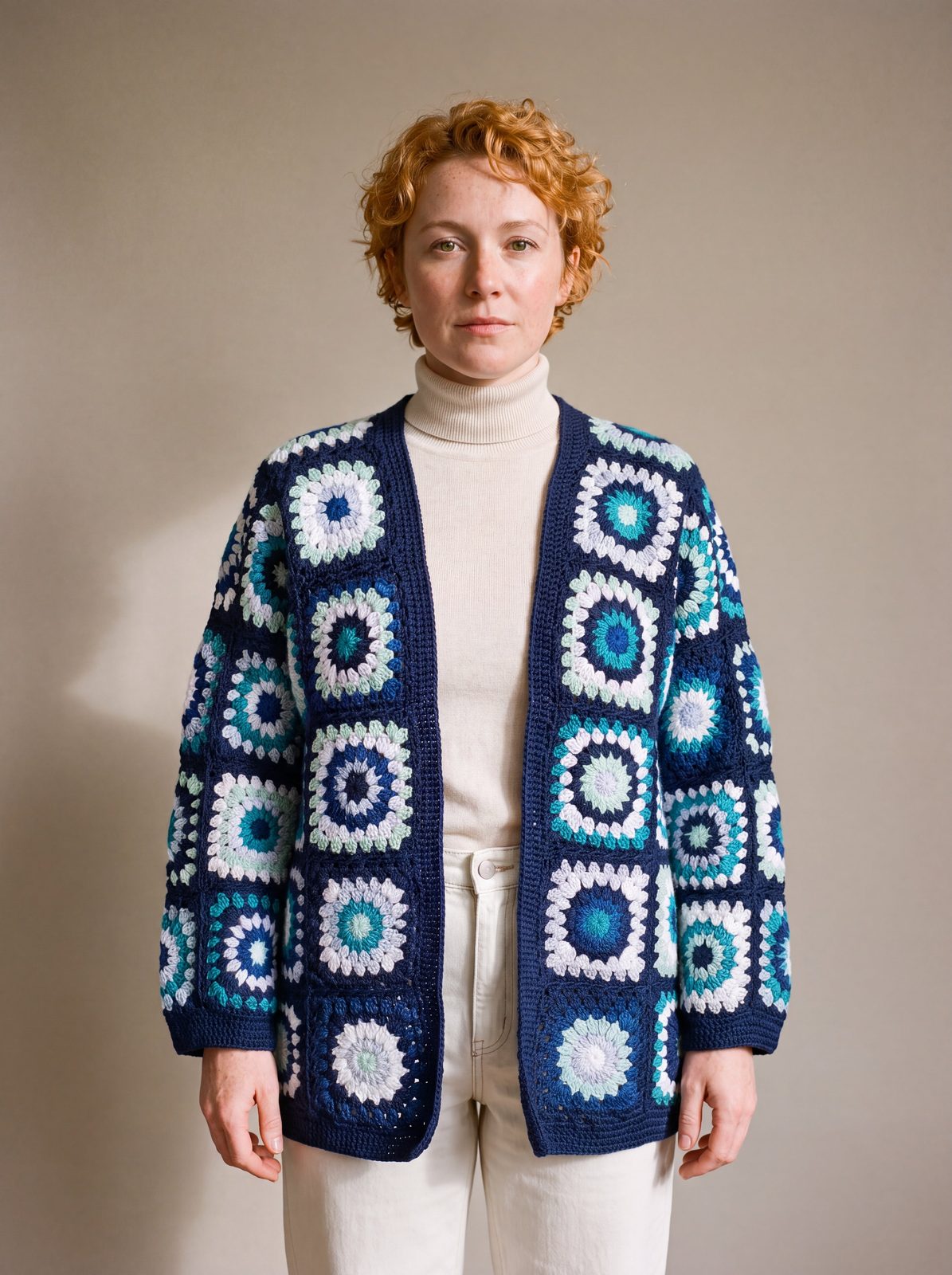
For an open, longer silhouette, layer a simple white top under the Long Cardigan – Navy & Turquoise. Its turquoise, mint, ice-blue, and white squares already provide a palette. Echo one of those lighter shades in a skirt or trouser, rather than adding another strong print. A cream slip skirt, for example, lets the cardigan remain the focus while bringing movement below the hip. Keep the shoe uncomplicated: a flat sandal, loafer, or clean sneaker works according to the occasion.
White can also be a useful bridge when a cardigan is richly patterned. A plain tee or fine-gauge top gives the eye a resting place between the knit and the bottom half. Avoid treating cream and white as a rigid matching test; mixing their tones often looks more natural than trying to make every pale piece identical. To browse related layers, visit the cardigan collection.
Trade denim for tailored trousers
Trousers change the register of knitwear quickly, without making the outfit formal in a stiff way. Navy paired with stone, oatmeal, camel, or warm gray looks polished for a workday or a relaxed dinner. A straight trouser balances a roomy cardigan; a wider leg works best when the knit either ends near the hip or is worn open over a closer-fitting base layer. If both pieces are oversized, define one point—cuff the sleeve, show the waist, or choose a shoe with a visible shape—so the silhouette does not disappear.
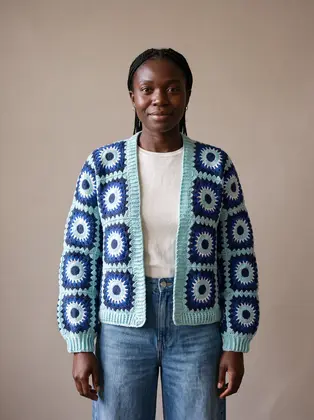
For a more tonal outfit, put navy beside charcoal or ink, then use a lighter accessory or top to separate the shades. Different textures matter more than perfect color matching: a smooth trouser, a ribbed tee, and a textured crochet layer create definition even when the colors sit close together. If the navy is vivid cobalt rather than inky, choose a restrained neutral bottom instead of introducing several competing blues. The Ribbed Cuff Cardigan – Navy & Aqua has a strong graphic surface, so a plain trouser gives its repeating pattern room to read.
Bring in a skirt without making the knit feel precious
A skirt is one of the most useful ways to move navy knitwear beyond casual jeans. A fluid midi in cream, taupe, olive, or a muted floral print gives a substantial cardigan a lighter counterpoint. With a long cardigan, leave the front open and let the skirt’s waistline show; with a shorter knit, a tucked or close-fitting base layer can make the proportions feel neat. A denim skirt is an option, but it is not the only casual choice: cotton poplin, soft pleats, and simple slip shapes all work if their volume is balanced with the knit.
For a lively look, borrow a color that already appears in the sweater—turquoise, rust, pale blue, or cream—and repeat it once in the skirt or accessory. Repeating a shade once gives an outfit cohesion; repeating every shade can make it feel overly coordinated. The navy and turquoise long cardigan can sit over a solid cream skirt, while a more restrained navy layer might pair with a small-scale print. If the knit is patterned from shoulder to hem, keep the skirt’s pattern quieter or let it be solid.
Length is personal, but the outline should feel purposeful. A mini skirt with a longer cardigan can create a clear short-over-long contrast; a midi often pairs comfortably with a cropped or hip-length layer. Avoid relying on a rule that every hem must line up. Instead, look at the visible proportions in a mirror and adjust the cardigan’s opening, sleeve, or belt to create a shape you like. See the broader collections for additional wardrobe pieces to mix in.
Use color with a light hand
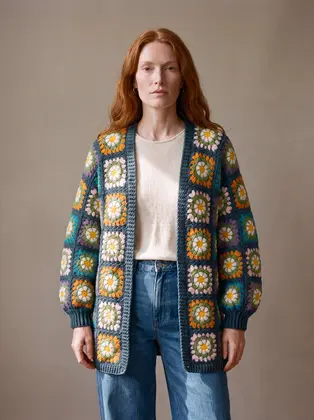
Navy is a steady base for warm shades that might feel too bold beside black. Rust, cinnamon, mustard, and burgundy make a cool-weather outfit feel grounded; pale pink, lilac, and soft green give it a fresher direction. A useful approach is one main neutral, navy, and one accent color. For example, wear a navy cardigan with ecru trousers and a rust scarf, or pair a patterned blue knit with a simple brown skirt and a small gold-toned detail. The accent does not need to be a major garment; a bag, shoe, or hair accessory is enough.
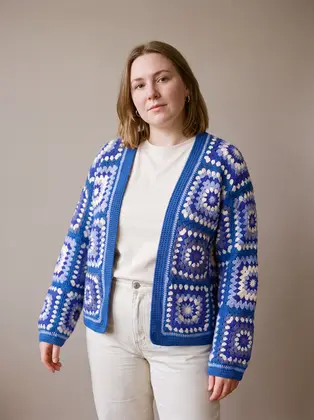
When the knit itself has several colors, treat those colors as a ready-made guide, not a checklist. Pick one for the bottom half or an accessory and leave the rest alone. The Blues Oversized Cardigan, with its cobalt-and-cream arrangement, already carries contrast across the body and sleeves. A cream tee and a solid neutral trouser would let the design stand out without competing patterns. If you want more color, choose one clear accent rather than a second multicolor item.
Make proportion and layering do the work
Before adding a coat or jacket, check the knit’s sleeve and shoulder volume. A roomy cardigan may sit more comfortably beneath a relaxed coat than a narrow tailored jacket. If outerwear is fitted, use a thinner base layer and avoid bunching the cardigan’s cuffs. For transitional weather, a cardigan worn as the outer layer can be enough; if wind or rain is involved, choose suitable outerwear rather than assuming a knit will provide weather protection.
Layering is also a practical way to make a bold cardigan easier to wear. A plain long-sleeve top beneath an open knit creates a clean frame, while a shirt collar adds structure if the neckline allows it to sit comfortably. Keep the shirt hem from extending in an accidental-looking strip: tuck it, choose a shorter shirt, or let the full hem show intentionally. When the cardigan is longer than the top, leaving it open usually keeps the lines uncomplicated.
Check the specific product information before choosing a size or planning care. Fit and fiber content can differ from one piece to another, so use the item’s listed details and confirm any uncertainties with the team. Follow the actual garment label for care rather than assuming all knits can be washed or dried the same way. For guidance, see size and care, and contact the team if a product detail needs clarification.
Three easy outfit formulas to try
For daytime, wear a navy knit open over a white tee, cream straight-leg trousers, and loafers or sneakers. Keep the tee untucked if its length meets the trouser rise cleanly; otherwise, a small front tuck defines the waist. For a softer weekend look, try the long navy-and-turquoise cardigan over a pale slip skirt with a simple tank and flat sandals. A small bag in tan or natural texture adds warmth without competing with the squares.
For an evening plan, layer a patterned navy cardigan over a simple dark or ivory dress, depending on the color contrast you want. A shorter dress under a long open knit creates a clear line; a longer dress can feel elegant when the cardigan ends above or near the hip rather than interrupting the skirt at an awkward point. Keep jewelry spare if the knit has a strong motif. These are starting points, not strict formulas: adjust the hem, shoe, and degree of contrast to suit your own proportions and the setting.