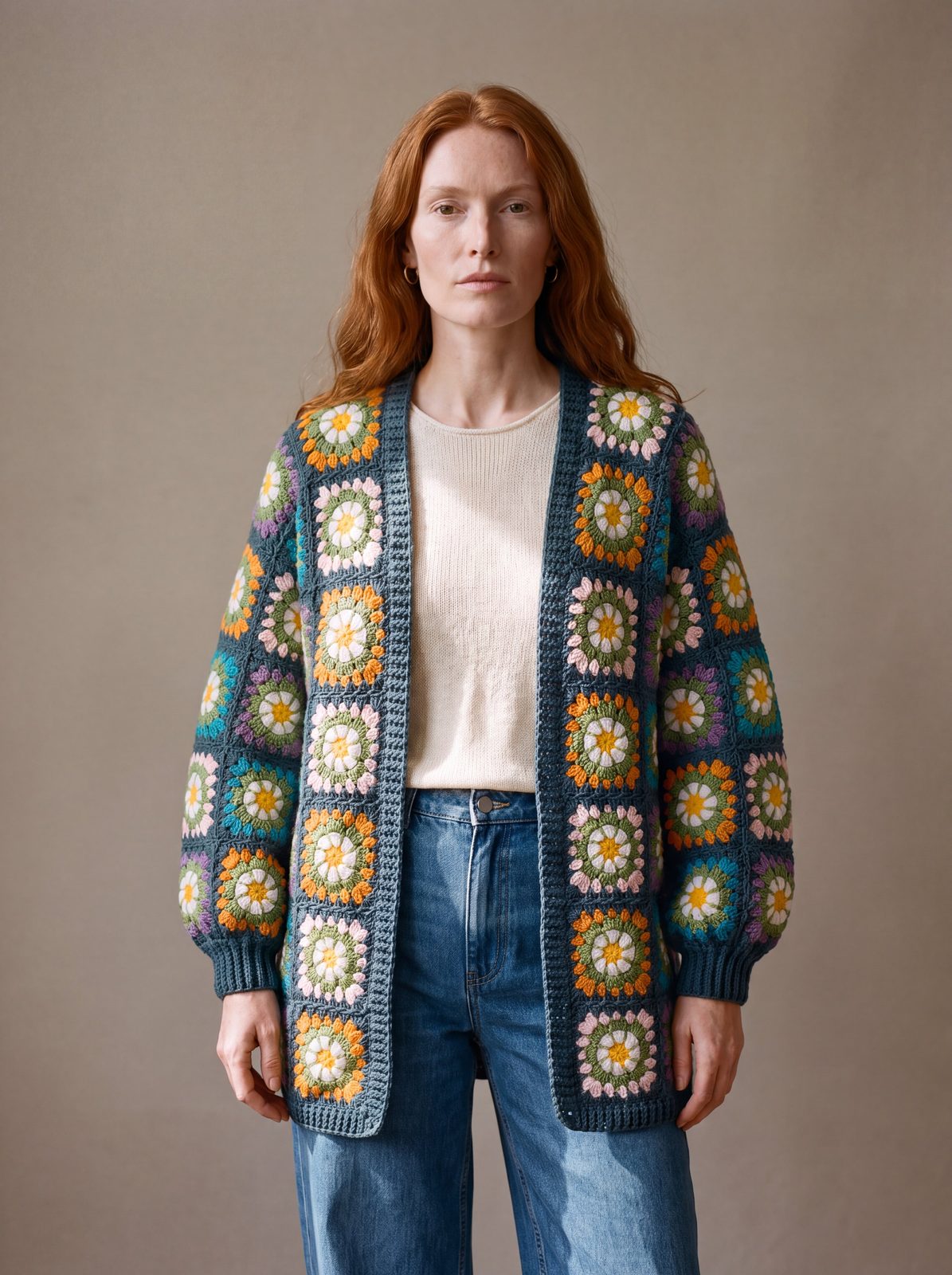
Long layers and wide-leg pants work best when neither piece has to fight for attention. The pants already create a broad, continuous line; a cardigan or light jacket adds movement and warmth above it. The useful question is not whether a long layer can be worn with wide legs—it can—but where its hem lands, how much shape remains visible underneath, and whether the outfit feels intentional from the side as well as the front.
Start with the hem, not a rule about length
A long cardigan can skim the hip, reach the mid-thigh, or fall closer to the knee. Each length changes the proportion of the outfit. With high-rise pants, a layer ending around the high hip leaves a clear view of the waistband and the fullest part of the trouser leg. A mid-thigh hem creates a longer central line, especially when worn open, while a layer near the knee makes a stronger statement and asks for more attention to the pants’ drape and the shoes beneath them.
Try the combination in a full-length mirror and check three points: the shoulder, the cardigan hem, and the trouser hem. If the top layer and pants both have generous volume, give the eye a deliberate anchor—an open front, a tucked top, a visible waist, or a clean column of color. The goal is not to make every outfit look slim. It is to make the layers read as chosen shapes rather than extra fabric gathered in the middle.
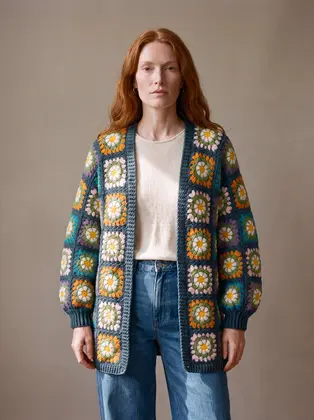
For an easy starting point, pair a straight or fluid trouser with a cardigan that falls below the hip but does not overwhelm the leg. The Daisy Balloon Sleeve Long Cardigan in Teal has a longer body and noticeable sleeve volume, so it makes sense over a simple, close-fitting base and a pant with a smooth front. Let the cardigan stay open; its two vertical edges create a frame without hiding the trousers completely.
Keep a point of definition underneath
Long layers look most relaxed when there is still a hint of the body’s shape underneath. That can be as simple as a fitted ribbed tank, a neat tee, or a blouse tucked in at the front. A full tuck gives wide-leg pants a crisp waistline; a partial tuck feels less formal and works well when the top is soft rather than bulky. If you prefer a completely untucked base, choose a top that ends near the waistband instead of falling far down the seat.
Wear the cardigan open when the base outfit benefits from a visible center line. For a more gathered look, button only one or two buttons around the waist if the garment is designed to close comfortably, leaving the lower portion free. Avoid pulling a long layer tightly across the hips: it can bunch above the pant fabric and interrupt the clean fall of both pieces. A narrow belt can help, but it is optional; the waistband itself often provides enough definition.
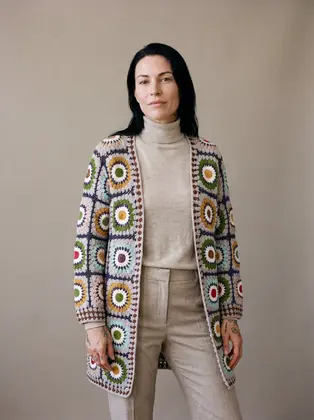
Texture deserves the same attention as fit. A patterned or openwork cardigan already supplies visual detail, so a solid, quiet base can keep the outfit composed. The colorful Boho Circles Long Cardigan can be treated as the focal point: echo one of its colors in a top or accessory, then let the pants stay uncomplicated. When both cardigan and pants are patterned, look for a shared color and vary the scale; otherwise, the eye may not find a place to rest.
Balance width, weight, and movement
Wide-leg trousers are not all alike. A crisp pair with a pressed crease has a different mood from soft, flowing pants or denim with a broad leg. Match the weight of your layer to that movement. A substantial cardigan feels grounded with denim or a firmer trouser; a lighter open layer can drift over a fluid pant without making the outfit feel heavy. If the cardigan has balloon sleeves, choose a base top with sleeves that do not bunch beneath them.
Length and width can balance rather than cancel each other. A long, open cardigan supplies vertical lines, while the pants bring a clear horizontal sweep at the hem. Keep those lines visible: avoid letting a very long top cover the entire waistband and fall to the same visual level as a bag or scarf that already crosses the body. If proportions feel crowded, push the sleeves to the forearm, leave the front open, or switch to a lighter base layer before changing the pants.
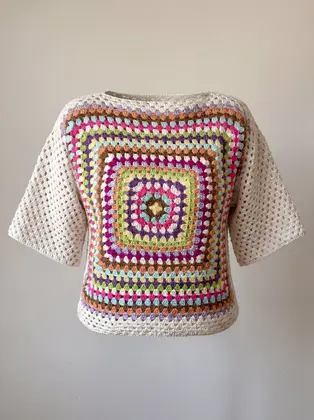
Try a simple three-part palette. Start with pants in a neutral shade, add a top in a related tone, then use the cardigan for contrast. Cream, denim, and a saturated blue knit feel relaxed without requiring exact color matching. For a quieter look, repeat one color in the shoes or bag. The Patchwork Blouse is itself a multicolor statement; underneath a cardigan, wear it with subdued pants and keep the layer open enough for the blouse to remain visible. If the combination feels busy, remove one patterned piece rather than adding more accessories.
Choose shoes that support the trouser hem
Shoes matter because wide legs often cover much of the foot. A low-profile sneaker or flat keeps a casual outfit easy, while a loafer or a modest heel can give a longer pant a little lift. The best choice depends on the actual trouser length: the hem should move freely and should not drag underfoot. When trying a new pair of pants, test them with the shoes you expect to wear most often instead of judging the length barefoot.
A long cardigan and a wide hem can feel especially substantial with a heavy shoe. That can be appealing in cold weather, but it is not the only option. A slimmer shoe can lighten the lower half; a boot with a clean shaft can work when the pant leg falls over it without catching. Keep the rest of the accessories proportionate. A medium-sized shoulder bag usually sits comfortably with the outfit, while an oversized tote may add another large shape at the hip. There is no universal rule—check the silhouette in motion, not only in a posed mirror.
For more layering ideas, browse the cardigan collection and compare different body lengths and sleeve shapes. If you want a lighter foundation, the top collection offers options to wear tucked, half-tucked, or simply under an open knit. Treat product descriptions as a starting point for styling; use the item’s own label and confirmed team information for material, sizing, or care details.
Make the outfit work for the day
For a weekday outfit, start with a simple top and trousers that sit comfortably at the waist, then add a long cardigan for warmth. Keep the front open on the commute and take it off indoors if the extra layer feels cumbersome. For a casual dinner, switch the tee for a smooth blouse and choose a shoe that gives the hem enough clearance. If the cardigan is colorful or textured, let it do the expressive work instead of trying to make every accessory equally noticeable.
On a warmer day, use the same proportion idea with a lighter layer: a short-sleeve or sleeveless base, wide-leg pants, and an open cardigan that can be removed easily. Avoid assuming that a long layer must be heavy; what matters is how it moves, how it sits over the waistband, and whether you feel comfortable in it. When you are between two styling options, take a quick side-view photo. It reveals whether the hem catches at the widest point of the pants or falls cleanly past it.
Finally, let comfort settle the details. Sit down, walk, and reach forward before deciding the outfit is finished. Check that the cardigan does not pull across the shoulders, the base top stays where you want it, and the trouser hem clears the ground. For questions about a particular item’s fit or care, consult its product information and the size and care guide; when a detail is not specified, confirm it with the team rather than guessing. The combination should look polished because each layer has room to move—not because it has been forced into a formula.