Cream and camel are a useful starting point when an outfit needs softness without feeling plain. The trick is to treat neutrals as a range of tones and textures, not as a uniform. A warm cream top, sandy trousers and a crochet layer can look considered because each piece does a different job: one brightens, one grounds, and one adds dimension. Start with the clothes you already reach for, then use the ideas here to make the combination feel intentional rather than overly matched.
Build a palette with more than one temperature
“Neutral” does not mean every shade has to be identical. Cream can lean buttery or cool and chalky; camel can read golden, tawny or nearly brown. Before getting dressed, place the pieces together in natural light. Look for an overall sense of warmth, not a perfect color match. A warm ivory beside camel usually feels easy, while a distinctly blue-white can make the camel look more orange by contrast. That difference is not a mistake, but it changes the mood.
For a dependable base, pair one light shade with one medium shade and leave the darkest brown for a small detail, such as a belt or shoe. You can also introduce a quiet bridge color: oatmeal, mushroom, sand or soft tan. These mid-tones ease the jump between pale cream and deeper camel. If you prefer a sharper look, use a clean cream top against darker camel trousers and keep accessories simple. If you want a softer impression, choose pieces closer in value and let their surfaces supply contrast.
Think in proportions as well as color. A light top under a camel jacket creates a clear vertical break; a cream cardigan over a tan dress makes a more blended column. Neither is inherently more flattering. The useful question is where you want the eye to pause and whether you feel comfortable moving in the outfit.
Let crochet be the texture, not the whole story
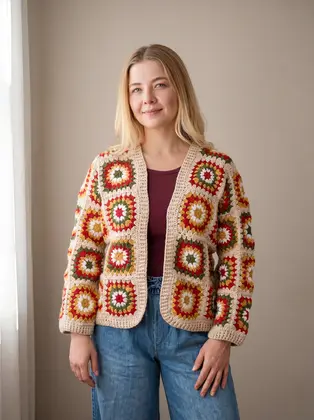
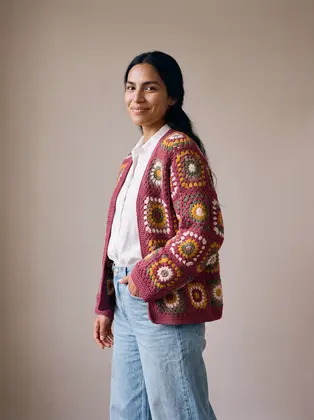
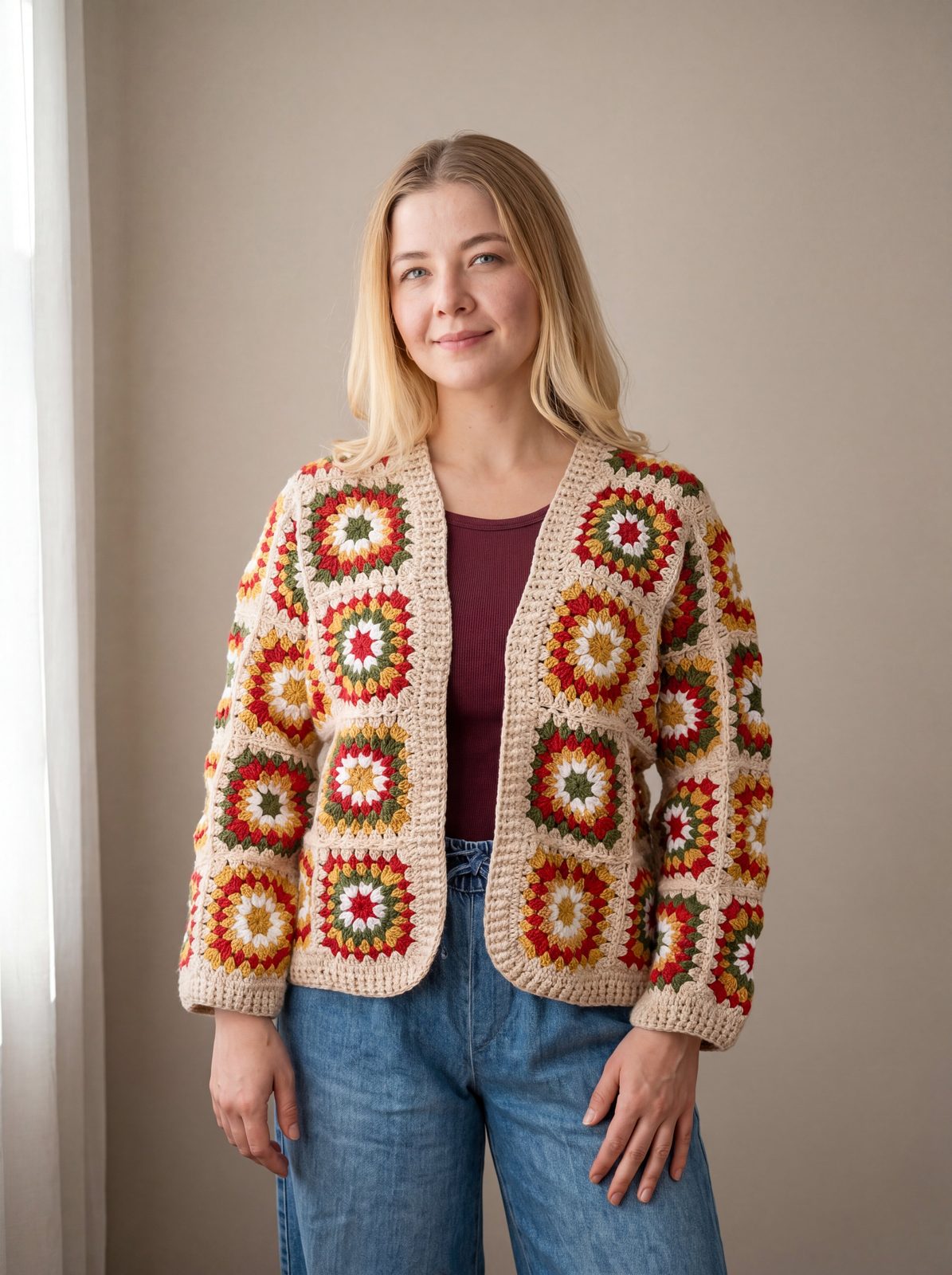
Crochet brings openwork, raised stitches and visible joins into an outfit, so it already carries detail. Give that texture room. A smooth tee, a simple woven skirt or clean denim can keep the look balanced without competing for attention. For a warm palette with a little color, the Boho Cardigan – Beige has cream-colored squares with red, green and mustard rings. Wear it as the focal layer over a plain cream or tan base; repeating every accent color elsewhere is unnecessary.
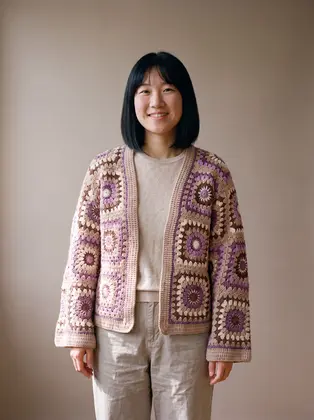
On a day when you want a quieter variation, the Mosaic Cardigan – Tan pairs a sandy ground with dusty lilac, deep chocolate and cream floral details. That combination shows how a neutral outfit can include a muted color and still feel settled. Pick one color from the garment to echo subtly—perhaps in a bag, a small piece of jewelry or a muted lip—rather than assembling a full coordinated set.
Texture also affects how an outfit reads at different distances. A crochet layer has visual movement up close and a larger color block from across the room. Keep the underlying silhouette legible: if the cardigan is roomy, try a more defined base beneath it; if the base has volume, consider wearing the layer open and letting its edges frame the outfit. These are starting points, not rules. Check that sleeves, shoulders and hems sit comfortably over the pieces you plan to wear.
Choose proportions for the day ahead
A useful outfit has to work when you sit, walk and carry what you need. With an open cardigan, the length of the base layer matters. A tee that ends close to the waistband usually gives a tidy line with high-rise pants; a longer shirt can work too if you like the layered effect, but make the hem look deliberate. For skirts and dresses, a cardigan that stops near the waist or hip can mark the transition between pieces. A longer layer may feel more relaxed and coat-like.
If you like a generous crochet shape, balance it with a straight or softly tapered bottom rather than adding volume at every point. Wide-leg trousers can look excellent with an open cardigan as well; keep the upper layers relatively neat, or use a front tuck to show where the waist sits. A slim base under a broad layer is not a requirement, just one way to keep the outfit from feeling bulky. Try the combination with the shoes you will actually wear, since a change in footwear can alter the apparent length of trousers and skirts.
For a casual weekday, wear a cream tee, straight-leg jeans and a crochet cardigan, then add a camel belt or bag if those are already in your wardrobe. For an easy lunch outfit, swap the jeans for a simple midi skirt and choose shoes that suit the walking involved. For a relaxed evening, use a tonal base—cream top and tan trousers, for example—and let the crochet texture carry the interest. The same layer can feel different with a change of hem, shoe and jewelry.
Use accessories to finish, not over-coordinate
Brown leather, woven materials and understated metal jewelry sit naturally beside cream and camel, but there is no need to match every accessory to the cardigan. One deeper element can anchor pale clothing: a chocolate shoe, a dark belt or a bag with a structured shape. For a softer finish, choose a sand-toned shoe and let the outfit stay light. If your crochet piece already includes several colors, accessories in cream, brown or denim will usually let it remain the center of attention.
Consider practical details before settling on an outfit. A delicate chain can disappear into an open neckline, while a longer pendant may sit visibly over a plain top; check that it does not catch on the crochet. A bag with a smooth strap is often easier over a textured shoulder than one with a rough or snag-prone edge. Scarves can add warmth and color, but avoid piling bulky fabric over an already substantial layer if it restricts movement.
When choosing a new piece, compare its real color and shape with the wardrobe staples you own rather than relying on a color name alone. Product photographs and screens can render shades differently. Review the actual product details, fit information and images before deciding whether a cream, beige or tan item will fill a gap. Explore current cardigans and tops for pieces that can work with the clothes already in rotation.
Care for texture with attention
Crochet and other open textures deserve thoughtful handling because loops can catch on jewelry, rough surfaces or bag hardware. Before wearing, check cuffs and hems for anything that might snag, and keep sharp closures away from the garment. When you take a layer off, avoid pulling it by one edge; support the fabric so its weight is not concentrated in a single spot. These small habits help keep the piece looking tidy during regular wear.
Do not assume that every knit or crochet item can be washed the same way. Fiber content and construction vary, and a general internet tip cannot replace the care instructions for a particular garment. Follow the product's actual care label and confirm any uncertainty with the RETROLIFE BOUTIQUE team before washing or storing it. If a label gives specific drying or cleaning directions, use those rather than improvising. More guidance is available on the Size & Care page.
The best neutral outfit is one that feels natural to wear, not one that follows a strict palette formula. Begin with a comfortable base, choose a camel or cream layer that works with its proportions, and let crochet add the detail. A slightly unexpected shade, a well-worn pair of jeans or a simple brown accessory can make the combination personal. Keep the pieces easy to move in, take care of textured surfaces, and repeat the outfits that make getting dressed simpler.