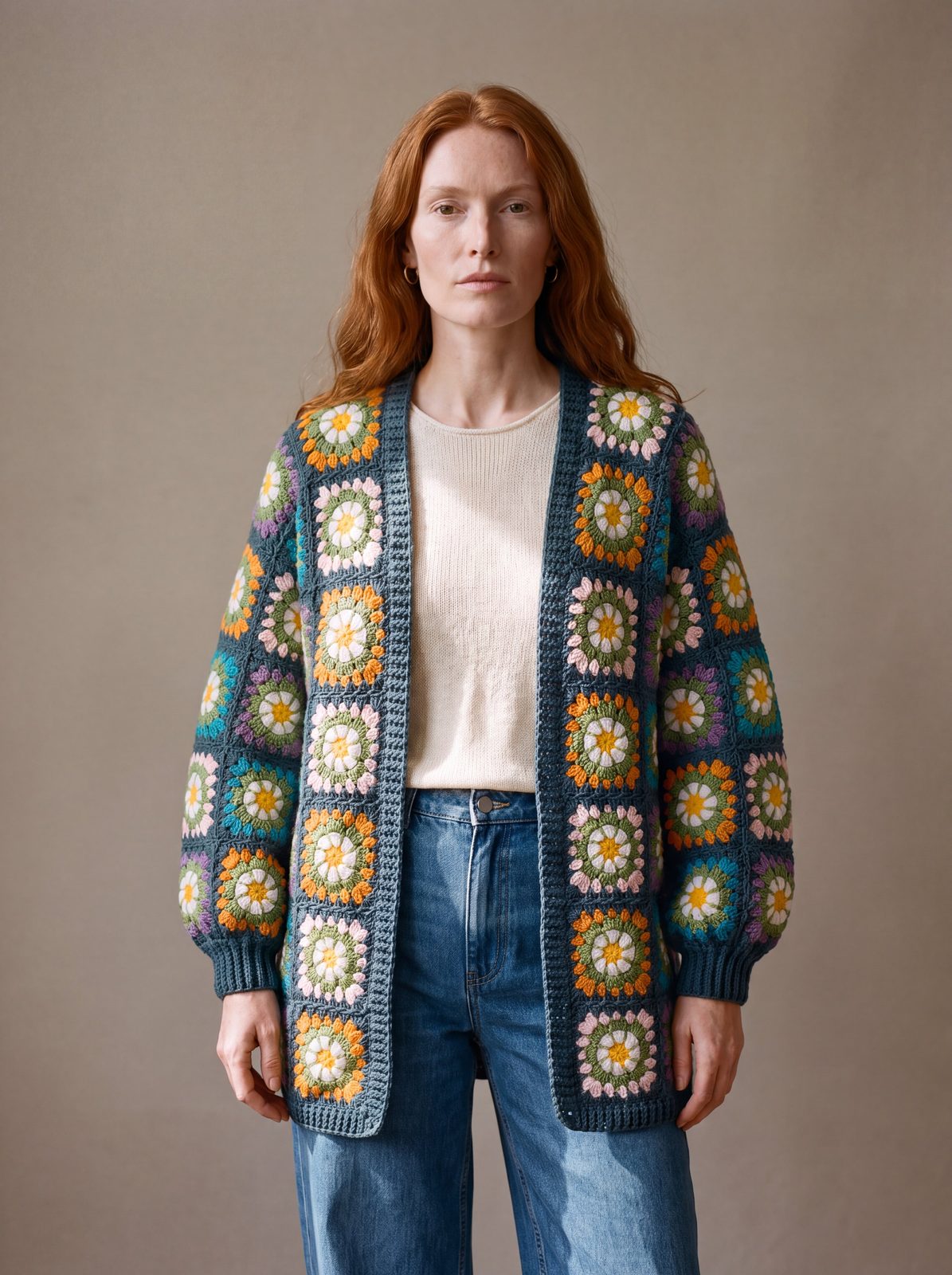
When your cardigan already carries the color, pattern, or texture of an outfit, accessories should make it easier to wear—not compete for the same attention. Start with the garment’s strongest feature, then choose one or two supporting details that clarify the mood. A patterned crochet layer can look intentional with plain shoes, a useful bag, and jewelry scaled to the neckline. The goal is not to make every piece quiet; it is to give the eye a place to rest.
Read the cardigan before choosing anything else
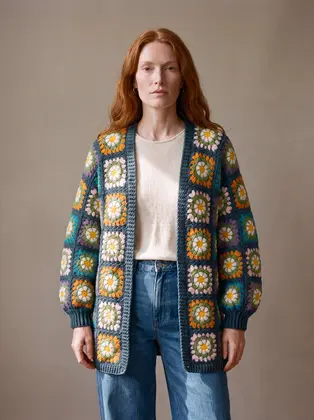
Look at the cardigan at arm’s length. Is its impact mainly color, like a deep teal ground dotted with daisies, or does it come from surface texture and a distinctive shape? A long, open style such as the Daisy Balloon Sleeve Long Cardigan – Teal has both color and volume, so accessories are best selected for their proportion as much as their palette. Balloon sleeves and a long body already create movement. A compact shoulder bag or a clean, narrow shoe balances that outline more naturally than another oversized, highly textured piece.
Notice the colors that repeat, but resist matching every one. With a multicolor cardigan, pick one grounded shade for a bag or shoe and let the remaining colors stay in the knit. With a tonal cardigan, you have more room to bring in contrast: a warm leather-like neutral, a polished metal accent, or a scarf with a restrained print. If the cardigan is mostly solid, its silhouette still matters. A cropped shape, long duster length, or roomy sleeve changes where a bag strap sits and how much jewelry shows.
Before adding anything, consider the base layer too. A simple tee or shirt gives a patterned cardigan a clean frame; a printed blouse creates another focal point. Browse the cardigan collection for different proportions, and use the top collection to consider quieter layers that leave the statement knit in focus.
Keep color coordinated, not identical
Color matching works best when it feels like a decision rather than a set. Pull one hue from a cardigan’s background or one of its smaller accents, then pair it with a neutral that gives that hue room. A navy-and-turquoise knit can sit comfortably beside denim, cream, or charcoal; a bright floral cardigan may look more composed with a bag in a soft neutral than with a bag repeating its loudest flower color.
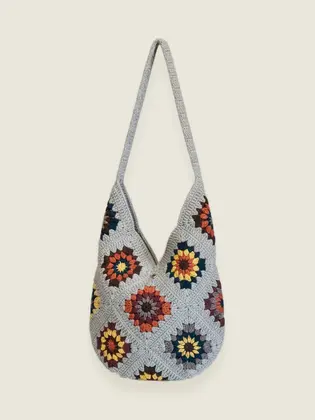
For a more expressive outfit, use neighboring colors rather than trying to reproduce the entire pattern. A plum accessory beside pink and cream can add depth without echoing every detail. A small crossbody in a complementary shade can also serve as a punctuation mark. The Patchwork Shoulder Bag – Grey, for instance, mixes vivid squares against a pale grey ground; with an already patterned cardigan, keep the rest of the outfit especially simple and let the bag be the one additional color story. If both pieces are visually active, separate them with a plain top and uncomplicated trousers or a skirt.
Metal jewelry is another way to bridge colors without introducing a new print. Gold tends to warm rust, mustard, and cream; silver can sharpen navy, teal, and cooler pastels. These are starting points, not rules: the cardigan’s actual colors and your other accessories matter more than a formula. Repeating a metal once—at the ears and wrist, for example—is usually enough.
Use texture and scale to create balance
Texture is part of the statement. Crochet, raised stitching, and chunky yarn invite a tactile response, but piling on several equally prominent textures can make an outfit feel crowded. A smooth belt, a simple leather or canvas bag, or a clean shoe gives the knit contrast. If you choose another textured accessory, keep its area small. A compact pouch is easier to balance against a heavily worked cardigan than a second large, open-knit layer.
Scale matters at the neckline and sleeves. A high or busy neckline leaves little space for a substantial necklace; try small hoops, studs, or no necklace and let the collar do its work. An open-front cardigan over a plain crew neck can accommodate a pendant, provided it does not tangle with the front edges. Wide sleeves may catch on stacked bracelets, so one cuff or a watch can be more practical. Try the full combination while moving your arms, sitting, and carrying your bag. Accessories should not interrupt the way the garment hangs.
For a long cardigan, a crossbody strap can break up the front visually. Set its length so the bag rests comfortably without pulling the knit out of shape. A shoulder bag worn over one shoulder keeps the front open and may feel less busy. Short cardigans often work well with a belt at the natural waist, but only if the knit sits smoothly under it; avoid cinching a soft or bulky layer so tightly that it bunches.
Choose one accessory to lead
A statement cardigan does not mean every accessory must be plain. It does mean that each item should have a job. Decide whether the lead role belongs to the knit, the bag, or a hat, then let the other pieces support it. If the cardigan is richly patterned, a small structured bag and understated earrings provide definition. If the cardigan is a solid, sculptural color, a vivid bag or a patterned hat can add personality without creating pattern-on-pattern confusion.
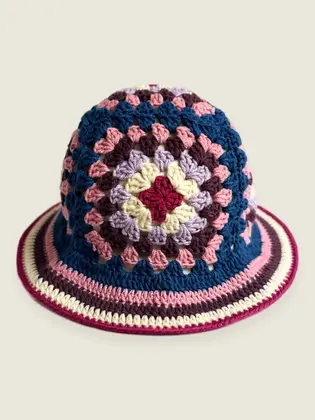
For example, the Plum Bucket Hat combines a floral square motif with a striped brim. It can be a playful partner for a plain cardigan, or a lot of visual information alongside a busy one. When wearing it with a statement knit, choose a simpler bag and avoid adding a printed scarf near the face. Alternatively, let the hat lead and keep the cardigan tonal. The same principle applies to jewelry: one noticeable pair of earrings can feel more considered than a necklace, earrings, and hair accessory all competing for attention.
Think about where each accessory sits. A scarf placed directly over a patterned neckline can obscure the cardigan’s best detail; worn loosely over a plain coat, it may be the outfit’s focal point instead. A belt can define a waist, while a bag adds a line across the torso. Choose the placement that helps the silhouette rather than layering several strong lines over the same area.
Let the occasion and comfort settle the final edit
For everyday errands, prioritize function: hands-free carry, shoes you can walk in, and jewelry that will not snag in open stitches. A statement cardigan already makes familiar basics feel dressed. For dinner or an event, switch to a smaller bag, a more deliberate earring, or a refined shoe rather than adding all three at once. The cardigan can remain the expressive piece while the accessories make the outfit feel suited to the setting.
Weather and care deserve a place in the decision. A hat or scarf may be useful, but consider whether its texture will catch on the cardigan and whether you can comfortably wear both. For fiber content, fit, and care, rely on the individual product label and confirmed team guidance rather than assumptions based on appearance. Check the size and care information before choosing how to store or clean a knit; do not assume every crochet or blended garment can be washed the same way.
Finish with a quick mirror check: remove one item if several are calling for attention, make sure the bag strap and sleeves move freely, and check that the shoes feel proportionate to the cardigan’s length. The strongest accessory choice is often the one that makes the cardigan look more like your own—not the one that adds the most. Let color, texture, and scale guide you, then stop when the outfit feels balanced and comfortable.