A balaclava changes the outline of an outfit before it changes the temperature. The face opening frames the features, the crown adds a little height, and the neck panel creates a clean transition into a coat or knit. Treat it as a considered accessory rather than an emergency layer: choose a shape that sits comfortably, decide whether its colors should blend or lead, then build the rest of the look around its proportions.
Start with the opening and the line around your face
The most useful fit is the one you can forget about while wearing. A face opening should sit clear of your eyes and allow easy movement; it should not need constant tugging to stay in place. Before heading out, try the piece with your usual hairstyle and outerwear. Hair tucked away gives a neat, close outline, while loose lengths soften the edge. Neither is a rule. The point is to notice whether the opening and your hair work together rather than compete.
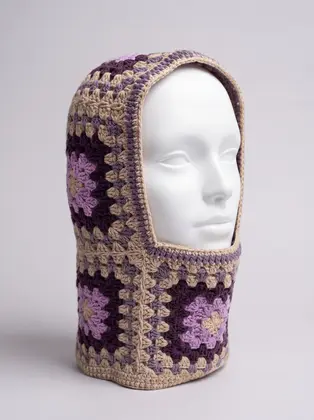
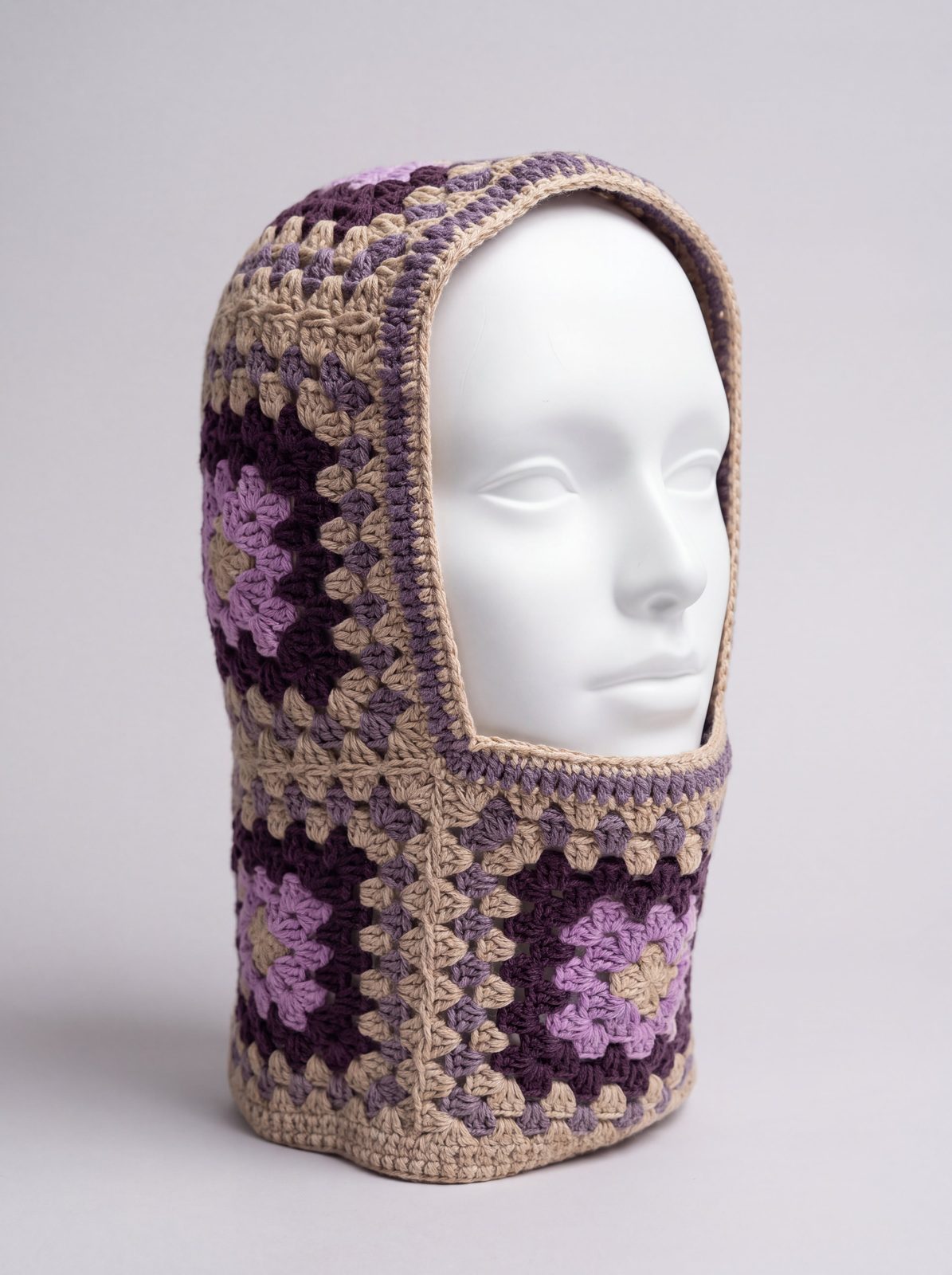
Because a balaclava covers the head and neck, it naturally draws attention upward. Balance that visual weight with a deliberate shoulder and hemline. A straight coat creates a long, uninterrupted column; a cropped jacket makes the hood more prominent and casual. If the outer layer has a broad collar, wear the neck panel either cleanly inside it or fully outside it. A half-hidden panel can bunch and interrupt the line. For a simple first combination, pair the Sand & Plum balaclava with a plain coat in charcoal, camel, or cream.
Use color to set the mood, not to match everything
Color is where a crocheted or square-patterned balaclava can feel especially personal. A tonal choice makes the texture the main event: plum against sand, for example, reads quietly at a distance and reveals more detail up close. A high-contrast palette becomes the focal point, so keep the other pieces calm rather than trying to repeat every shade. One echoed color is usually enough. Pick it up in a scarf, a stripe, or a small accessory; let the rest of the outfit provide breathing room.
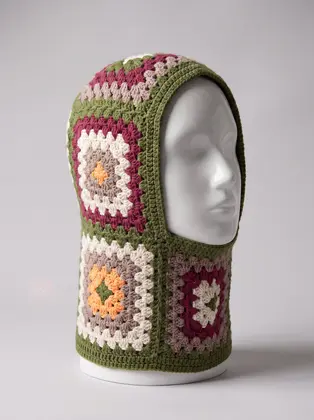
Neutrals make a patterned hood easy to wear, but they need not mean an all-beige uniform. Navy, denim, charcoal, olive, and warm brown all act as useful anchors. The Olive Green balaclava has burgundy, cream, and taupe within its squares, so a coat in one of those deeper or softer tones gives the palette a natural connection without looking like a set. If you prefer a sharper contrast, try it with a plain light knit and dark trousers. Keep nearby patterns restrained: a checked coat plus a busy hood can work, but only when the scale and colors are clearly distinct.
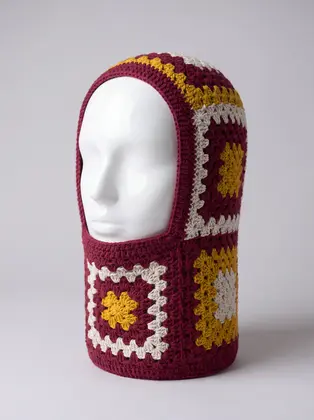
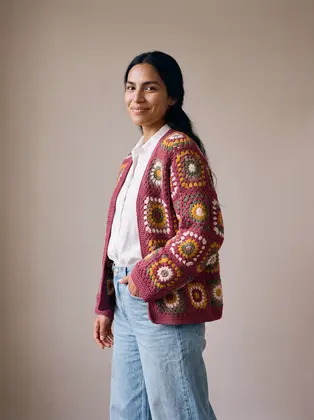
Think about the color nearest your face as well as the full outfit. A dark edge can make the opening feel crisp; a pale ground can lift a dark winter coat. If you are unsure, hold the piece beside the coat in daylight and check whether the colors look intentional together. The Burgundy & Mustard balaclava already carries strong contrast, so let it speak against navy, brown, or a simple neutral. You do not need to match mustard elsewhere.
Layer for comfort without crowding the neck
Good layering is about leaving room where fabric meets fabric. A thin base layer beneath a balaclava is often more comfortable than a bulky scarf competing for the same space. With a crewneck sweater, the neck panel can rest over the collar. With a high-neck top, tuck the panel neatly under the outer layer or choose a coat opening that leaves it visible. Check that you can turn your head freely and that the coat does not pull the hood backward.
For changeable weather, use a sequence you can adjust: a comfortable top, a midweight sweater or cardigan, then a coat or jacket. The balaclava adds coverage at the head and throat, while the outer layer handles wind and rain. It is not a substitute for weather protection, and a textured open stitch should not be assumed to block wind. On a milder day, skip the heavy middle layer and wear it over a tee or fine knit beneath a relaxed jacket. On a colder day, add warmth through the body and arms rather than stacking extra fabric directly around the face.
Pay attention to the hood and collar interaction. A coat with a roomy neckline can accommodate the neck section without folding it into a thick ridge. If your coat has a close fastening, test it while seated and standing; a combination that feels fine in front of a mirror may press when you move. Keep drawstrings, loose scarf ends, and dangling jewelry clear of anything that could catch. Practical styling should feel easy, not restrictive.
Balance volume across the outfit
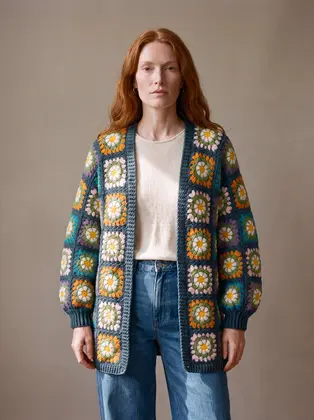
A balaclava has a distinctive silhouette, so the rest of the outfit benefits from a little structure. Straight-leg denim, tailored trousers, and a long skirt each give the eye a clear direction below the hood. A long cardigan can add a soft, vertical layer; the open-front Long Cardigan – Navy & Turquoise pairs naturally with a simple base and a solid coat when the colors are compatible. For more outfit ideas, browse the cardigan collection and look for a length and weight that suit the outer layer you already own.
Proportion is more useful than a strict formula. If the hood is colorful and the coat is oversized, keep the lower half relatively clean. If the coat is fitted and minimal, a fuller skirt or relaxed trouser can prevent the outfit from feeling top-heavy. Cuffs that show at the wrists and a visible hemline also help the layers look purposeful. You can bring in a patterned top, but give it a different scale from the squares or color blocks of the hood, or place most of it beneath a plain layer.
Consider the setting, too. For a walk, commute, or time outdoors, choose layers that let you move and check the face opening before leaving. Indoors, the piece can come off easily and the outfit should still make sense without it. That simple test helps keep a distinctive accessory from doing all the work. A plain crewneck, crisp shirt, or uncomplicated knit beneath a statement balaclava gives you a useful transition from outside to inside.
Make the styling work with your real wardrobe
Start with pieces already in rotation. Lay the balaclava beside two coats, one everyday knit, and the shoes you reach for most. Build one quiet combination and one more expressive one. A neutral coat lets a lively color story take center stage; a richly colored coat may call for a quieter hood. If the outfit only works with a new matching purchase, reconsider the pairing. Repeating a tone you own already—a brown belt, navy trousers, or cream sweater—is an easier route to cohesion.
Texture deserves the same attention as color. Crochet has visible depth, so smooth denim, wool-look outerwear, and simple jersey create contrast without adding visual noise. A textured sweater can still work, especially when its stitch is finer or its color is close to the hood’s ground. The tops collection is a useful place to find a straightforward layer; choose by neckline and weight rather than assuming a particular fabric or fit. Product descriptions and photographs can guide the look, but confirm actual fiber content, sizing, and care on the item’s label or with the team.
For care, avoid treating every knit or crocheted piece alike. Follow the specific garment label and ask the team if instructions are unclear; do not assume a method based on appearance alone. When not wearing it, store the piece dry and avoid leaving it compressed under heavier items. The size and care guide can help with general questions, while product-specific details should take precedence. A good outfit is practical when it feels comfortable, holds its shape through the day, and can be cared for according to its own instructions.
Ultimately, the best balaclava outfit gives the hood a clear role. Shape sets the outline, color supplies the point of view, and thoughtful layers make it wearable. Keep one or two other elements quiet, check the neckline and movement, and let the combination feel like your wardrobe rather than a costume. That is enough to make a distinctive winter piece feel natural from the first cold morning onward.